
3 Weekend DIY Projects You Can Build With Just a DeWalt Circular Saw
There is a persistent idea that proper woodworking begins with a garage full of machinery. A table saw takes up one wall, a mitre saw claims the other and, before you have cut a single board, the workshop has cost more than the furniture you planned to build.
For most weekend DIY projects, that simply is not necessary.
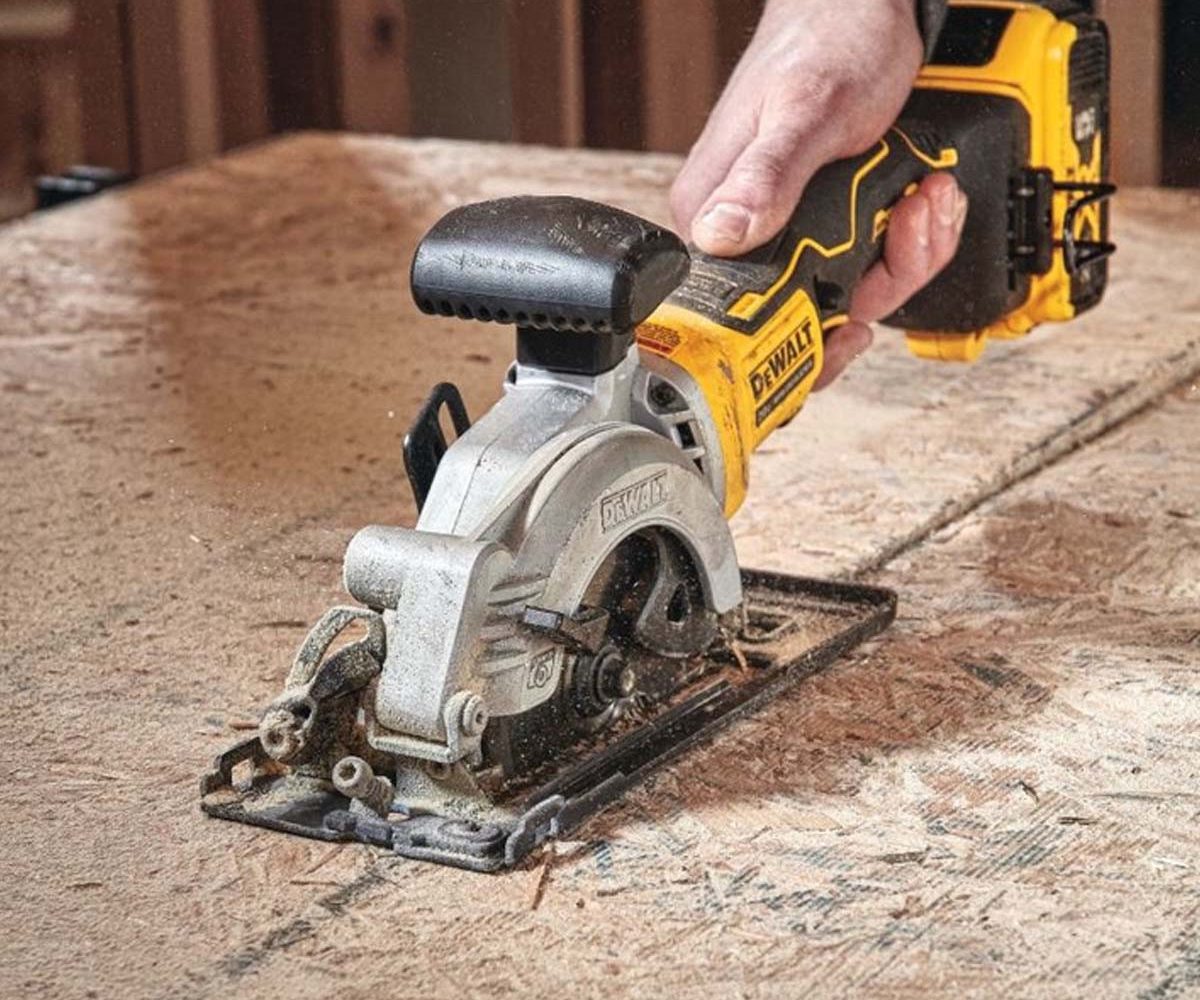
A dependable DeWalt circular saw, a straight edge and a few clamps will handle an impressive amount of work. It can break down plywood, cut construction timber to length and produce straight, repeatable parts without occupying half the shed.
Add a cordless drill for pilot holes and screws, and you have a compact setup capable of building genuine furniture and workshop storage. The three projects below are deliberately straightforward. There are no curved components, complicated joints or specialist machines hiding in the instructions.

DeWalt Circular Saws
The Ultimate Starter Setup: A Drill and a DeWalt Cordless Circular Saw
The best starter tool collection is not the biggest one. It is the one in which every tool earns its shelf space.
A practical place to begin is the DeWalt DCD796P2-GB 18V XR brushless combi drill kit. It comes with two 5.0Ah batteries, a charger and a case, giving you the batteries needed to start an 18V XR collection.
Pair it with the body-only DeWalt DCS391N-XJ 18V XR cordless 165mm circular saw. Because both tools use the 18V XR platform, the batteries from the drill kit can also power the saw. You avoid paying for another charger, another case and batteries that spend most of their lives sitting unused.
For anyone searching for a DeWalt circular saw 18V model for home projects, the DCS391N-XJ is a sensible starting point. Its 165mm blade is well suited to timber and sheet material, while the cordless format lets you work in the garden, on the drive or in a small shed without dragging an extension lead behind you.
That is the real appeal of a DeWalt 18V battery circular saw. It is easy to take to the material, rather than trying to carry a full sheet of plywood over to a fixed machine.
Already own several XR tools? A body-only saw is usually the economical choice. Those starting without batteries can compare compatible options in Toolden’s DeWalt batteries and chargers range.
Before You Make the First Cut
A circular saw is only as accurate as its setup. Fortunately, the setup is simple.
- Support the material on both sides of the intended cut.
- Clamp the workpiece so it cannot move as the blade enters it.
- Set the cutting depth so the blade projects only slightly below the material.
- Use a carpenter’s square for short crosscuts and a clamped straight edge for long cuts.
- Keep the saw’s power cable, battery, hands and loose clothing clear of the blade path.
- Remove the battery before changing the blade or carrying out adjustments near it.
- Wear suitable eye, hearing and respiratory protection.
For long guided cuts, measure the distance between the edge of the saw’s base plate and the blade. Offset your straight edge by that amount, clamp it down and let the base plate run against it. Do not try to steer back towards a wandering pencil line halfway through a cut. Stop, reset and make the cut properly.
Project 1: A Heavy-Duty Workbench
A workbench is the ideal first build because it makes every later project easier. It does not need cabinetmaker-level joints. It needs a rigid frame, a flat top and enough mass to stay put while you work.
A useful starting size is roughly 1,500mm long, 600mm deep and between 850mm and 900mm high. Adjust the height to suit the way you work and the space available.
What You Will Need
- Construction-grade 2×4 timber for the frame and legs
- 18mm plywood for the top
- Additional plywood for an optional lower shelf
- Suitable structural wood screws
- Wood glue, if required
How to Build It
- Cut four legs to the same length. Use the first accurately cut leg as a reference when marking the remaining three.
- Cut the short rails for two matching end frames.
- Drill pilot holes and assemble both end frames, checking each one for square before fully tightening the screws.
- Cut the long front and rear rails, then use them to join the two end frames.
- Add lower rails if you want a plywood shelf or additional resistance to racking.
- Measure the completed frame before cutting the plywood top. Frames can move slightly during assembly, so relying entirely on the original drawing may leave you with an unnecessary overhang or shortage.
- Rip the plywood to width using a clamped straight edge, then crosscut it to its final length.
- Position the top, check the overhang and screw it securely to the frame.
A brief technical distinction is useful here. You will normally crosscut the 2×4 timber to length and rip the plywood along its length. A DeWalt circular saw handles both jobs, provided the material is supported and the saw is guided properly.
Common planed 2×4 timber is around 47mm thick, so it can be cut in one pass when laid flat with a suitable 165mm saw. Plywood is thinner but more awkward because of its size. Place the sheet on stable sacrificial supports so the offcut cannot drop, pinch the blade or tear away at the end of the cut.
Do not worry if the bench picks up a few pencil marks or minor scratches during construction. It is a workbench. Flat, square and solid matter far more than flawless.
Project 2: Clean-Lined Floating Shelves
Floating shelves expose inaccurate cuts immediately. A gap at the end of a workshop shelf is easy to ignore. The same gap at eye level in a living room will bother you every time you walk past it.
This makes the project a good exercise in controlled crosscutting. The saw is not the limiting factor. Marking, supporting and guiding it properly are what produce the clean result.
One beginner-friendly design is a hollow shelf that slides over a timber wall cleat. For a shelf approximately 800mm wide, 220mm deep and 75mm high, you can cut:
- Two 800mm x 220mm plywood panels for the top and bottom
- One 800mm x 75mm front face
- Two end pieces cut to fit between the front face and rear opening
- A timber back rail and projecting arms for the concealed wall cleat
Getting Cleaner Cuts
Use the same reference edge for every measurement. If one panel is slightly out of square, copying measurements from that panel can multiply the error across the whole shelf.
For veneered plywood or furniture board, use a sharp blade intended for the material. Toolden carries a selection of DeWalt circular saw blades for different cutting requirements. Check the blade diameter, bore size, speed rating and material suitability before fitting it.
With a conventional handheld circular saw, placing the visible face down can help keep the cleaner edge on the side that will be seen. Material and blade behaviour vary, however, so make a test cut on an offcut first. Masking tape over the cut line may also reduce surface breakout, but it will not compensate for a blunt or unsuitable blade.
Assembling and Mounting the Shelf
- Dry-fit the top, bottom, front and end pieces before drilling anything.
- Drill pilot holes to reduce the risk of splitting or forcing the pieces out of alignment.
- Assemble the hollow shelf box with glue and countersunk screws.
- Build the concealed cleat so it fits inside the rear opening without excessive movement.
- Fix the cleat level to suitable wall structure or with fixings appropriate for the wall type and expected load.
- Check for hidden cables and pipes before drilling into any wall.
- Slide the shelf over the cleat and secure it from above or below where the fixing will be least visible.
If furniture projects are likely to become a regular habit, the DeWalt DCS570N-XJ 18V XR 184mm brushless circular saw is a logical step up. Its larger blade and brushless motor make it a capable all-rounder while keeping you on the 18V XR platform.
Project 3: An Outdoor Planter Box
A planter box is more forgiving than indoor furniture and more useful than another practice joint destined for the scrap pile. It is also a good excuse to take the cordless saw outside and work with longer boards.
A finished size of approximately 700mm long, 350mm wide and 350mm high works well for herbs, flowers or a compact patio display. The dimensions are not critical, so adapt them to the boards available.
What You Will Need
- Exterior-rated or naturally durable timber boards
- Four corner posts or internal battens
- Exterior-grade screws
- Timber for the base supports
- A suitable liner that allows drainage
- An exterior wood finish appropriate for the intended use
How to Build It
- Decide how many horizontal boards will form each side, based on their actual width.
- Cut all long side boards to one matching length.
- Cut the shorter end boards, checking the dimensions against the way the corners will overlap.
- Cut four corner posts slightly shorter than the finished height so they remain hidden below the top edge.
- Pre-drill the boards and screw them to the corner posts, checking for square as each side is added.
- Add lower support battens and base boards, leaving small gaps so water can escape.
- Raise the planter slightly on feet or battens to keep the base away from standing water.
- Protect exposed end grain and apply the chosen finish before filling the planter.
Repeatability matters more than speed. Cut one long board accurately, use it to mark the others and keep the same edge against the saw guide each time. Small inconsistencies that look harmless on individual boards become obvious once four or five are stacked together.
If the planter will be used for edible crops, make sure the timber, liner and finish are suitable for that purpose. Also leave a clear drainage route. A planter that holds water will be hard on both the plants and the timber.
When It Is Time for a FlexVolt DeWalt Circular Saw
The three projects above sit comfortably within the capabilities of an 18V setup. There is little reason for a beginner to buy the largest saw available simply to make a small shelf or planter.
The calculation changes when occasional DIY develops into deck construction, roof work or shed framing. Those jobs involve larger sections, repeated cuts and longer working sessions. That is where a FlexVolt DeWalt circular saw becomes a more logical investment.
The DeWalt DCS579T2-GB 54V XR FlexVolt 190mm circular saw kit is designed for more demanding ripping, crosscutting and framing work. It offers a 61mm cutting depth at 90 degrees, a brushless motor and a rail-compatible base. The kit also includes two 6.0Ah FlexVolt batteries, a charger and a TSTAK case.
That is a substantial upgrade, not an essential first purchase. Build the smaller projects, learn how to guide the saw accurately and move to FlexVolt when the work genuinely requires it.
Frequently Asked Questions
Can a beginner safely use a DeWalt circular saw?
Yes, but a circular saw demands proper setup and attention. Read the supplied instructions, wear appropriate protective equipment and practise on offcuts before starting the finished project. The material should be stable, the cut path should be clear and both hands should remain in their intended operating positions.
Is a DeWalt skill saw the same as a DeWalt circular saw?
The phrase “DeWalt skill saw” is commonly used as an informal search term for a handheld circular saw. The correct product category is a DeWalt circular saw. These tools are intended primarily for straight ripping, crosscutting and bevel cuts when fitted with the correct blade.
Which DeWalt circular saw is best for a first DIY toolkit?
The DCS391N-XJ is a practical entry-level choice for general timber and sheet cutting. The DCS570N-XJ is better suited to someone who wants a larger 184mm blade and a brushless motor for more regular work. Both are body-only 18V XR models, so remember that batteries and a charger must be purchased separately unless you already own compatible equipment.
Can an 18V DeWalt circular saw cut 2×4 timber?
Yes, a suitable 165mm or 184mm model can normally crosscut common planed 2×4 timber in one pass when the timber is laid flat. Always measure the actual timber and compare it with the saw’s stated cutting capacity. Do not assume every piece sold as 2×4 has identical finished dimensions.
Can a circular saw make clean cuts in plywood?
Yes. Use a sharp blade suited to plywood, support the full sheet and guide the saw against a clamped straight edge. A test cut will show which face should be positioned uppermost or downwards for the cleanest finish with your particular blade and material.
Do I need a guide rail?
No. A straight piece of timber, aluminium level or another rigid straight edge can act as a guide when clamped securely. A compatible guide rail becomes more useful when you are regularly cutting panels, worktops or other finished sheet materials.
What does “body only” mean?
Body only means that the tool is supplied without a battery or charger. It is usually the best-value option for someone who already owns compatible batteries. New users should factor the cost of batteries and a charger into the complete setup rather than comparing tool prices alone.
Do I need a FlexVolt saw for these weekend projects?
No. An 18V DeWalt cordless circular saw is the more proportionate choice for a workbench, floating shelves and a planter box. FlexVolt makes more sense when you move into sustained framing, deck construction or other demanding work with larger timber sections.
Start With the Workbench
Of the three projects, the workbench is the best place to begin. It gives you a stable surface for assembling the shelves, cutting the planter components and tackling whatever comes next.
More importantly, it proves the central point. You do not need a room full of stationary machines to build useful things. A drill, a straight edge and one of Toolden’s DeWalt circular saws can take you a surprisingly long way.
Need some help with your order? Our new help centre has a wide range of helpful articles and guides!
If you have any additional queries, please do not hesitate to contact us below: