
5 Essential Tips for Perfect Cuts with Your DeWalt Circular Saw
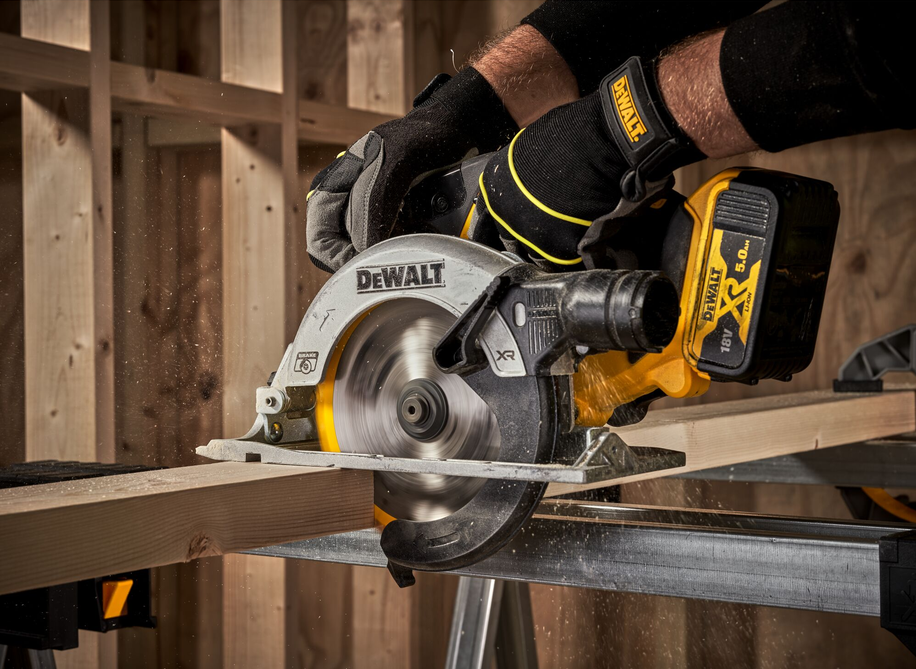
A dewalt circular saw is one of those tools that gets picked up all the time. Cutting sheets down, trimming timber, ripping boards, sorting joists, taking a bit off a door. It is a proper everyday bit of kit.
A good saw will leave a rough edge if it is set up badly. Splintering, wandering cuts, burnt timber, batteries draining too fast, most of it comes down to the blade, the depth setting, or trying to cut freehand when the job needs a guide.
So, before blaming the saw, it is worth getting the basics right. These five tips apply whether you are using a compact DeWalt cordless circular saw, a FlexVolt DeWalt circular saw.

DeWalt Circular Saws
1. Start With the Right Blade
The blade makes a bigger difference than people give it credit for. You can have plenty of motor power, a fresh battery, and a steady hand, but if the blade is blunt or too coarse for the job, the finish will not be great.
A lot of DeWalt circular saws come with a general-purpose blade. That is fine for rougher site work. If you are cutting framing timber, lengths of CLS, or anything where the edge is not going to be seen, a lower tooth-count blade does the job quickly. The problem starts when you use that same blade on sheet material, laminated boards, skirting, doors, or anything where the cut edge matters.
For cleaner work, move to a higher tooth-count blade. A 24T blade is useful for fast cutting. Something around 40T or above will usually give a neater finish because each tooth is taking a smaller bite. The cut feels smoother, there is less tear-out, and you spend less time tidying up the edge afterwards.
Toolden stocks a wide range of TCT circular saw blades, including DeWalt options such as the DeWalt DT1945-QZ 190mm x 30mm 40T Circular Saw Blade 3 Pack.
Check the size before ordering. A 165mm saw will not take the same blade as a 190mm model. Look at the blade diameter, bore size, kerf, and tooth count. That small check saves buying the wrong blade and, more importantly, gives the saw a fair chance of cutting properly.
2. Set the Depth
This is one of the easiest habits to fix. A lot of people run the blade far too deep. It feels like the safe option because the saw is definitely getting through the wood, but it actually makes the cut harder than it needs to be.
The blade only needs to sit slightly below the underside of the material. Not half the blade. Not as deep as the saw will go. Just enough for the teeth to clear the workpiece cleanly.
To set it, take the battery out first. Hold the saw against the side of the material, release the depth adjustment, then lower or raise the shoe until the teeth just come past the bottom edge. Lock it off properly before putting the battery back in.
That small adjustment reduces friction and makes the saw feel more controlled. It can also help battery life, especially if you are using a dewalt circular saw 18v or another cordless model. A dewalt 18v battery circular saw should not be wasting power spinning loads of unused blade through fresh air under the board.
If the saw is labouring, burning the timber, or going through batteries quicker than expected, check the blade depth before assuming the tool is underpowered.
3. Use a Straight Edge When the Cut Has to Be Straight
Freehand cutting has its place. For rough work, it is quick and convenient. But if the cut needs to be straight, a pencil line on its own is not enough.
For short crosscuts, clamp a speed square to the timber and run the saw shoe against it. It is a simple trick, but it works. The saw has something solid to follow, so you are not trying to steer it by eye for the whole cut. A square such as the Sealey AK9008 Metric Speed Square is useful for quick marking, squaring, and guiding on site.
For longer cuts, especially sheet material, use a guide rail or a straight clamped edge. It does not need to be complicated. What matters is that the saw runs against something fixed. That is how you avoid the slow drift that shows up halfway along a board.
If you do a lot of sheet cutting, worktops, flooring, or panel work, a rail-compatible saw is worth looking at. The DeWalt DCS572N-XJ 18V XR Brushless 184mm Rail Compatible Circular Saw and the DeWalt DCS579NT-XJ 54V XR FlexVolt 190mm Rail Compatible Circular Saw are both designed for more controlled cutting when paired with the right rail.
Toolden also stocks the DeWalt DWS5023-XJ 2.6m Plunge Saw Guide Rail, which is a useful length for larger panels and longer straight cuts.
4. Let the Saw Get Up to Speed First
This sounds obvious, but it is an easy mistake to make when you are in a hurry. Do not push the blade into the timber as soon as you pull the trigger.
Set the front of the shoe on the workpiece, keep the blade clear of the edge, pull the trigger, and give the saw a moment to reach full speed. Then move into the cut steadily. The start of the cut will be cleaner, the blade is less likely to snatch, and the saw will feel much easier to control.
This applies to all dewalt circular saws, from smaller 18V models to larger FlexVolt machines. A powerful saw such as the DeWalt DCS578N-XJ 54V FlexVolt 190mm Circular Saw still cuts better when it is allowed to spin up properly before meeting the wood.
The same goes for feed speed. Do not ram the saw through the timber. If the motor note drops heavily, something is wrong. The blade might be dull, the material might be pinching, the depth might be too low, or you might simply be pushing too hard.
5. Check the Guard and Support the Work Properly
A clean cut is not worth much if the setup is unsafe. Before cutting, check the lower blade guard moves freely and returns by itself. Do not wedge it open. Do not tie it back. It is there for a reason.
Also think about how the material is supported. If a board sags as you cut, it can pinch the blade. That is when kickback becomes a real risk. Sheet material should be supported properly, ideally with both sides of the cut stable so the waste can fall away without trapping the blade.
Clamping helps too. A piece that moves during the cut will not give you a clean line. It also makes the saw harder to control. Take an extra minute to support and clamp the work, especially if you are cutting doors, flooring, worktops, or long sheet material.
Good safety habits usually lead to better cuts anyway. The saw tracks straighter, the blade is less likely to bind, and you are not fighting the workpiece while trying to follow a line.
Which DeWalt Circular Saw Should You Choose?
If you want a lighter everyday saw for timber, sheet goods, and general joinery, an 18V model makes sense. The DeWalt DCS565N-XJ 18V XR 165mm Brushless Circular Saw is a compact option for users already on the 18V XR battery platform.
For heavier cutting, thicker timber, and longer site work, FlexVolt is the step up. A flexvolt dewalt circular saw gives you more cutting power while keeping the convenience of cordless. Models such as the DeWalt DCS577T2-GB XR 190mm FlexVolt 54V Circular Saw with 2 x 6.0Ah Batteries are better suited to tougher site use.
If accuracy is the main concern, especially on sheet material, look at rail-compatible options. They give you a more controlled way to cut long straight lines, which is useful for fitted work, panels, worktops, and flooring.
Final Word
Getting better cuts with a DeWalt circular saw is not about one clever trick. It is about setting the saw up properly every time.
Use the right blade. Set the depth properly. Clamp a guide when the cut matters. Let the blade reach full speed. Keep the guard working and support the timber properly.
Do those things and your DeWalt circular saw will cut cleaner, feel smoother, and waste less material. Browse Toolden’s range of DeWalt FlexVolt circular saws, DeWalt circular saws, and circular saw blades to get the right setup for the work you do most.
FAQ
What blade should I use with a DeWalt circular saw?
Use a blade that matches the saw size and the job. A lower tooth-count blade is better for quick rough cuts. A higher tooth-count blade gives a cleaner finish on sheet material, timber boards, doors, and visible edges. Always check the blade diameter and bore size before buying.
Why is my DeWalt circular saw splintering the wood?
Splintering is usually caused by a rough blade, a blunt blade, poor support, or cutting too quickly. Try a sharper blade with more teeth, support the material properly, and use a straight edge or guide rail where accuracy matters.
Is a DeWalt circular saw 18V powerful enough?
For most general timber, sheet material, and site joinery, a DeWalt circular saw 18V is more than capable. The key is using the right blade, setting the depth correctly, and not forcing the tool through the cut.
When should I choose a FlexVolt DeWalt circular saw?
Choose a FlexVolt DeWalt circular saw if you are cutting thicker timber, working on heavier site tasks, or want more power from a cordless saw. FlexVolt models are also a good option if you want corded-style performance without using a mains lead.
How far should the blade stick out below the wood?
The teeth should sit just below the underside of the material. Too much exposed blade creates more friction, makes the saw harder to control, and can reduce battery runtime on cordless models.
Is a guide rail worth using with DeWalt circular saws?
Yes, especially for long cuts, sheet material, worktops, flooring, and panel work. A guide rail keeps the saw on a fixed path, which gives a straighter and cleaner cut than working freehand.
What is the difference between a DeWalt cordless circular saw and a DeWalt skill saw?
People often use “skill saw” as a general name for a circular saw. A DeWalt skill saw usually means a DeWalt circular saw used for general cutting work. A DeWalt cordless circular saw simply means it runs from a battery rather than mains power.
For long, straight, visible cuts, yes. A guide rail helps keep the saw moving in a fixed line, which improves accuracy and finish quality. For shorter crosscuts, a clamped speed square is often enough.
Need some help with your order? Our new help centre has a wide range of helpful articles and guides!
If you have any additional queries, please do not hesitate to contact us below: