
Choosing the Best Laser Level in 2026: A Buyer’s Guide
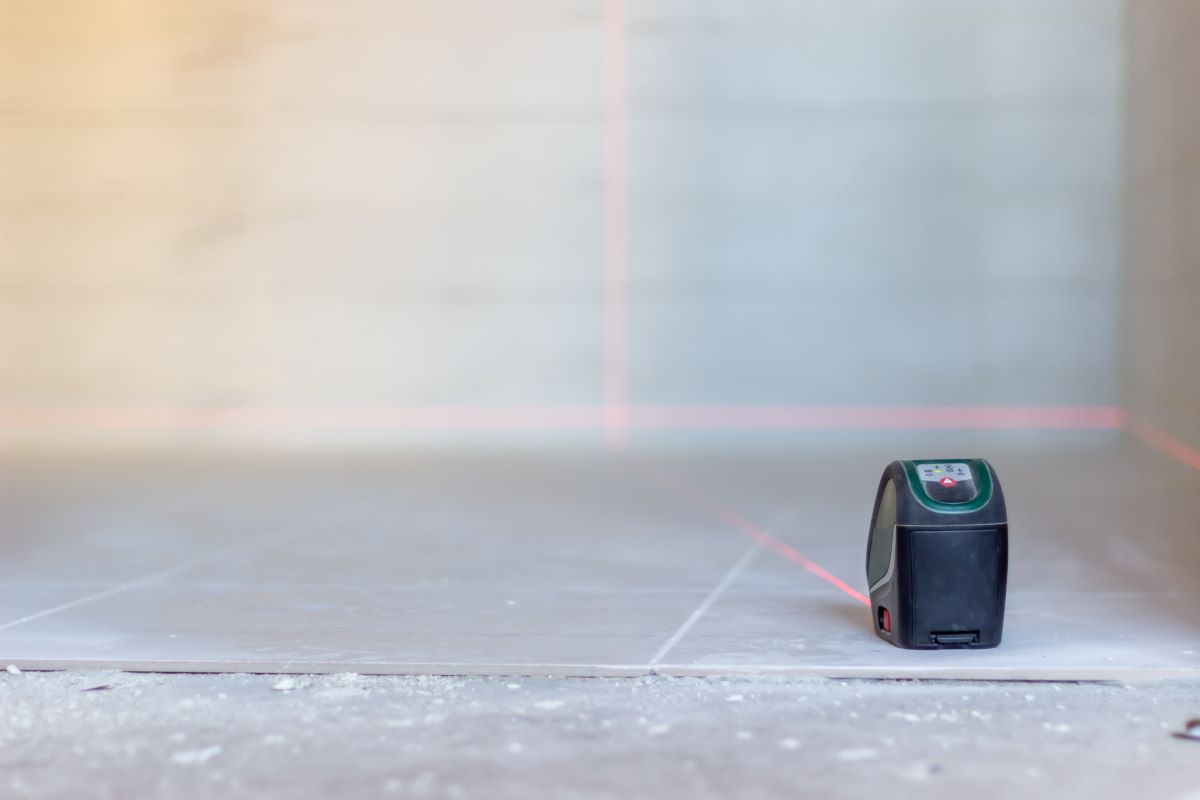
Selecting the best laser level has become increasingly challenging due to the abundance of brands, diverse laser level types, and many features and technical specifications. To simplify the decision-making process and clarify your options, we will explore the different laser-level types available on the market.
Whether you need it for indoor or outdoor applications, the primary function of a laser level is to project lines resembling ‘virtual chalk lines’. These lines ensure precise alignment and angles at the worksite, irrespective of whether you opt for a self-levelling or rotary laser, both of which typically project either green or red light to enhance levelling visibility.
Green Laser Level vs. Red: Which One Should You Choose?
The difference between a green laser and a red laser level really comes down to where you are working most of the time. Here’s a quick comparison table summary of how they stack up:
- Indoor Use (Often Red Lasers): These are lightweight, highly portable, and rely on standard AC power or batteries. They are perfectly optimised for smaller, stable interior spaces where lower-power red beams are easily visible.
- Outdoor Use (Usually Green Lasers): Built for the harsh realities of construction sites, these rugged, water-resistant units utilise bright green beams that cut through glaring sunlight over extended distances. They maintain their precision despite wind or temperature shifts and often run on robust power sources like heavy-duty rechargeable batteries.
Ultimately, if you are tackling heavy-duty site work outside, a green laser level is the clear winner. For standard interior decorating or carpentry, a red laser level is more than sufficient.
| Feature | Indoor Use | Outdoor Use |
| Visibility | Lower power, often red lasers; designed for controlled lighting. | Usually green lasers; highly visible and clear in bright sunlight. |
| Working Range | Shorter range suited for smaller indoor spaces. | Extended range to project visible lines over large construction sites. |
| Durability | Lightweight and portable; delicate construction, as it avoids harsh weather. | Rugged and water-resistant; often features rubberised casings against dust and debris. |
| Accuracy | Optimised for stable environments without wind or extreme temperature shifts. | Maintains accuracy despite environmental challenges like wind, temperature changes, and uneven terrain. |
| Power Source | Relies on standard batteries or AC power. | Robust options like rechargeable batteries or solar power for extended operational periods. |
Different Types of Laser Levels Based on the Laser Beam
Laser levels come in various types based on the laser beam they project and how it aligns with a reference point. Here are some common types:
- Point Laser Level:
- Projects a single point of reference. Useful for tasks like aligning objects vertically or horizontally.
- Line Laser Level:
- Emits a straight line, making it useful for aligning objects along a level plane. Some models project both horizontal and vertical lines simultaneously.
- Cross-Line Laser Level:
- Projects intersecting horizontal and vertical lines, forming a cross. Ideal for tasks requiring both horizontal and vertical alignment simultaneously.
- Rotary Laser Level:
- It emits a rotating laser beam in a 360-degree circle. It is well-suited for large-scale projects where a level reference is needed all around.
- Plumb Laser Level:
- Used for vertical alignment. It projects a plumb line, which is a straight, vertical reference.
- Combination Laser Level:
- Integrates multiple functions, such as point, line, and/or rotary features, offering versatility for different tasks.
- Dot Laser Level:
- Projects multiple points or dots on a surface, useful for tasks like aligning points in 3D space.
- Self-Levelling Laser Level:
- Automatically adjusts the laser to maintain a level reference, even if the device is slightly out of level. This ensures accurate measurements and ease of use.
- Manual-Levelling Laser Level:
- Requires manual adjustment to achieve a level position. Users need to adjust the device until the bubble vial or levelling indicators show it is level.
- Three-Plane Laser Level:
- Projects horizontal, vertical, and forward-facing lines simultaneously, providing a comprehensive reference for layout tasks in three dimensions.
The Benefits of a Self-Levelling Laser for Site Work
A self-levelling laser uses an internal pendulum mechanism (or electronic servo motors) suspended on magnets to automatically find true level—typically within a range of ±4
For site work, replacing manual spirit levels or optical water levels with a self-levelling laser provides several major practical benefits:
1. Rapid Setup and Downtime Reduction
- Instant Calibration: Once placed on a tripod, floor, or wall mount within its levelling range, the laser levels itself in seconds.
- Minimal Adjustments: Tradespeople do not need to spend time fiddling with thumbscrews or manual bubble vials before taking measurements.
2. Elimination of Human Error & Out-of-Level Alerts
- Consistent Precision: Provides reliable tolerances across distance (typically around ±2 mm to ±3 mm over 10m).
- Active Warning System: If the unit is bumped, vibrated by heavy site plant, or knocked out of its levelling threshold, the beam will either flash rapidly or sound an alert. This stops work immediately and prevents costly layout errors before fixings or studs are secured.
3. True One-Person Operation
- Reduced Labour Costs: Traditional levelling often requires two people—one holding a tape, staff, or chalk line, and another sighting the level. A self-levelling laser casts a clear reference line across the entire workspace, allowing a single worker to frame, tile, or install suspended ceilings independently.
4. Simultaneous Multi-Plane Referencing
- Cross-Line and 360° Coverage: Modern 3D or multi-line lasers project horizontal (datum) and vertical (plumb) lines simultaneously, establishing a perfect 90° square corner and plumb transfer points (floor to ceiling) in a single setup.
5. Pendulum Lock for Angled Layouts & Transit
- Dual Functionality: When the self-levelling pendulum is locked, the laser can be tilted to project angled lines required for stair stringers, handrails, drainage falls, or vaulted ceilings.
- Mechanism Protection: Locking the pendulum also secures the delicate internal components during transport, preventing calibration loss over bumpy site terrain.
How to Set Up Your Levelling Laser with a Tripod
Setting up a levelling laser on a tripod correctly ensures your reference lines remain perfectly accurate across the entire site. Since I do not know the exact model you are working with, these are the universal steps for mounting and preparing a standard self-levelling unit:
Position the Tripod
Extend the tripod legs to your desired working height and plant the feet firmly into the ground. Ensure the top mounting plate looks as level as possible. You will know this is successful if the tripod feels completely stable and does not wobble when you lightly press down on the top plate.
Mount the Laser Unit
Carefully align the threaded insert on the bottom of the laser level with the tripod’s mounting screw (these are typically 1/4-inch or 5/8-inch threads). Turn the laser or the mounting dial until it is snug, but avoid over-tightening. You can verify this step is successful when the laser sits perfectly flush against the plate and does not shift when lightly touched.
Perform a Rough Levelling
If your tripod or laser has a manual bubble vial, adjust the length of individual tripod legs until the bubble sits close to the centre. This step is successful when the bubble remains inside the inner circle, ensuring the tool is positioned within its automatic self-levelling range (usually $\pm 4^\circ$).
Unlock and Power On
Locate the pendulum lock switch on the side of the laser, switch it to the unlocked position, and turn the power on. The internal mechanism will take a moment to settle. You will know this step is successful when the projected laser lines stop bouncing and remain solid without flashing or sounding an alarm.
Laser Safety: Never look directly into the laser beam or point it towards anyone’s eyes, as this can cause permanent vision damage.
The choice of a laser level depends on the specific requirements of the project, such as the size of the working area, the need for multiple reference points, and whether indoor or outdoor use is predominant. Each type has its advantages and is suitable for particular applications in construction, surveying, and various other tasks that demand precise alignment.
Toolden’s Best Laser Levels

DeWalt DW088K Self-Levelling Cross Line Red Laser Level Kit
The DeWalt DW088K Cross Line Red Laser Level Kit is a popular choice for its exceptional accuracy of ±0.3 mm/m. Featuring a self-levelling capability of up to 4° and an automatic out-of-level indicator, it ensures rapid and precise levelling. The robust design with over-moulded housing and thick glass enhances durability and maintains calibration on challenging job sites. The kit includes the DW088K Cross Line Laser, three AA alkaline batteries for over 40 hours of runtime, a magnetic pivot bracket for metal surfaces, a wall mount bracket, and a heavy-duty carry case. This successor to the DW087K offers superior performance, durability, and ease of use in a compact and efficient package.
Milwaukee M12 CLLP-0C 12V Green Cross Line Laser with Plumb Points (Body Only)
The Milwaukee M12 CLLP-0C is a 12V Cordless Green Cross Line Laser offering versatile functionality, including horizontal levelling, vertical alignment, and plumb point transfer from floor to ceiling. Equipped with high-intensity green diodes, it provides exceptional visibility, up to 4x better than red lasers, with a working range of 30 metres (50 metres with a detector). Featuring a 3-mode pendulum system, integrated magnetic bracket, and a robust, over-moulded construction with an IP54 rating, this laser is water/debris-resistant and durable, making it a reliable tool for various applications. The kit includes the M12 CLLP-301C Line Laser Body, a track clip, a high-visibility target plate, and a Milwaukee-branded carry case.


DeWalt DCE089D1G-GB 12V Self-Levelling Green Multi-Line Laser with 1x 2.0Ah Battery
The DeWalt DCE089D1G-GB is a 12V Self-Leveling Green Multi Line Laser that combines precision with convenience. Cordless and drop-tested to 2 m, it projects three 360° self-levelling lines with a 30-metre operating range, making it four times more visible than red lasers. Featuring an IP65 rating, full-time pulse mode for detector use, and compatibility with existing 10.8V products, this laser offers professional accuracy and durability. The kit includes the DCE089D1G-GB Laser, a 2.0Ah battery, charger, target plate, wall bracket, green laser glasses, and a TSTAK carry case for comprehensive use and storage.
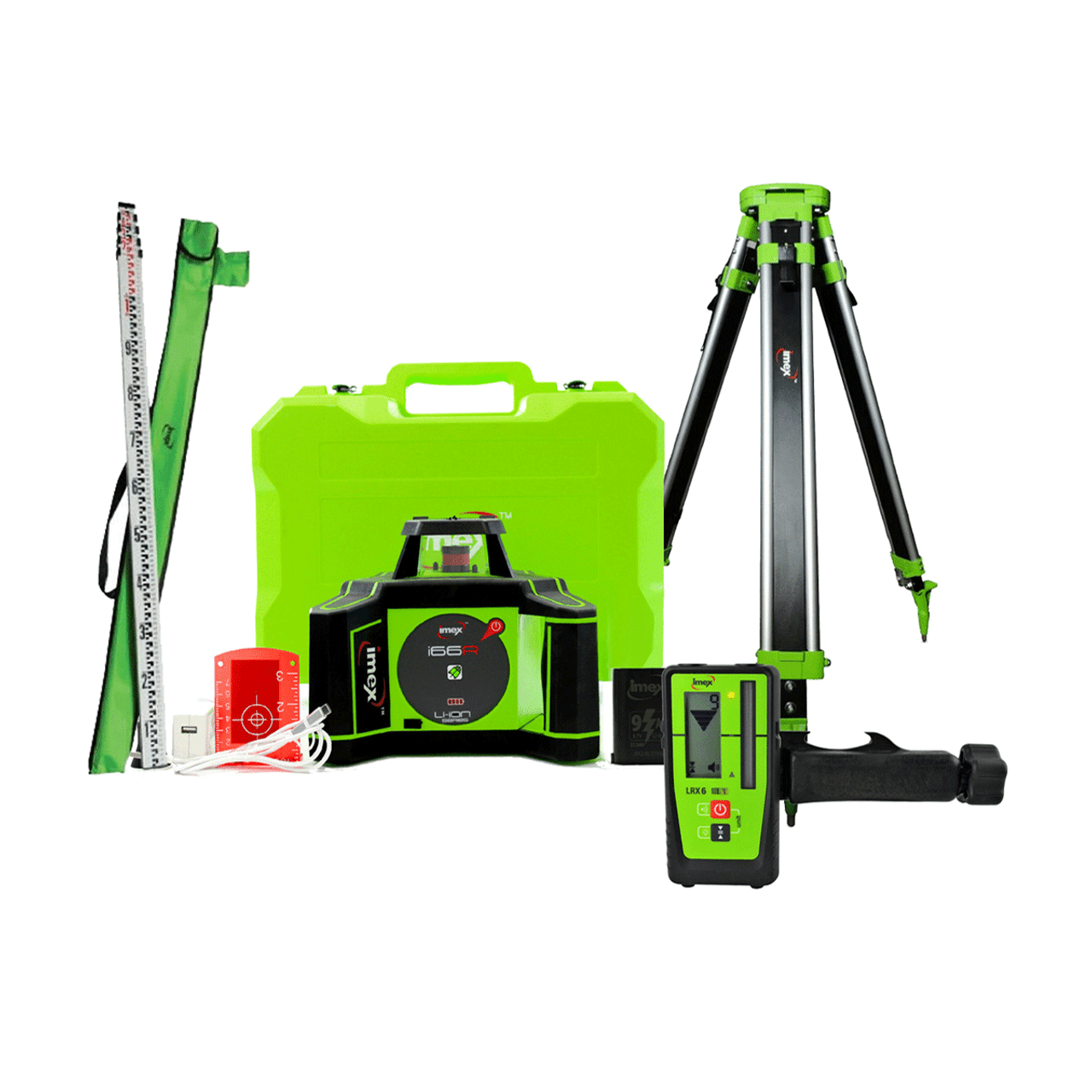
Imex i66R Rotating Red Laser Level Kit with 2x 9.0Ah Batteries, LRX6 Receiver, Staff & Tripod
The Imex i66R Rotating Laser Kit is an essential toolset for precision levelling and grading tasks, catering to landscapers, bricklayers, groundworkers, and builders. The i66R Rotating Red Laser Level, equipped with dual-grade slope mode, allows accurate recording of grades and slopes up to 8.8% in both directions. With robust construction, self-levelling capability, and a range of 400 m, this laser level ensures accuracy with a 2.0 mm precision at a 30-meter distance. The kit also includes the LRX6 Digital Detector for enhanced clarity, the IMEXLS5 5m Metric-E Levelling Staff, a flat-top aluminium tripod, a USB cable, two powerful 9.0Ah lithium batteries, a car charger, a target plate, and a hard carry case for comprehensive utility and convenient storage.

Stabila STBLAR350SET LAR 350 Rotation Laser L-Set
The Stabila LAR 350 Rotation Laser L-Set is a versatile motor-driven rotation laser designed for precise horizontal and vertical applications, along with manual inclination in two axes. Featuring innovative motion control via the included remote control, it offers functions like dual slope inclination, section mode for defined laser emission areas, and a manual alignment function. The integrated LED assist system ensures easy operation and workplace safety by indicating axis tilt points. With an IP65 dust and water-resistant rating and the STABILA PROTECTOR system, this laser provides maximum durability, even when dropped from a height up to 1.80m. The set includes the Stabila REC300 Receiver, RC-LAR 350 Remote Control, construction tripod, levelling rod, angle rail, laser goggles, target plate, carrying case, and batteries.
Laser Level FAQs
What is the difference between a rotary laser level and a line laser level?
Rotary Lasers: These project a rotating 360-degree laser beam around an entire room or job site. Because of their extended range, they are typically the go-to choice for large outdoor projects like levelling land, laying foundations, or pouring concrete.
Line Lasers: These project one or more fixed, static lines (such as a horizontal and vertical cross-line). They are generally used for smaller indoor tasks like aligning tiles, installing cabinets, or hanging shelves.
Green vs. Red Laser Levels: Is Green Really Worth the Extra Cost?
Green laser beams appear significantly brighter to the human eye compared to red beams. This makes them much easier to see over longer distances or in bright ambient lighting conditions. If you are working on a large commercial site or in highly lit areas, a green laser is worth the investment. Red lasers are more cost-effective and are perfectly suitable for standard indoor DIY projects.
How does a self-levelling laser work?
Self-levelling units use an internal pendulum—often suspended on magnets—to automatically find true level, as long as the device is placed on a relatively flat surface (usually within a tolerance of ±4 degrees). If the surface is too uneven and the unit goes out of its self-levelling range, the laser beam will rapidly flash or sound an alarm to warn you that your layout is no longer accurate.
Can I see the laser outside in bright sunlight?
In direct sunlight, even the brightest green laser beams will get washed out and become invisible to the naked eye. To use a laser level outdoors, you must use a compatible laser detector (or receiver). This device detects the pulse of the laser beam and guides you to the exact level line using LED indicators and audible beeps.
3D vs. 4D Laser Levels: What’s the Difference for Construction?
Multi-line lasers project continuous 360-degree lines across multiple planes simultaneously.
3D Lasers: Project 3 independent planes (one horizontal and two vertical), allowing you to establish a perfectly square layout in a room.
4D Lasers: Project 4 independent planes. The addition is usually a second horizontal line projected extremely close to the ground, which is specifically designed for floor screeding and precise floor tiling.
How do I calibrate and use a laser level?
To calibrate a laser level, place it on a stable surface and ensure it is level using built-in bubble vials or electronic levelling indicators. Adjust the unit until it shows level. For use, turn on the laser, align it with the desired reference points, and secure it in place. Ensure the laser beam aligns accurately with your intended layout. Always follow the manufacturer’s instructions for specific calibration and usage guidelines.
Do laser levels work on uneven surfaces?
Laser levels may face challenges on uneven surfaces as they rely on a stable base for accuracy. To mitigate this, use levelling mechanisms like adjustable feet or a tripod to create a stable foundation. Some self-levelling laser models automatically compensate for slight unevenness, but extreme variations may impact accuracy.
Need some help with your order? Our new help centre has a wide range of helpful articles and guides!
If you have any additional queries, please do not hesitate to contact us below: