
Hedge Trimmers Decoded: Types, Features and How to Choose One for Your Needs
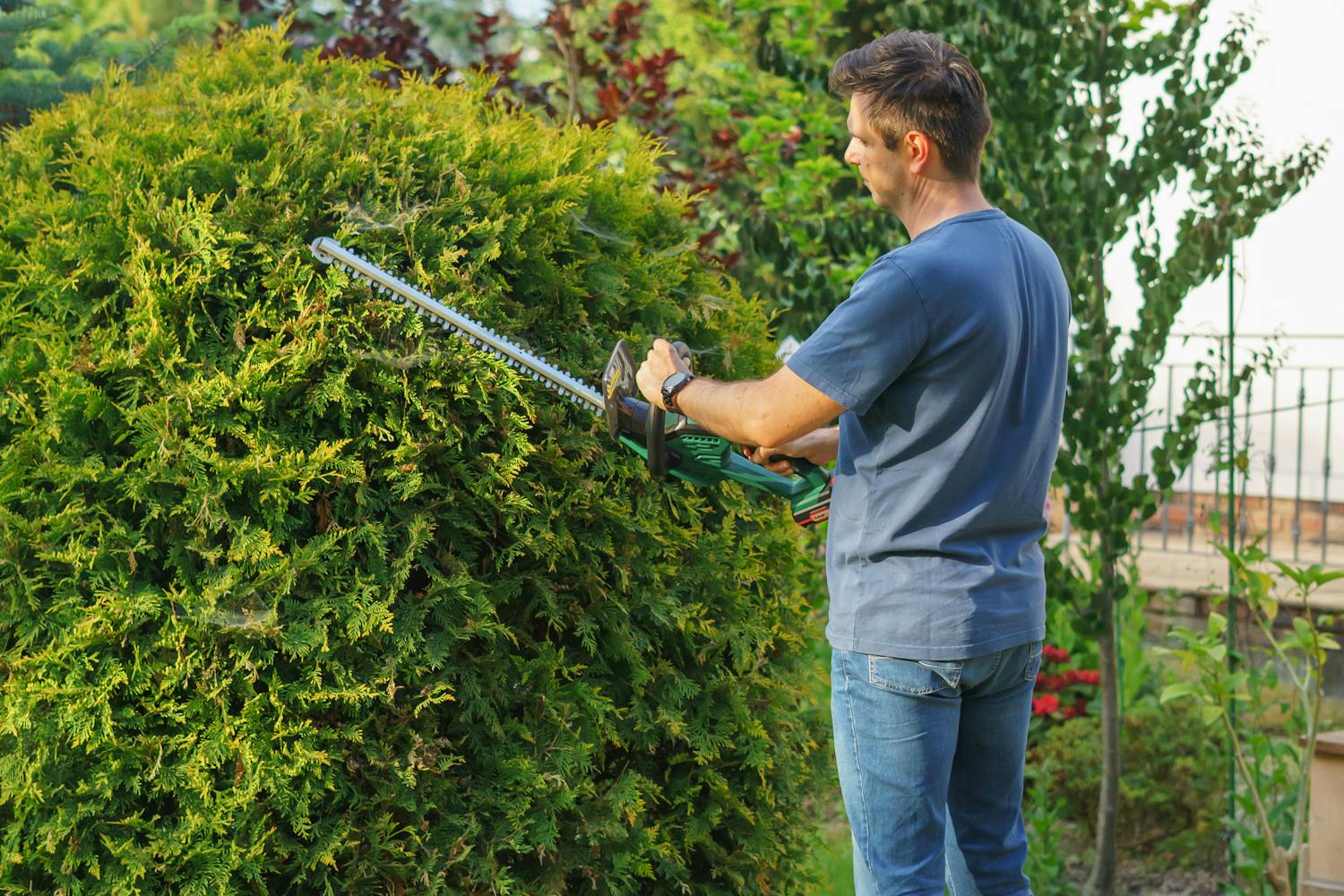
A hedge trimmer is a garden tool for cutting and shaping hedges, shrubs and leafs. Its moving blades give a straighter, cleaner cut than hand shears and make the job quicker. The right hedge trimmer depends on the size of your garden, hedge height, branch thickness, power access and how often you trim. Electric models suit smaller gardens, petrol hedge trimmers are better for larger hedges, and cordless models offer a practical balance of power, freedom and low maintenance.
This guide breaks down the main types of hedge trimmers, how they work, what features matter, and how to maintain one properly. You can also browse Toolden’s full hedge trimmer range here: Hedge Trimmers at Toolden.
Hedge Trimmers
Types of hedge trimmers
Hedge trimmers are usually split by power source and design. The power source tells you how the tool runs. The blade and body design tell you how it handles and the best use cases. The most popular are petrol, cordless and corded hedge trimmers.
By Power Source
Petrol Hedge Trimmers
Petrol hedge trimmers are built for tougher, longer jobs where cables or batteries are not practical. They suit large gardens, commercial work, rural properties and long runs of mature hedge. You can refill fuel and keep going instead of waiting for a battery to charge.
Their main advantage to Petrol models are stamina.; they are ideal for thick growth, heavy use and dense hedges such as laurel, conifer, hawthorn, privet and mixed boundary hedging. They are also useful when working far from the house or anywhere cable management would be awkward.
The trade-off is weight, noise, fumes and upkeep. Petrol hedge trimmers are often heavier than corded or cordless models, so they can be tiring at shoulder height or above. They also need fuel management, spark plug checks, filter cleaning, proper storage and occasional servicing. For light trimming, this may be more hassle than it is worth.
When choosing one, check the engine size, blade length, cutting capacity, weight, handle design and vibration control. A rotating rear handle helps with vertical hedge faces. Low vibration is useful for longer sessions. Also decide whether you need a standard handheld model, a long reach petrol pole hedge trimmer, or a multi-tool system with a hedge trimmer attachment.
What are the bestselling petrol hedge trimmers on Toolden.co.uk?
These Toolden-listed petrol options are strong places to start when comparing power, reach and value:
- Hyundai HYMT5200X-1 52cc 2-Stroke Petrol Garden Multi Tool – a versatile five-in-one petrol garden multi-tool that includes a hedge trimmer attachment, pole saw attachment, brush cutter and grass trimmer.
- Hyundai HYHT2600X 26cc Petrol Hedge Trimmer – a dedicated petrol hedge trimmer with a 60cm blade and low-vibration design for routine hedge maintenance.
- Hyundai HYPT5200X 52cc 2-Stroke Petrol Long Reach Pole Hedge Trimmer – a long reach petrol pole hedge trimmer for tall or awkward hedges.
- Draper 32319 500mm Petrol Hedge Trimmer 22.5cc 750W – a petrol hedge trimmer with a 500mm cutting blade and rotating rear handle.
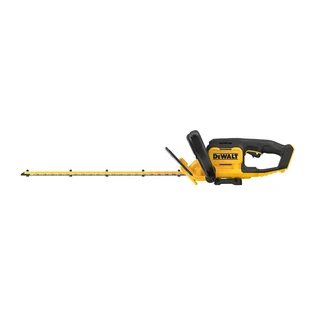
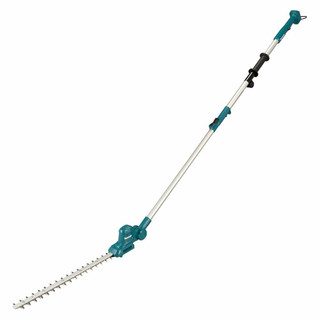
If you are comparing petrol with cordless hedge trimmers, some of the most searched cordless hedge trimmer brands in the UK include Stihl, Bosch, DeWalt, Makita and Milwaukee. Toolden-only verified brand routes include, DeWalt Hedge Trimmers, Makita Hedge Trimmers and Milwaukee Hedge Trimmers.
DeWalt Hedge Trimmers
Makita Hedge Trimmers
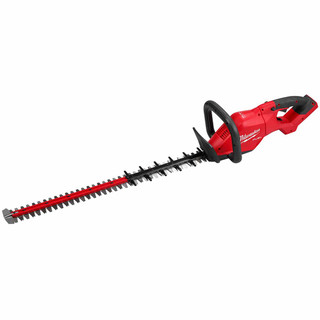
Milwaukee Hedge Trimmers
Cordless Hedge Trimmers
Cordless hedge trimmers give you the freedom of petrol without fuel, pull-starting, engine servicing or fumes. They are a practical choice for most UK gardens because they are easy to start, quieter, simple to store and quick to use for seasonal trimming.They are especially useful in gardens with obstacles such as raised beds, side gates, steps, sheds, trees or furniture. With no cable to drag around, you can move more freely and avoid the risk of cutting through an extension lead.
The main thing to check is the battery platform; many cordless hedge trimmers are sold body only, so the battery and charger are not included. This can save money if you already use the same system, such as Makita LXT, DeWalt XR or Milwaukee M18. If not, compare the full price of the tool, battery and charger.
Runtime depends on battery size, hedge density, cutting style and motor efficiency. Brushless motors usually run more efficiently and need less maintenance. An 18V cordless hedge trimmer is often enough for light trimming, while thicker or longer hedges need more attention to blade length, tooth gap, cutting capacity and battery amp-hours.
What are the bestselling cordless hedge trimmers on Toolden.co.uk?
Toolden’s hedge trimmer category highlights several cordless models among its best sellers and current range. Good cordless options to compare include:
- Makita DUH523Z 18V 52cm Cordless Hedge Trimmer (Body Only) – a popular 18V LXT option for regular hedge work.
- DeWalt DCM563PB-XJ 18V XR Cordless Hedge Trimmer (Body Only) – a DeWalt XR cordless hedge trimmer for users already invested in the platform.
- DeWalt DCMHT563N-XJ XR 18V Hedge Trimmer (Body Only) – a lightweight 18V model for domestic and trade garden maintenance.
- Makita DUH506Z 18V Li-ion LXT Brushless 50cm Hedge Trimmer (Body Only) – a brushless Makita model with a 500mm blade.
- Milwaukee M18FHET60G2-0 18V Fuel 60cm Hedge Trimmer (Body Only) – a higher performance cordless model for heavier trimming needs.
Electric Corded Hedge Trimmers
Corded hedge trimmers run from mains electricity and are usually the simplest, cheapest type of electric hedge trimmer. They suit small and medium gardens where the hedge is close to the house. Plug in, press the trigger and cut without worrying about fuel, battery charge or storage.
Their main benefit is steady power. A corded hedge trimmer keeps running while it is connected to a suitable supply, with no battery fade or refuelling. They are also often lighter than cordless or petrol models, which makes them easier to handle.
The main downside is the cable, it can limit your range, snag on plants or furniture, and can be cut if you are careless. Keep the cable behind you, use an outdoor-rated extension lead and RCD protection, and stop straight away if the cable is damaged. Corded models are not ideal for long boundaries, remote areas or gardens with lots of obstacles.
When buying one, check the motor wattage, blade length, tooth gap, cable length, blade brake, handle comfort and total weight. A compact corded model is usually enough for box, privet and small hedges. For taller hedges, a corded pole hedge trimmer can work, as long as the hedge is within safe cable reach.
What are the bestselling corded hedge trimmers on Toolden.co.uk?
Good Toolden-listed corded hedge trimmers and corded pole options to compare include:
- Hyundai HYHT550E 510mm Corded Electric Hedge Trimmer/Pruner 230V 550W – a budget-friendly corded option for small to medium gardens.
- Black & Decker BEHT201 Hedge Trimmer 45cm 420W 240V – a compact corded model for smaller hedge maintenance.
- Black & Decker BEHTS501 Hedge Trimmer 60cm 600W 240V – a longer 60cm corded model for medium hedges and larger cuts.
- Black & Decker PH5551 550W 240V Pole Hedge Trimmer – a corded pole hedge trimmer for extra height and reach.
- Hyundai HYP2HT550E 450mm 2-in-1 Convertible Corded Electric Pole Hedge Trimmer/Pruner 230V 550W – a convertible corded option for both standard and long-reach trimming.
By Blade and Design
Single-sided
A single-sided hedge trimmer has cutting teeth on one side of the blade. It is mainly used for straight hedge faces and long, flat runs where control and a neat finish matter.
The main benefit is steady, directional cutting. It can feel more predictable when sweeping along one line, which is why some professionals use single-sided blades for formal hedges.
The downside is flexibility. For most home gardens with corners, tops, mixed shapes and tight spaces, a single-sided blade can feel limiting. They are also less common in general DIY ranges. For everyday hedge trimming, a double-sided model is usually the easier choice.
Double-sided
A double-sided hedge trimmer has cutting teeth on both sides of the blade. It is the most common choice for general garden use because it cuts in both directions and is easier to move around shapes.
The main benefit is manoeuvrability; double-sided hedge trimmers allow you to sweep left and right, trim tops and sides, and work around curves with fewer wasted movements. For most homeowners, a double-sided corded or cordless hedge trimmer is the best all-round option.
Double-sided models suit ornamental shrubs, mixed hedges and regular garden tidying. Just take care with technique, as both sides cut. Keep hands, cables, clothing and loose branches clear of the blade at all times.
Extendable/Long-reach/Pole Hedge Trimmer
An extendable, long reach or pole hedge trimmer is made for tall hedges and hard-to-reach areas. It lets you cut from ground level using a longer shaft and angled head, instead of climbing a ladder with a standard trimmer.
It is useful for conifers, tall privet, high boundary hedges and wide hedges where the back edge is hard to reach. Many models have pivoting heads, so you can trim the top, face and sides from a safer position.
However, the longer the pole, the heavier the tool feels at the blade end. Even light models can feel tiring when fully extended. Before buying, check the reach, blade length, head angle, weight, harness options and whether the pole is fixed or telescopic. For high hedges, a proper long reach model is safer and neater than overreaching with a standard trimmer.
What are the best telescopic hedge trimmers on Toolden.co.uk?
For tall hedges and awkward reach, these Toolden-listed pole and telescopic hedge trimmers are worth comparing:
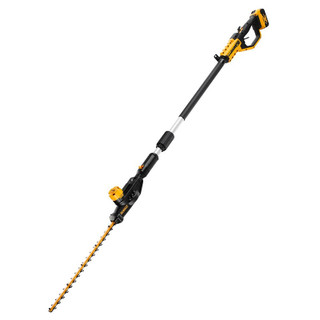
- DeWalt DCMPH566N-XJ XR 18V Pole Hedge Trimmer (Body Only) – an 18V pole hedge trimmer with an articulating head and up to 3.35m reach.
- Makita DUN461WZ 18V LXT 460mm Pole Hedge Trimmer (Body Only) – an 18V LXT pole model with telescopic shaft adjustment and an angle-adjustable head.
- Makita DUN500WZ 18V LXT Brushless Pole Hedge Trimmer (Body Only) – a brushless pole model with multiple speed settings and a foldable design for storage.
- Hyundai HYPT5200X 52cc 2-Stroke Petrol Long Reach Pole Hedge Trimmer – a petrol long reach option for taller hedges where cordless runtime may be limiting.
- Bosch 06008B3070 UniversalHedgePole 18 Cordless Telescopic Hedge Trimmer with 1 x 2.5Ah Battery & Charger – a cordless telescopic hedge trimmer supplied with battery and charger.
How do hedge trimmers work?
A hedge trimmer works like powered shears. Its blades move back and forth at speed, trapping stems between the teeth and cutting them as you move along the hedge.
The power source affects how the tool performs. Cordless models use a rechargeable battery. Corded models run from mains electricity. Petrol models use a small engine. This changes the runtime, weight, noise, maintenance and where the tool can be used.
Electric hedge trimmers use a motor. Higher-end cordless models often use brushless motors, which run efficiently and have fewer wearing parts. Petrol models use a combustion engine, giving strong cutting power but needing more upkeep.
Inside the tool, gears and linkages turn the motor or engine rotation into fast blade movement. The blade length affects how much hedge you cut in one pass. The tooth gap affects what size stems can fit between the teeth. Cutting capacity tells you what the tool is designed to cut safely.
Most modern hedge trimmers use two-hand controls, so both hands need to be on the tool for it to run. A hand guard helps protect your front hand, while a blade brake stops the blade quickly when the trigger is released.
Each type has its own trade-offs. Corded models are simple and steady but need careful cable control. Cordless models are easy to move around but need battery planning. Petrol models are powerful but need fuel and servicing. Pole hedge trimmers add reach, but also need more control and balance.
What else to look for when buying a hedge trimmer?
Blade lengths and tooth gap
Blade length affects how much hedge you cut in one pass. Shorter blades, around 45cm to 50cm, are easier to control and suit small hedges, shaping and tight spaces. Medium blades, around 50cm to 60cm, suit most home gardens. Longer blades, around 60cm to 75cm, are better for wide, straight hedges, but they feel heavier and need steadier handling.
Tooth gap is the space between the blade teeth. A smaller gap suits fine growth and light trimming. A wider gap lets thicker stems into the blade, but it does not turn the tool into a chainsaw. Always check the stated cutting capacity. For thicker branches, use secateurs, loppers, a pruning saw or a suitable chainsaw instead.
Cutting capacity
Cutting capacity is the maximum branch thickness the hedge trimmer is made to cut. It matters more than general claims about power. Light domestic models suit soft green growth and smaller stems, while stronger cordless, petrol and higher-wattage corded models can handle thicker material.
Do not force the tool through branches beyond its rated capacity. This can jam the blade, strain the motor, damage the gearbox, drain the battery faster or make the tool twist unexpectedly. If it hesitates, chatters, stalls or bends the branch instead of cutting cleanly, stop and use secateurs, loppers, a pruning saw or a chainsaw.
Weight and Ergonomics
Weight matters more than many buyers expect. A hedge trimmer may feel fine for a minute, then feel heavy after twenty minutes at shoulder height. Think about how you will actually use it: trimming tops, cutting vertical faces, reaching across wide hedges and carrying it around the garden. It is important to look for good balance, comfortable handles, a solid front grip, low vibration and easy controls. A rotating rear handle helps when switching between horizontal and vertical cuts.
For cordless models, check the weight with the battery fitted, not just the bare tool. For pole hedge trimmers, remember that extra reach adds leverage, so the head can feel heavier than the stated weight suggests.
How to store, service and maintain your hedge trimmer to extend its life?
- Clean the blades after every use. Remove leaves, sap and resin build-up before it hardens. A dirty blade cuts poorly and increases strain on the motor or engine.
- Disconnect the power first. Remove the battery, unplug the cable or switch off the petrol engine and disconnect the spark plug before touching the blade area.
- Lubricate the blades regularly. Use a suitable hedge trimmer blade lubricant, such as DeWalt DT20666 Hedge Trimmer Blade Lubricant 300ml, or the lubricant recommended by your tool manufacturer.
- Check for loose fasteners. Vibration can loosen screws, guards and handles over time. Tighten only as recommended in the manual.
- Inspect the blade for damage. Bent, cracked or missing teeth reduce performance and can be unsafe. Replace damaged parts before using the tool again.
- Sharpen when performance drops. If stems are being torn or bruised rather than cleanly sliced, the blades may need sharpening.
- Use the blade cover. Fit the sheath before carrying or storing the hedge trimmer. This protects both the blade and anyone handling it.
- Store in a dry place. Moisture encourages corrosion and can damage electrical parts. Do not leave the tool outside or on a damp shed floor.
- Look after batteries. Store cordless tool batteries in a cool, dry place. Avoid leaving them fully flat for long periods and keep them away from extreme heat or cold.
- Manage petrol correctly. For petrol hedge trimmers, use the correct fuel mix, empty or stabilise fuel for long storage periods, and follow the manufacturer’s instructions for air filter and spark plug maintenance.
- Do not ignore strange noises. Grinding, rattling, smoking, burning smells or repeated jamming are signs to stop and inspect the machine.
- Transport it safely. Carry the hedge trimmer with the blade pointing away from your body, with the blade cover fitted whenever possible.
FAQs
What is a brushless hedge trimmer?
A brushless hedge trimmer uses a brushless electric motor instead of a brushed one. It is usually more efficient, creates less internal friction and needs less motor maintenance. On cordless models, this can mean better runtime, strong power delivery and longer motor life.
Can a hedge trimmer cut branches?
Yes, but only within its rated cutting capacity. Hedge trimmers are made for hedge growth, twigs and smaller stems, not thick branches. For thicker wood, use loppers, secateurs, a pruning saw or a suitable chainsaw.
How to clean hedge trimmer blades?
Disconnect the power first. Brush off debris, wipe the blades clean and use a suitable resin remover for sticky sap. Dry the blade, then apply blade lubricant before storage. Never clean blades while the tool is connected to power.
Can you sharpen hedge trimmers?
Yes. Hedge trimmer blades can often be sharpened with a file or by a professional service. Keep the original cutting angle. If the blade is bent, cracked or badly worn, replacement is safer.
What is the longest reach hedge trimmer?
The longest reach depends on the model and whether the manufacturer quotes tool length, shaft length or total working reach with the user holding it. Always compare actual reach, weight and head angle before buying.
Can a hedge trimmer cut brambles?
Yes, but only lighter bramble growth. Thick or tangled brambles can snag and jam the blade. For heavy brambles, use loppers, secateurs or a brush cutter. Wear gloves, eye protection and long sleeves.
Can a hedge trimmer cut grass and how long can it be?
A hedge trimmer can skim small patches of soft grass or ornamental grass in a pinch, but it is not designed as a grass-cutting tool. Long grass tends to fold, tangle and clog the blade. For lawn edges, weeds and long grass, use a grass trimmer or strimmer instead.
Can you cut bamboo with a hedge trimmer?
You can trim fine leaves and small new shoots, but mature bamboo canes are usually too hard. Use secateurs, loppers or a saw for canes.
Can you cut ivy with a hedge trimmer?
Yes. Hedge trimmers work well on leafy ivy. Check first for hidden wires, pipes, nails, masonry, trellis and nesting birds.
Can you cut laurel with a hedge trimmer?
Yes. Hedge trimmers are often used on laurel. Use sharp, clean blades to avoid ragged leaves. Cut thick stems separately with loppers.
Can you trim azaleas with hedge trimmers?
You can, but hand pruning is usually better. A hedge trimmer is only suitable if the azalea is being kept as a formal hedge or mass planting.
Can you trim rose bushes with a hedge trimmer?
Only for light shaping on large shrub roses or rose hedges. For proper pruning, use clean secateurs.
Can you trim rhododendrons with a hedge trimmer?
Yes, if shaped as a hedge, but selective pruning is usually better. Hedge trimming can remove flower buds and leave a blunt finish.
Can you use a hedge trimmer on holly bushes?
Yes. Holly can be trimmed with a hedge trimmer, but it is tough and prickly. Use sharp blades, gloves and eye protection. Cut thick stems with loppers.
Can a hedge trimmer cut your finger off?
Yes. Hedge trimmers can cause severe injury. Keep both hands on the handles, never clear jams while connected to power, and do not bypass safety switches.
Can I use a hedge trimmer when or after raining?
Avoid using a hedge trimmer in rain or on very wet hedges. Water increases electrical risk, affects grip and makes cutting less safe. Wait until conditions are dry.
Can I use a chainsaw oil on a hedge trimmer?
Use the lubricant recommended in the manual. Chainsaw bar oil is not always suitable. Dedicated hedge trimmer spray or light machine oil is often better, if approved.
Can you repair a cut cable on a hedge trimmer?
Do not tape it and carry on. Unplug the tool immediately and have the cable properly repaired or replaced by a competent professional.
Can you replace hedge trimmer blades?
Often, yes, but it depends on the model. Check the model number, spare parts availability and warranty terms before buying replacement blades.
Where can I get my hedge trimmer sharpened?
Use a garden machinery service centre, tool repair shop or sharpening service. DIY sharpening is possible, but badly damaged blades are best handled professionally.
Will an 18V battery run a 20V cordless hedge trimmer?
Only if the manufacturer says the battery is compatible. Voltage labels can be misleading, but battery shape, electronics and charger systems still need to match. Never force a battery into a tool.
Need some help with your order? Our new help centre has a wide range of helpful articles and guides!
If you have any additional queries, please do not hesitate to contact us below: