
18V XR vs 54V XR FLEXVOLT: Which DeWalt Recip Saw Do You Actually Need?
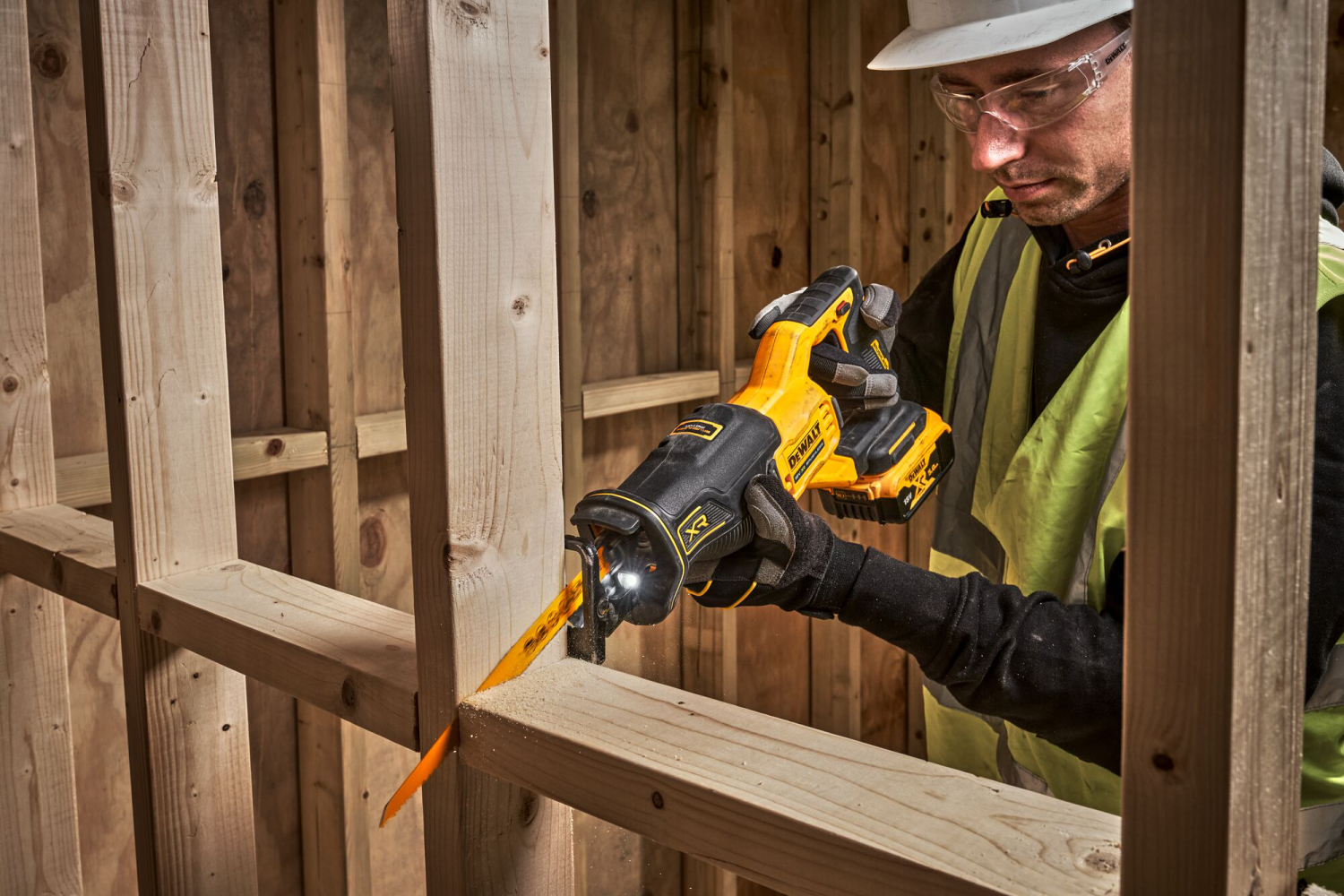
Across the UK, cordless tools have become the standard on site. Cordless offers no trailing leads to work around, less need for transformers, faster setup, and far more freedom when moving between rooms, floors, roofs, gardens, vans, and scaffolding.
The DeWalt reciprocating saw has moved the same way. Not long ago, plenty of trades would still keep a corded recip saw for the heavier jobs. Now, many users prefer the convenience of running one from the same battery system as their drill, impact driver, grinder, and other everyday tools.
The bigger decision is not really whether to go cordless. It is which battery platform makes the most sense. For most builders, plumbers, electricians, and capable DIY users, an 18V reciprocating saw will handle the majority of day-to-day cutting work without issue. For demolition teams, timber framers, roofers, or anyone regularly cutting larger sections and tougher materials, the 54V XR FlexVolt range is where the extra power starts to justify itself.
This guide compares the 18V XR and 54V XR FlexVolt options, using the DeWalt DCS382N-XJ 18V XR Brushless Reciprocating Saw and the DeWalt DCS389N-XJ 54V XR FlexVolt Reciprocating Saw as the main examples.
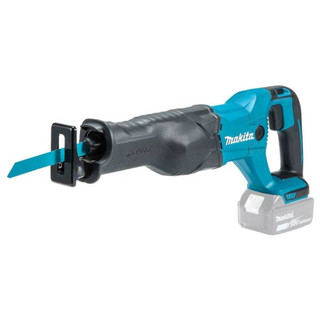
Cordless Reciprocating Saws
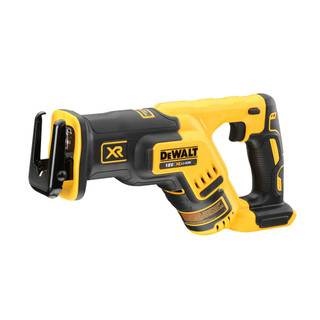
DeWalt Reciprocating Saws
First, What Does a Recip Saw Actually Need to Do?
A reciprocating saw is not built for neat, polished cuts. It is the tool you reach for when something needs removing, shortening, cutting free, or dealt with in an awkward spot.
Old pipework, nail-embedded timber, joists, window frames, plastic waste pipe, metal conduit, pallets, rough openings, and tight spaces are all typical recip saw jobs. It comes into its own where a circular saw is too bulky, a jigsaw is too delicate, and a handsaw would take too long.
That is where voltage becomes important. This is not a choice between two tidy workshop machines. It is about how much power, runtime, and weight you want in your hands when the cut is rough, dusty, and not always predictable.
The 18V XR Lineup: Best for Most Trades and General Demolition
The DeWalt DCS382N-XJ 18V XR Brushless Reciprocating Saw is the sensible choice for a lot of UK tradespeople. IThe DCS382N-XJ runs on DeWalt’s 18V XR battery platform, which makes it a practical choice for anyone already using the same system. For builders, plumbers, electricians, maintenance teams, and serious DIY users, that is a bigger advantage than it might first seem. A bare unit is only good value if you already have the right batteries and charger, and the 18V XR range is often the most straightforward place to build from.
Where this saw really makes sense is in day-to-day handling. Compared with the 54V FlexVolt model, it is lighter, easier to control overhead, and less tiring when working in tight or awkward spaces. That makes it well suited to second fix rip-outs, bathroom refurbishments, kitchen strip-outs, garden work, light framing, and general site alterations.
It is also the more affordable route for most users. A DeWalt 18V reciprocating saw gives you proper cordless performance without the added cost and weight of 54V tools and larger FlexVolt batteries. For many people looking at a DeWalt reciprocating saw 18V, that is the appeal: plenty of power for regular work, without carrying more tool than the job actually needs.
Why choose 18V XR?
- Lighter weight: Easier to use one-handed where appropriate, overhead, or in tight voids.
- Lower entry cost: Better suited to buyers who already own DeWalt 18V XR batteries.
- Wide battery compatibility: A practical option for users already running DeWalt drills, impacts, multi-tools and grinders.
- Good all-round performance: More than enough for timber, PVC, pipework, conduit and standard demolition work with the correct blade.
For plumbers, the 18V model is a good match for cutting plastic waste pipe, copper, threaded rod, and the odd bit of timber in awkward spaces. Electricians will find it useful for tray, conduit, trunking, and general site alterations. For builders, it has enough power for rip-outs, studwork, old frames, and everyday demolition work without feeling oversized.
Put simply, 18V XR is the sensible choice when a reciprocating saw is part of your regular kit, but not something you are pushing through heavy materials all day.
The 54V XR FlexVolt Lineup: Corded-Level Power for Heavy Work
The DeWalt DCS389N-XJ 54V XR FlexVolt Reciprocating Saw is a different proposition. This is the saw for users who want cordless freedom without giving up too much of the force and pace they would expect from a corded machine. If you are regularly cutting heavy timber, steel sections, roofing materials, demolition waste, or mixed site material, the extra power soon becomes useful.
It is the model to consider when speed and staying power matter more than keeping the tool as light as possible. A 54V FlexVolt reciprocating saw can be more than you need for a few cuts through plastic pipe, but it comes into its own when the blade is deep in thicker material and the motor needs to keep pulling rather than slowing down.
For demolition contractors, roofers, and timber framers, the appeal is straightforward. You get a more powerful cordless saw for tougher, dirtier, longer cutting sessions. On roofs, outbuildings, remote plots, and sites where cables get in the way, that can make a noticeable difference to how quickly the work gets done.
Why choose 54V XR FlexVolt?
- Higher cutting power: Better suited to demanding cuts and dense materials.
- Faster progress: Useful when productivity matters and you are making repeated cuts.
- Heavy-duty focus: A stronger fit for structural timber, steel sections, demolition waste and rough site work.
- Cordless freedom: Useful where leads, transformers and power access slow the job down.
For buyers who want a full kit rather than a bare unit, Toolden also lists the DeWalt DCS389T2-GB 54V XR FlexVolt Reciprocating Saw with 2x 6.0Ah Batteries and the DeWalt DCS389X2-GB 54V XR FlexVolt Brushless Reciprocating Saw with 2x 9.0Ah Batteries.
The Battery Point: FlexVolt Backward Compatibility
One of the main reasons DeWalt FlexVolt makes sense as an upgrade route is the battery compatibility. FlexVolt batteries are designed for both 18V and 54V tools, so they can run the higher-powered XR FlexVolt range while still working with standard 18V XR kit.
That gives users a practical way to move into heavier cordless tools without writing off the batteries, chargers, and tools they already own.
For example, a user with a fleet of 18V XR tools can look at the DeWalt FlexVolt batteries and chargers range and build upwards. The same FlexVolt battery investment can support a future 54V saw while still giving extra runtime on existing 18V tools.
This matters for anyone planning long term. You might buy an 18V recip saw now because it suits today’s work, then add a 54V FlexVolt saw later when heavier demolition becomes more regular.
18V XR vs 54V FlexVolt: Which One Should You Buy?
Buy the 18V XR option if your day-to-day work is varied and you value a lighter tool. The DCS382N-XJ makes sense if you are cutting timber, plastics, pipe, metal sections and general demolition materials, but not spending every day forcing the saw through the hardest stock on site.
Buy the 54V XR FlexVolt option if your work is consistently heavy. The DCS389N-XJ is the better fit for tougher demolition, roof work, framing, repeated cuts in heavy timber and demanding site clearance. For masonry-related demolition, use the correct blade and accept that a recip saw is for rough removal work, not neat masonry cutting.
The blade is still critical. A powerful saw with the wrong blade will cut badly. A standard 18V tool with the right blade will often outperform a 54V tool fitted with the wrong one. Before blaming the voltage, check the blade type, tooth count, length and material rating. Toolden also stocks recip saw blades for different cutting jobs.
Quick Decision Checklist
- Choose 18V XR if you want a lighter, more affordable saw for everyday trade use.
- Choose 18V XR if you already own DeWalt 18V XR batteries and chargers.
- Choose 18V XR for plumbers, electricians, general builders, maintenance work and standard demolition.
- Choose 54V FlexVolt if cutting speed and raw power are more important than weight.
- Choose 54V FlexVolt if you regularly cut thick timber, steel sections, roof materials or mixed demolition waste.
- Choose 54V FlexVolt if you are a heavy demolition contractor, roofer, timber framer or high-output site user.
- Check your budget because 54V tools and FlexVolt batteries cost more, but they can save time on heavier work.
FAQ
Is a dewalt 18v sawzall the same as a DeWalt reciprocating saw?
Most UK buyers using the phrase dewalt 18v sawzall are looking for an 18V DeWalt reciprocating saw. On Toolden, these tools are listed as DeWalt reciprocating saws or cordless reciprocating saws.
Which recip saw Dewalt option is best for most trades?
For most mixed trade work, the 18V XR option is the more practical starting point. A recip saw Dewalt buyer who needs lighter weight, lower cost and battery compatibility should look closely at the DCS382N-XJ.
What are reciprocating saw saws used for?
The phrase reciprocating saw saws is a clumsy search term, but the tool itself is straightforward. It is used for rough cutting, demolition, pipework, timber, plastics and metal, depending on the blade fitted.
Is a receptacle saw the same thing?
Some people type receptacle saw when they mean reciprocating saw. The correct tool category to browse is DeWalt reciprocating saws.
Final Verdict
For the majority of UK tradespeople and serious DIYers, 18V XR is enough. It is lighter, more affordable and easier to fit into an existing DeWalt battery setup. The DeWalt DCS382N-XJ 18V XR Brushless Reciprocating Saw is the better choice for general building, plumbing, electrical work, maintenance and normal demolition.
For heavier daily workloads, 54V XR FlexVolt is the more serious option. The DeWalt DCS389N-XJ 54V XR FlexVolt Reciprocating Saw is built for users who need more cutting speed, more muscle and cordless power that feels closer to corded performance.
The honest answer is simple: choose 18V if the saw is part of your kit. Choose 54V if the saw is central to your work.
Need some help with your order? Our new help centre has a wide range of helpful articles and guides!
If you have any additional queries, please do not hesitate to contact us below: