
From Site to Garden: Why Your 18V DeWalt Recip Saw is the Ultimate Pruning Hack
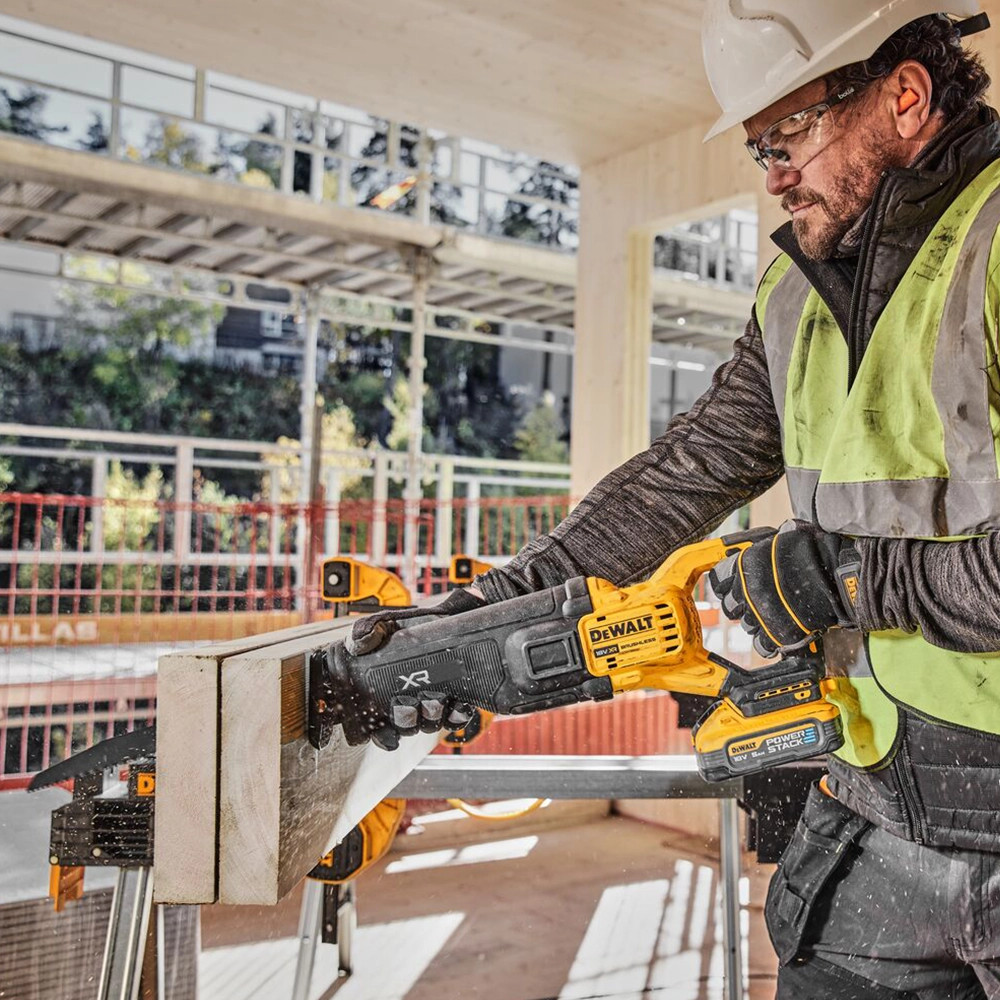
A dewalt reciprocating saw usually gets thought of as a site tool. It is the saw you reach for when plasterboard needs opening up, old pipework is coming out, or a bit of timber is too awkward for a circular saw.
With the right blade fitted, the same saw can earn its keep in the garden at the weekend. Overgrown shrubs, small tree limbs, thick hedge stems and dead branches, all of these are realistic jobs for a reciprocating saw. It will not replace a chainsaw for proper felling or heavy timber work, and it shouldn’t be treated like one. Used sensibly, though, it can save you buying another dedicated garden machine for the few pruning jobs that appear every spring and autumn.
This is where the 18V XR platform makes sense. A body-only saw such as the DeWalt DCS369N-XJ 18V XR Brushless Sub Compact Reciprocating Saw or the DeWalt DCS367N-XJ 18V XR Brushless Reciprocating Saw can share batteries with the kit many tradespeople and DIY users already own.
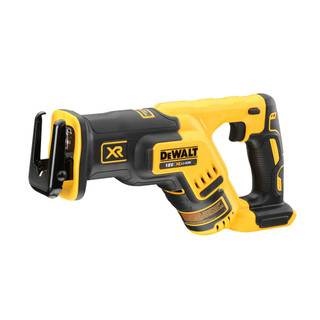
DeWalt Reciprocating Saws
First, forget the demolition blade
The most common mistake is assuming that any blade will do. A metal blade, or a fine general-purpose blade, will chatter through green wood, clog quickly, heat up, and make the job feel harder than it needs to be. Wet timber is fibrous. It moves. It grips the blade. It needs a coarse, aggressive tooth pattern that clears material quickly rather than polishing its way through the cut.
For branch work, look for a low TPI blade. In normal terms, that means fewer teeth per inch. A 6 TPI blade is a practical place to start for rough garden pruning, especially when dealing with thick, damp stems rather than neat joinery timber.
Toolden stocks DeWalt reciprocating saw blades in a range of lengths and pack sizes, including 228 mm and 305 mm options. The DeWalt DT2307L 2X Life Wood & Nail Reciprocating Blades 228 mm x 6 TPI are listed for wood applications with a 228 mm length and 6 teeth per inch, while the DeWalt DT2349-QZ Reciprocating Saw Blades 228 mm x 6 TPI are listed with aggressive tooth geometry, anti-stick coating, and a 6 TPI specification.
For thicker stems where extra blade length is useful, the DeWalt DT2350-QZ 305 mm x 6 TPI Reciprocating Saw Blades give you more reach through bulky material. Toolden lists them for fast cuts in wood with nails and tough plastics, with bi-metal construction and a universal 1/2 inch shank.
A quick warning, because this is where people get caught out: a longer blade is not automatically better. If the blade is much longer than the branch needs, it can flex, whip, and snag. Choose enough length to clear the branch comfortably, with a little extra travel, but do not fit the longest blade in the box just because it looks more serious.
Why a recip saw works well in the garden
A chainsaw is brilliant at chainsaw jobs. Logs, felling, heavy limbs, repeated cutting through serious timber, that is its territory. But plenty of garden work is not that. It is one branch overhanging the path. A woody shrub that has got too leggy. A dead limb sitting awkwardly behind a fence. A thick stem where secateurs will not touch it and a hand saw would be slow.
That is where a DeWalt reciprocating saw can be useful. The category includes 18V and 54V models, with Toolden listing body-only options as well as kits.
The action is simple. The blade moves back and forth, rather than spinning. That gives you decent control in tight spaces, and there is no chain oil, chain tensioning, or two-stroke petrol to think about. For the occasional garden clear-up, that simplicity matters.
There is also a storage benefit. A dewalt 18v reciprocating saw takes up less space than another garden machine, and the blades can sit in the same organiser as your other accessories. For someone already using DeWalt 18V tools, the saving is not just the cost of a chainsaw. It is avoiding another battery system, another charger, and another tool that only comes out twice a year.
The safety bit people skip
A recip saw looks less intimidating than a chainsaw, which is exactly why it can catch people out.
Do not use it one-handed on a ladder. That is the blunt version. The longer version is that a reciprocating saw can bite, kick, or shake if the blade binds in the branch. If you are stretched sideways on a ladder, one hand on the saw and one hand pretending to steady the branch, you have no proper control left.
Use both hands on the tool where the saw design allows it. Work from the ground where possible. If the branch is above a safe standing height, rethink the job rather than reaching further. A proper working platform is better than a ladder for most pruning work because it gives you a more stable stance and lets you keep your shoulders square to the cut.
This is also where sub-compact tools make sense. The DCS369N-XJ is a compact saw designed for better access to hard-to-reach cuts, with a brushless motor, twist-action keyless blade clamp, LED light, and a 1.43 kg weight.
That lower weight helps when clearing branches around shoulder height or working inside a dense shrub. It does not make unsafe overhead cutting sensible. It just makes controlled cutting less tiring when the job is already within safe reach.
How to prune with a DeWalt 18V reciprocating saw
Start by looking at the branch, not the tool. That sounds obvious, but it changes the cut. A branch is rarely just a round piece of wood sitting still. It may be under tension. It may drop suddenly. It may split as the cut opens. It may trap the blade as the weight of the branch closes the kerf.
1. Clear the area first
Move plant pots, furniture, hosepipes, children’s toys, and anything else from the drop zone. Check where the branch will fall. Do not cut above glass, cars, fences, pets, or anyone else in the garden. If the branch is heavy enough to damage something when it drops, it is heavy enough to deserve more planning.
2. Fit the right blade before you get into position
Remove the battery before changing blades. Fit a coarse wood blade, such as a 6 TPI blade from the DeWalt reciprocating saw blades range. Make sure the blade is locked fully into the clamp. Tug it lightly before refitting the battery.
For wet timber, do not choose a fine metal blade. It may cut eventually, but it will be slow, rough in the wrong way, and more likely to bind. A proper coarse wood blade clears chips better and lets the motor work rather than fight.
3. Take the weight off long limbs first
If you are dealing with a long branch, do not make your final cut tight against the trunk straight away. Cut the branch back in sections. Remove the outer weight first, then work inwards. This gives you more control and reduces the chance of bark tearing down the trunk when the branch finally lets go.
This is one of the biggest differences between demolition cutting and pruning. On site, you often just want the material gone. In the garden, you want the plant to recover cleanly.
4. Use a small undercut to stop bark tearing
For thicker branches, make a shallow cut on the underside first. You are not trying to cut through from below. You are just breaking the bark and fibres so they do not peel away when the branch drops.
After that, move to the top of the branch and cut down slightly further out from the trunk or main stem. The branch should break away without ripping a long strip of bark behind it. Once the weight is gone, you can make the final tidy cut near the branch collar.
5. Keep the shoe against the branch
Do not hover the saw in mid-air. Rest the shoe of the recip saw against the branch and let it act as a brace. This reduces vibration and gives the blade a cleaner bite. If the saw is bouncing, stop and reset your position rather than pushing harder.
Use the trigger gently at the start of the cut. Let the blade find a groove. Once it is tracking properly, increase speed. Forcing the saw usually gives a worse cut and makes binding more likely.
6. Watch for trapped blades
If the cut begins to close on the blade, stop. Do not yank the saw sideways. That can bend the blade, damage the clamp, or throw you off balance. Take the battery out, support or lift the branch if it is safe, then free the blade carefully.
On awkward branches, make a relief cut from the side that is opening, not the side that is closing. Green timber moves as fibres release. It is not like cutting a straight length of dry CLS on a pair of trestles.
Which DeWalt recip saw makes most sense?
For light pruning, the sub-compact DCS369N-XJ is the tidy choice. It is lighter, easier to handle inside shrubs, and less tiring when you are working around shoulder height. Its listed 90 mm wood capacity is enough for many garden pruning jobs, although that does not mean every 90 mm branch is automatically a good DIY cut. Location, weight, and fall direction matter more than the number on a spec sheet.
For heavier site use as well as garden jobs, the DCS367N-XJ is the more capable all-rounder. Toolden lists a 300 mm max cutting capacity in wood, a 4-position blade clamp, 0 to 2,900 spm stroke rate, and 2.3 kg tool weight without battery.
The older-style DeWalt DCS380N-XJ 18V XR Cordless Reciprocating Saw is another option in the Toolden range. It is listed with a 28.6 mm stroke length, up to 2,950 strokes per minute, and a 4-position blade clamp.
People search for these tools in all sorts of ways. Recip saw dewalt, dewalt 18v sawzall, dewalt reciprocating saw 18v, reciprocating saw saws, even receptacle saw. The actual tool category you want is a reciprocating saw, or recip saw for short. Sawzall is commonly used as a general term, but it is not the DeWalt product name.
The battery advantage
This is the strongest argument for using the tool you already own.
If your van, garage, or shed already has DeWalt 18V XR batteries, a body-only saw keeps the cost down. You are not paying for another charger. You are not managing another platform. You are not buying a garden-only machine that might sit unused for months.
A battery such as the DeWalt DCB184-XJ 18V 5.0Ah XR Lithium-Ion Battery is compatible with DeWalt XR Li-Ion 18V tools, with a 5.0Ah capacity, LED state of charge indicator, and protection against overheat, overload, and deep discharge conditions.
That compatibility is the point. The same battery that runs your drill or impact driver during the week can power a dewalt 18v reciprocating saw for pruning on Saturday morning. For occasional landscaping work, that is often the smarter buy.
When not to use a recip saw for pruning
There are limits. A recip saw is not the right answer for every branch.
Do not use it for felling trees. Do not use it on branches near overhead cables. Do not use it where the branch is heavy enough to swing, split, or fall unpredictably. Do not use it one-handed from a ladder. Do not cut above shoulder height unless you have a safe, stable working position and full control of the saw.
Also, do not expect a demolition-style blade to leave a perfect horticultural finish. If you are pruning a fruit tree, ornamental tree, or anything where the health and final appearance of the cut really matters, make the rough reduction with the recip saw, then tidy the final cut carefully.
Final thoughts
A DeWalt reciprocating saw is not just for ripping out drywall, cutting pipe, or chewing through old timber. With a coarse wood blade and a bit of patience, it becomes a very useful weekend garden tool.
The sensible setup is simple: choose an 18V XR saw that suits the work, fit an aggressive low TPI blade for wet timber, keep both hands on the tool, and cut branches in sections instead of trying to blast through everything in one go.
For many homeowners and trade users, that is enough to deal with the awkward pruning jobs that sit between secateurs and chainsaws. And if you already own DeWalt 18V XR batteries, it is a neat way to get more value from the kit you have already paid for.
Browse Toolden’s DeWalt reciprocating saws and DeWalt reciprocating saw blades to put together a setup that works for both site jobs and garden clear-ups.
FAQ
Can you use a DeWalt reciprocating saw for pruning?
Yes. With the right blade, a DeWalt 18V reciprocating saw can cut shrubs, thick stems, small branches, and dead wood. It is useful for jobs that are too much for secateurs but not serious enough for a chainsaw.
What blade should I use for pruning with a recip saw?
Use a coarse wood blade with a low TPI. A 6 TPI blade is a practical choice for rough pruning and wet timber because it clears material quickly and is less likely to clog.
Can I use a metal blade for cutting branches?
No. A fine metal blade will usually cut slowly, clog, chatter, and overheat in green wood. Use a proper wood pruning or coarse wood blade instead.
Is a reciprocating saw safer than a chainsaw?
It can be simpler to control for small pruning jobs, but it is still a powered saw. Use both hands, keep the shoe against the branch, and never use it one-handed from a ladder.
Can a DeWalt recip saw replace a chainsaw?
No. A recip saw is useful for light pruning, awkward branches, shrubs, and small limbs. It is not suitable for felling trees, heavy timber, or large branches that may fall unpredictably.
Which DeWalt reciprocating saw is best for pruning?
For light pruning, a compact model such as the DeWalt DCS369N-XJ is easier to handle in shrubs and tighter spaces. For heavier site use as well as garden work, the DCS367N-XJ offers more capability.
What size branches can a DeWalt 18V recip saw cut?
It depends on the saw, blade length, branch position, and how safely the branch can fall. Do not judge the job by diameter alone. If the branch is heavy, overhead, or under tension, use a safer method.
How do you stop a recip saw blade getting stuck in a branch?
Cut long branches in sections and remove the outer weight first. Keep the saw shoe pressed against the branch, avoid forcing the cut, and stop if the branch starts closing on the blade.
Should I cut branches from the top or underneath?
For thicker branches, make a shallow undercut first to reduce bark tearing. Then cut down from the top slightly further out. Once the weight is removed, make the final tidy cut near the branch collar.
Can I use my DeWalt 18V batteries for a reciprocating saw?
Yes, DeWalt 18V XR reciprocating saws are designed to work with compatible DeWalt 18V XR batteries. This makes a body-only saw a useful option if you already own DeWalt cordless tools.
When should I not use a recip saw for pruning?
Do not use it for felling, large unstable branches, branches near overhead cables, or overhead cutting from a ladder. If you cannot keep a stable stance and full control of the saw, do not make the cut.
Do I need to remove the battery before changing blades?
Yes. Always remove the battery before fitting or changing a reciprocating saw blade. Check that the blade is locked into the clamp before refitting the battery.
Need some help with your order? Our new help centre has a wide range of helpful articles and guides!
If you have any additional queries, please do not hesitate to contact us below: