
Which Makita 18V Battery Should You Buy? (Ah Ratings Explained)
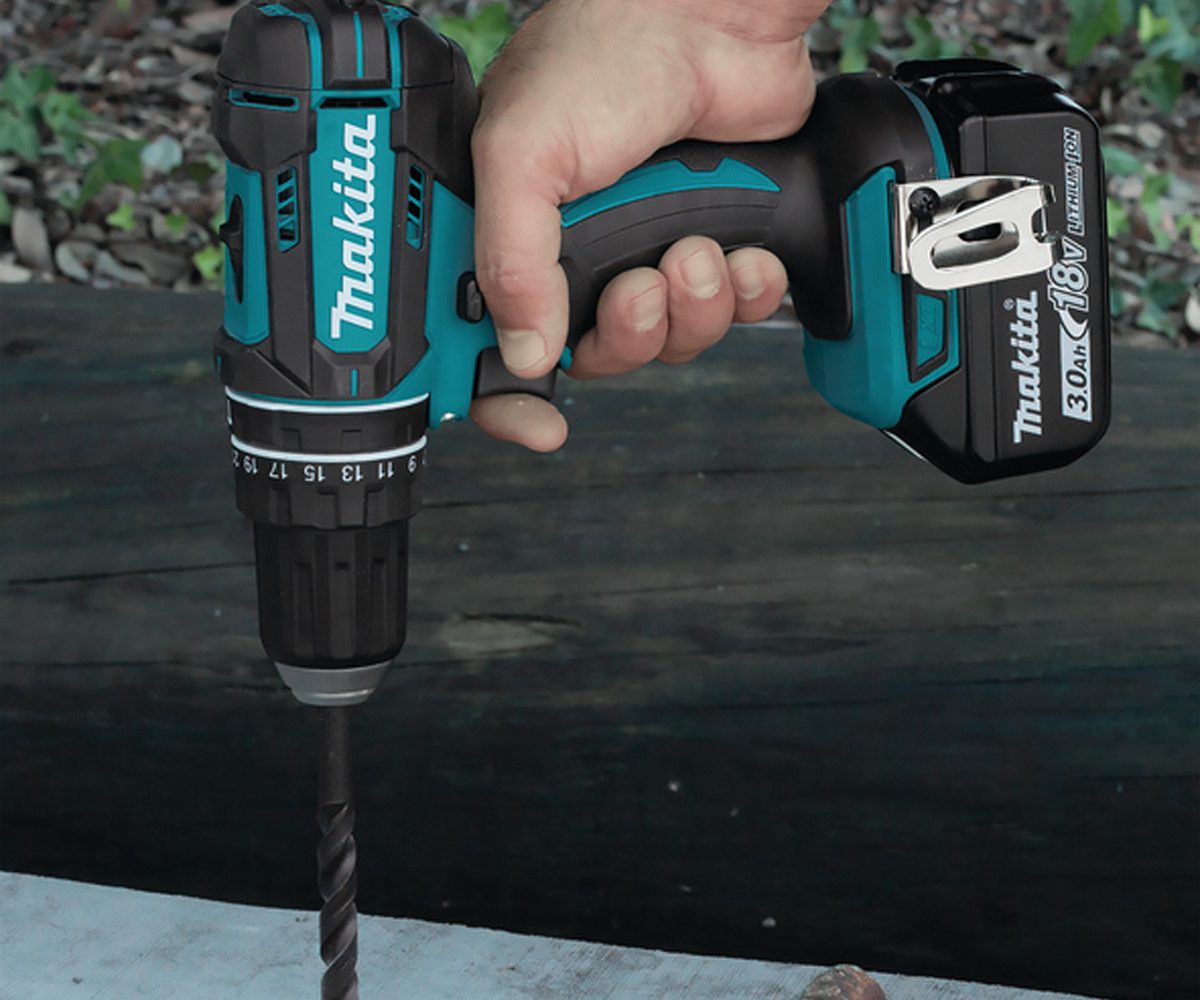
Buying a Makita 18V battery is not just a case of picking the biggest number on the shelf. That is where a lot of people go wrong. A larger Ah rating usually means longer runtime, but it can also change how the tool feels in the hand. On a circular saw, that extra capacity is useful. On a compact impact driver used above shoulder height all day, it can make the tool feel nose-heavy, slow and tiring.
The right choice depends on the job. A kitchen fitter driving cabinet screws, an electrician fixing containment overhead and a landscaper running cordless garden equipment all need different things from their Makita batteries. The trick is matching the battery’s weight, runtime and charge time to the tool, rather than buying the biggest pack out of habit.
This guide breaks down the practical trade-off between lightweight packs, everyday site batteries and heavier high-draw setups, so you can choose the right makita battery 18v option without spoiling the balance of your kit.
Makita Batteries & Chargers
The Lightweight Class: 2.0Ah to 3.0Ah
A lot of buyers look at a 2.0Ah pack and think it is only for light DIY work, but that misses the point. The lightweight class is about control, speed and comfort. When the tool is in your hand for hours, especially overhead or inside cabinets, saving weight is important.
The Makita BL1820B 18V 2.0Ah LXT Lithium-Ion Battery is a good example. It is still an 18V LXT battery, so you are not dropping into a weaker platform. You are simply choosing a smaller capacity pack that keeps the tool lighter and easier to handle.
This is where a 2.0Ah battery makes the most sense:
- Kitchen fitters working inside units, tall housings and awkward corners
- Electricians fixing tray, trunking, brackets and accessories overhead
- Joiners doing second fix work where control matters more than brute runtime
- Anyone using an impact driver for repetitive screwdriving through a full shift
Pair a 2.0Ah battery with a compact impact driver and the whole tool feels sharper. It starts and stops more naturally. It is less tiring in the wrist. It is easier to hold above your head when you are fixing into ceilings, soffits or high cabinets. Over a 10-hour shift, that difference is very noticeable.
A 2.0Ah pack is not the battery you would choose for a grinder, SDS drill or circular saw doing heavy work. It will drain faster under load, and you will be swapping packs more often. But for low-draw fastening work, that is not necessarily a problem. With a sensible rotation and a fast charger nearby, the comfort gain can easily outweigh the smaller capacity.
The Sweet Spot: 4.0Ah to 5.0Ah
For most UK trades, the 5.0Ah pack is the everyday answer. If you only want one size of Makita battery to build your kit around, this is the capacity to look at.
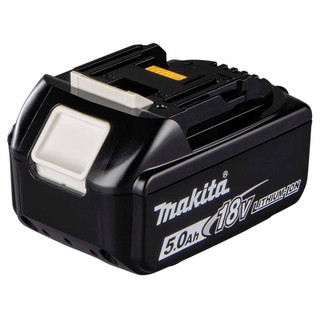
The Makita BL1850 18V 5.0Ah LXT Lithium-Ion Battery, often referred to as the BL1850B, has become the default site battery for a reason. It gives you a strong jump in runtime without making most 18V tools feel clumsy. It is big enough for combi drills, impact drivers, jigsaws, multitools, lights and plenty of saw work, but still compact enough to live on a tool belt or in a site box without feeling excessive.
This is the battery I would call the safest all-round buy for most Makita LXT users. It suits the way people actually work on UK sites: a mix of drilling, driving, cutting, fixing, snagging and moving between jobs. You are not constantly thinking about the battery, and that is the point.
The 5.0Ah BL1850B is also useful because it keeps downtime sensible. Used with a compatible Makita rapid charger, it has a rapid charge time of around 45 minutes. That matters if you run a small rotation of packs. Two or three 5.0Ah batteries and a decent charger can cover a lot of work without the constant stop-start feeling you get from underpowered battery planning.
For teams, the Makita BL1850 18V 5.0Ah LXT Lithium-Ion Battery Twin Pack is often the more practical way to buy. One battery on the tool, one on charge, and far less downtime during the day. If you are starting from scratch, the Makita DC18RC 18V LXT Fast Charger and BL1850 18V 5.0Ah Battery Bundle gives you a straightforward Makita battery and charger setup in one go.
The 4.0Ah class still has a place, particularly if you already own those packs as part of a kit. But if you are buying new and the price difference is not significant, the 5.0Ah is usually the better long-term choice. It offers the balance most trades are really after: good runtime, manageable weight and fast charging.
The Heavyweights: 6.0Ah and Dual Setups
The Makita BL1860 18V LXT 6.0Ah Li-Ion Battery is where the conversation changes slightly. It is still a standard Makita 18V LXT pack, and it keeps the same listed footprint as the 5.0Ah BL1850B. The listed weight difference is small too: Toolden lists the BL1850B at 0.63kg and the BL1860B at 0.66kg. In the hand, that is not the same jump you get when moving to oversized batteries on some other platforms.
That makes the 6.0Ah battery tempting, and in the right tool it makes sense. You get more capacity without turning the tool into a brick. For high-draw tools, it can be the better choice.
Use 6.0Ah batteries for:
- Cordless circular saws
- Angle grinders
- SDS drills and rotary hammers
- Reciprocating saws
- Outdoor garden equipment
- Heavy combi drill work where the tool is under real load
Where I would be more careful is putting a 6.0Ah battery on every tool by default. On paper it looks sensible. More runtime, almost the same footprint, not much extra listed weight. In practice, you still need to think about the task. If you are using a lightweight impact driver for hundreds of screws, a smaller pack may still feel better, even if the 6.0Ah technically fits.
It is also worth clearing up one common buying mistake. Some buyers carry over the “bigger is better” mindset from ultra-heavy 9.0Ah or 12.0Ah battery systems and assume that is the direction every cordless setup should go. For Makita 18V LXT tools, the practical top end for a normal single pack is the 6.0Ah class. Beyond that, you are usually looking at dual-battery machines, higher-voltage platforms or a much bulkier overall tool setup. That is fine for saws, grinders and outdoor kit. It is not what you want hanging off a small impact driver all day.
If you are running several high-demand tools, charging becomes part of the buying decision. A single charger is fine for one-person use, but a busy workshop or van setup can benefit from a faster battery rotation. The Makita DC18RC LXT 14.4-18V Fast Charger is the obvious starting point for rapid charging. For teams running multiple 5.0Ah packs, the Makita DC18RD 18V LXT Twin Port Charger with 2x 5.0Ah Batteries is a more serious site-ready option.
So, Which Makita 18V Battery Should You Actually Buy?
For most people, the answer is not one battery. It is two battery sizes. A lighter pack for control and fatigue, plus a 5.0Ah or 6.0Ah pack for runtime.
If you are a kitchen fitter or electrician, a 2.0Ah battery on your impact driver can make the day easier, while 5.0Ah packs cover drills, multitools and site lights. If you are a carpenter or general builder, 5.0Ah batteries should probably form the backbone of your kit. If you are cutting, grinding or drilling masonry regularly, add 6.0Ah batteries for the tools that genuinely need the extra capacity.
The mistake is treating every tool the same. A small impact driver and a cordless circular saw do not ask the same thing from a battery. One rewards balance. The other rewards capacity. Buy with that in mind and your Makita kit will feel better, run better and waste less time on site.
Quick Reference: Makita Batteries by Trade and Task
| Trade or task | Best battery size | Why it works |
|---|---|---|
| Kitchen fitting and cabinet installation | 2.0Ah for impact drivers, 5.0Ah for drills | Lightweight handling for repetitive fixing, with enough backup runtime for drilling |
| Electrical first and second fix | 2.0Ah to 5.0Ah | 2.0Ah is easier overhead, while 5.0Ah suits drilling, lighting and general site work |
| General building and carpentry | 5.0Ah | The best balance of runtime, weight and charging speed for mixed daily use |
| Joinery and second fix | 2.0Ah to 5.0Ah | Use lighter packs for control, 5.0Ah packs when runtime matters |
| Circular saws, grinders and reciprocating saws | 5.0Ah to 6.0Ah | Higher-draw tools benefit from more capacity and stronger runtime |
| SDS drilling and masonry work | 5.0Ah to 6.0Ah | Better suited to load-heavy drilling than compact packs |
| Outdoor Makita garden equipment | 6.0Ah or dual-battery setups where compatible | Longer runtime is more important than compact handling |
| Starting a new Makita LXT kit | 5.0Ah battery and charger bundle | A practical first setup for most UK users |
FAQs
Which Makita 18V battery is best?
For most users, the Makita BL1850B 18V 5.0Ah battery is the best all-round choice. It offers a good balance of runtime, weight and charge time, making it suitable for most drills, impact drivers, saws, multitools and site lights.
Is a 5.0Ah or 6.0Ah Makita battery better?
A 5.0Ah battery is usually better for everyday trade use, while a 6.0Ah battery makes more sense for higher-draw tools such as circular saws, grinders, SDS drills and garden equipment.
Does a higher Ah Makita battery mean more power?
Not exactly. A higher Ah rating mainly means longer runtime. It can help demanding tools run for longer under load, but the main difference is capacity rather than voltage.
Are all Makita 18V batteries interchangeable?
Makita 18V LXT batteries are designed for Makita 18V LXT tools, but Makita also makes other battery platforms such as CXT and XGT. Always check that your tool and battery are from the same compatible system.
Is a 2.0Ah Makita battery worth buying?
Yes. A 2.0Ah battery is useful for impact drivers, cabinet work, second fix jobs and overhead fixing because it keeps the tool lighter and easier to control.
How long does a Makita 18V battery take to charge?
Charge time depends on the battery and charger. As a guide, a Makita 18V 5.0Ah BL1850B battery takes around 45 minutes on a compatible Makita rapid charger.
Which Makita battery should I buy first?
If you are starting a Makita 18V LXT kit, begin with a 5.0Ah battery and fast charger. Add a 2.0Ah battery for lighter tools or a 6.0Ah battery for high-draw tools later.
Need some help with your order? Our new help centre has a wide range of helpful articles and guides!
If you have any additional queries, please do not hesitate to contact us below: