
The Ultimate Guide to Mitre Saw Blades: Wood, Metal, and Plastics Explained
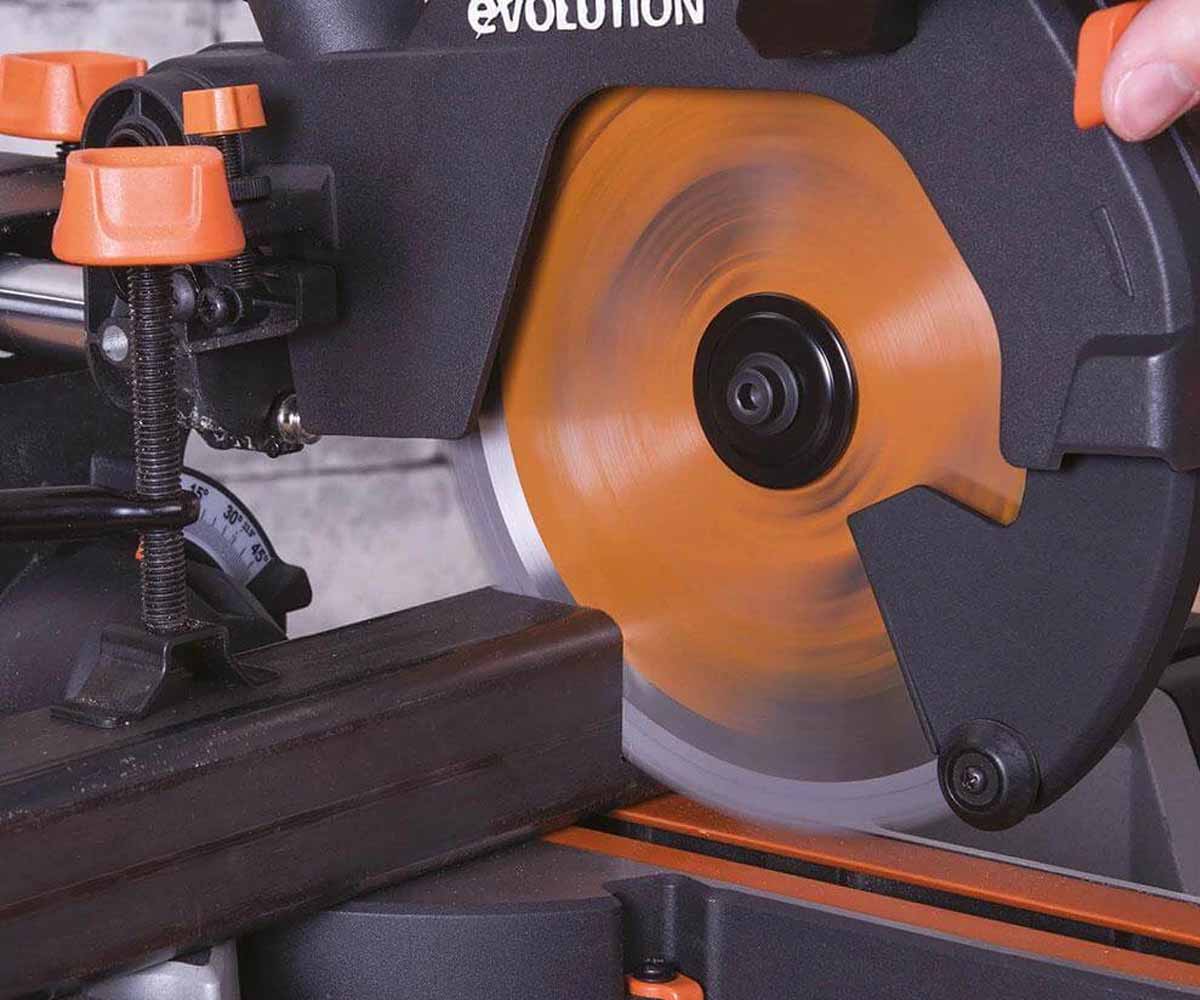
A mitre saw is only as good as the blade fitted to it. You can have a powerful motor, accurate angle adjustments and a premium cordless platform, but fit the wrong blade and you could still end up with burnt timber, chipped edges or rough, splintered cuts.
Choosing the correct mitre saw blade isn’t simply a case of finding one that fits. Blade diameter, bore size, tooth count, tooth geometry and kerf all influence how a saw performs and, most importantly, which materials it can cut effectively.
Whether you’re cutting construction timber, fine mouldings, aluminium, plastic or laminate, this guide explains what to look for when choosing a mitre saw blade and how different blade designs affect the finished cut.
Mitre Saws vs Chop Saws: What’s the Difference?
The terminology surrounding miter and chop saws can be confusing, particularly as the names are sometimes used interchangeably.
A conventional mitre saw is primarily designed for accurate crosscuts and angled cuts in timber. Depending on the model, it may also offer bevel and sliding functions, allowing you to tackle everything from framing timber to skirting boards and decorative mouldings.
A chop saw generally performs a simpler up-and-down cutting action. Dedicated metal-cutting chop saws are built specifically for cutting materials such as steel and other metals.
This distinction becomes particularly important when choosing a blade.
A dedicated metal-cutting machine such as the Evolution S355CPS-Li uses blades specifically designed for cutting metal. These are fundamentally different from the woodworking blades you would normally fit to a standard mitre saw.
Whatever type of chop miter saw or mitre saw you’re using, always check the manufacturer’s specifications before fitting a different blade or attempting to cut another material.
Mitre Saw Blade Anatomy 101
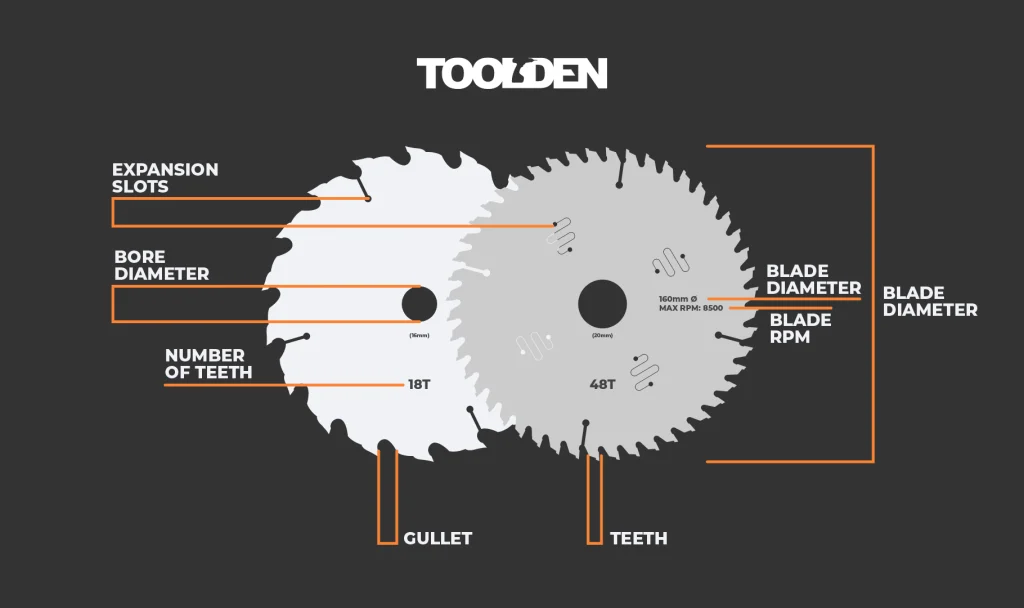
Before choosing a blade, it helps to understand the specifications you’ll encounter. Two blades of the same diameter can perform very differently depending on their tooth count, tooth geometry and kerf.
Blade Diameter and Bore Size
The first specification to check is blade diameter.
Common mitre saw blade diameters include:
- 184mm: typically found on smaller and more compact saws
- 216mm: a popular size offering a useful balance between cutting capacity and portability
- 250mm: suited to larger machines where increased cutting capacity is required
Larger blades generally allow greater cutting depths, but that doesn’t mean you can simply fit a larger blade to your saw.
Your mitre saw is designed around a specific blade diameter, and you should always use a blade size approved by the manufacturer.
You also need to check the bore size – the hole in the centre of the blade that fits over the saw’s arbor or spindle. The bore must be compatible with your machine.
Tooth Count: Why Does It Matter?
The number of teeth around a blade has a major influence on cutting speed and finish.
As a general rule: fewer teeth provide faster, more aggressive cuts, while more teeth produce a finer finish.
A lower tooth-count blade is therefore useful when quickly cutting construction timber where an ultra-clean edge isn’t essential.
Increase the tooth count and more teeth pass through the material during each cut. This generally creates a smoother finish, making higher tooth-count blades better suited to crosscutting, mouldings and finish work.
Here’s a quick overview:
| Blade characteristic | Best suited to | Main advantage | Typical finish |
|---|---|---|---|
| Lower tooth count | Construction timber and fast cuts | Faster material removal | Rougher |
| Higher tooth count | Crosscuts and finished timber | Cleaner cutting | Smooth |
| ATB tooth grind | Timber and woodworking | Reduces tearing across wood fibres | Clean |
| TCG tooth grind | Metals, laminates and harder materials | Durable cutting performance | Controlled |
| Thin kerf | Cordless mitre saws | Requires less material removal | Fast and efficient |
| Negative rake | Plastics, laminates and selected metals | Less aggressive engagement | Controlled and clean |
The correct tooth count will ultimately depend on the material, blade diameter and quality of finish you require.
Tooth Grind: ATB vs TCG
It’s not only the number of teeth that matters. Their shape also determines how a blade interacts with the material.
Alternate Top Bevel – ATB
An Alternate Top Bevel (ATB) blade uses teeth that alternate between bevelled edges.
This configuration helps slice through wood fibres rather than simply tearing through them, making ATB blades particularly useful for woodworking applications.
They’re a strong choice for clean crosscuts in timber, including jobs involving mouldings and other visible finished surfaces.
Triple Chip Grind – TCG
A Triple Chip Grind (TCG) uses a different tooth arrangement designed to withstand harder and more abrasive materials.
Rather than every tooth doing exactly the same job, the teeth work together to progressively remove material.
TCG designs are commonly found on blades intended for materials such as aluminium, non-ferrous metals and laminates. Depending on the blade and machine, carbide TCG blades may also be designed for cutting steel.
Always check the blade’s specified materials rather than assuming that any TCG blade can cut every type of metal.
What Is Blade Kerf?
The kerf is essentially the width of material removed by the blade as it makes a cut.
A thicker blade removes more material, meaning the saw’s motor has more work to do.
That’s particularly important when using a cordless mitre saw.
A thin-kerf blade requires less material to be removed during each cut, reducing resistance and helping the saw operate efficiently. On battery-powered machines, this can contribute to improved cutting performance and help maximise runtime between charges.
However, you should always use a blade compatible with your particular mitre saw rather than choosing the thinnest blade available.
What Mitre Saw Blade Do You Need?
The material you’re cutting should be one of the biggest factors in your blade choice.
A blade that performs brilliantly in softwood may be completely unsuitable for aluminium or plastic.
Timber: Choosing a Blade for Wood
Wood is the material most commonly associated with a mitre saw, but there’s still no single blade that’s perfect for every woodworking application.
For quickly cutting construction timber, a relatively low tooth-count blade allows fast material removal and is ideal when productivity is more important than achieving a furniture-quality edge.
If you’re cutting skirting boards, architraves, mouldings or other finished pieces, moving to a higher tooth count can provide a significantly cleaner edge.
ATB blades are particularly useful here because their alternating bevelled teeth help slice through the wood fibres cleanly.
As a general guide:
- Use lower tooth counts for fast construction cuts
- Use higher tooth counts for cleaner crosscuts
- Choose ATB teeth for clean woodworking applications
- Consider a thin kerf for compatible cordless mitre saws
The quality of your blade becomes especially important when making angled joints. A precisely calibrated mitre angle saw combined with a sharp, appropriate blade can help achieve much cleaner joints with less splintering.
Metal: Choosing a Blade for Steel and Aluminium
Cutting metal requires considerably more care when selecting both the machine and the blade.
Dedicated metal-cutting saws can use carbide-tipped blades engineered specifically for steel, aluminium and other metals.
TCG tooth configurations are commonly used because their geometry can provide durable, controlled cutting through harder materials.
However, not every mitre saw is designed to cut metal.
Don’t simply replace a woodworking blade with a metal-cutting blade and assume the machine is suitable. Check the saw manufacturer’s specifications, maximum RPM and blade compatibility first.
Dedicated metal-cutting chop saws, such as the Evolution S355CPS-Li, are engineered specifically around this type of work and use blades designed accordingly.
For non-ferrous materials such as aluminium and copper, look for a blade specifically rated for the material you’re cutting.
Plastics and Laminates: Prioritise Control
Plastic and laminate present their own challenges.
An overly aggressive blade can grab the material, while excessive friction can generate heat and potentially melt certain plastics rather than cutting them cleanly.
A negative-rake blade can provide more controlled tooth engagement, reducing the tendency for the blade to aggressively pull itself into the workpiece.
Higher tooth counts can also help produce a cleaner edge when cutting laminates and finished sheet materials.
For plastics and laminates:
- Look for blades specifically approved for the material
- Consider a high tooth count for a finer finish
- Negative-rake designs can provide more controlled cutting
- Secure the workpiece correctly before making the cut
- Avoid forcing the saw through the material
Again, always check that both your blade and mitre saw are approved for the material before cutting.
How to Make Your Mitre Saw Blades Last Longer
Buying the correct blade is only half the job. Keeping it in good condition will help maintain cutting performance and extend its working life.
Keep Your Blade Clean
Over time, timber can leave resin, pitch and sap deposits on the blade.
This build-up increases friction between the blade and material, potentially creating additional heat and reducing cutting performance.
A dirty blade can sometimes feel blunt even when the carbide teeth themselves still have plenty of life remaining.
Periodically removing resin build-up with an appropriate blade-cleaning product can help restore cutting performance.
Always remove the blade from the saw and follow the blade and cleaning-product manufacturer’s instructions before carrying out maintenance.
Check the Teeth Regularly
Take a look at your blade before starting work, particularly if you’ve noticed a reduction in cutting quality.
Watch for:
- Chipped or missing carbide teeth
- Excessive tooth wear
- Cracks or other damage to the blade body
- Unusual vibration while cutting
- Increasingly rough or burnt cuts
Never continue using a visibly damaged blade.
Sharpen or Replace?
A high-quality carbide-tipped mitre saw blade may be suitable for professional sharpening once it becomes dull.
Whether sharpening makes financial sense depends on the original blade quality, condition of the teeth and replacement cost.
If teeth are badly chipped, missing or damaged, replacing the blade will often be the more appropriate option.
A cheaper blade may also cost almost as much to professionally sharpen as it does to replace, whereas maintaining a premium blade can potentially extend its useful working life considerably.
Find the Right Mitre Saw Blades at Toolden
The correct blade can transform how your mitre saw performs.
Whether you’re making quick cuts through framing timber, producing clean edges on decorative mouldings or working with specialist materials, matching the blade to the application can provide cleaner results while reducing unnecessary strain on your saw.
At Toolden, you’ll find replacement and specialist saw blades from leading power tool manufacturers, including DeWalt TCT Saw Blades for a wide range of woodworking applications and Makita Saw Blades designed for compatible saws and materials.
Before ordering, remember to check:
- Blade diameter
- Bore diameter
- Maximum RPM
- Tooth count
- Tooth geometry
- Kerf
- Material compatibility
- Compatibility with your mitre saw
Taking a few minutes to check these specifications can be the difference between a clean, accurate cut and a wasted piece of material.
What is the best blade for a mitre saw?
The best mitre saw blade depends on the material you’re cutting and the finish required. Lower tooth-count blades are suited to fast cuts through construction timber, while higher tooth-count blades generally provide cleaner crosscuts for mouldings and finish work.
How many teeth should a mitre saw blade have for cutting wood?
For fast, general-purpose timber cutting, a lower tooth count is usually suitable. For cleaner cuts in skirting boards, architraves and mouldings, choose a higher tooth-count blade designed for fine crosscutting.
Can you cut metal with a mitre saw?
Only if the mitre saw and blade are specifically approved for cutting the type of metal you’re working with. Dedicated metal-cutting chop saws use specialist blades designed for materials such as steel and aluminium, so always check the manufacturer’s specifications before cutting.
Can you use a mitre saw to cut plastic?
Yes, some mitre saws can cut plastics when fitted with a suitable blade. Higher tooth counts and negative-rake blades can provide more controlled cutting and help reduce aggressive grabbing, chipping and excessive heat.
How do I know when my mitre saw blade needs replacing?
Signs include increasingly rough cuts, burning, excessive vibration and visible damage such as chipped or missing teeth. Resin and sap build-up can also reduce performance, so try cleaning an otherwise undamaged blade before deciding whether it needs sharpening or replacing.
Need some help with your order? Our new help centre has a wide range of helpful articles and guides!
If you have any additional queries, please do not hesitate to contact us below: