
Beyond Cutting: Using Your Oscillating Tool for Sanding, Scraping, and Grout Removal
When most tradespeople and DIYers pick up a multi tool, they usually have a tricky plunge cut or a stubborn skirting board in mind. Yet to use this incredibly versatile device as just a cutting saw is to leave a massive amount of its potential untapped. Whether you call it a multitool, an oscillating multi tool or just an oscillating tool, its unique side-to-side vibrating mechanism makes it the ultimate problem solver for jobs that traditionally take hours of tedious manual labour.
With a quick change of the attachment head, one machine can immediately replace dedicated detail sanders, heavy-duty scrapers and specialised grout removal tools. In this guide, we’ll help you get the most from your power tool investment by mastering sanding, scraping, and grout removal.
Core Mechanics: Why Oscillation is Important
But before we get to the applications, it’s important to understand why an oscillating tool works differently from the other tools in your arsenal. Unlike rotary tools, which spin in a continuous circle or orbital sanders, which move in randomised loops, an oscillating multi tool vibrates rapidly from side to side at an incredibly tight angle (typically between 2.5 and 3.2 degrees).
It’s the micro-vibration that makes it so versatile and safe. The blade or pad is not spinning. This means it doesn’t grab or kick back aggressively when it bites into a material. This gives you unmatched precision and control, especially when you’re working in tight quarters or right up against delicate finished surfaces.
1. Detail Sanding in Tight Spaces
A standard random orbital sander is great for flattening large, open tabletops but is pretty useless for getting into inside corners, window frames or detailed furniture profiles. This is where your multitool comes into its own. This is where your multitool comes into its own.
The Triangular Advantage
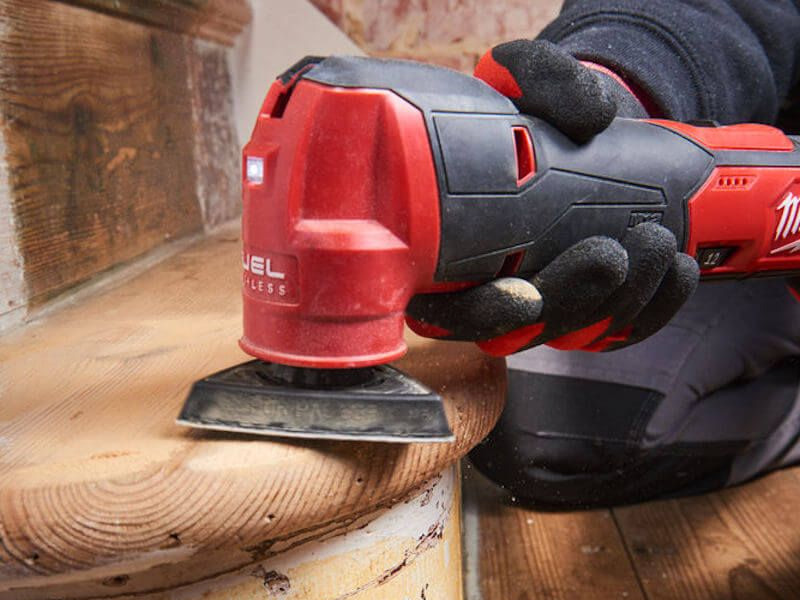
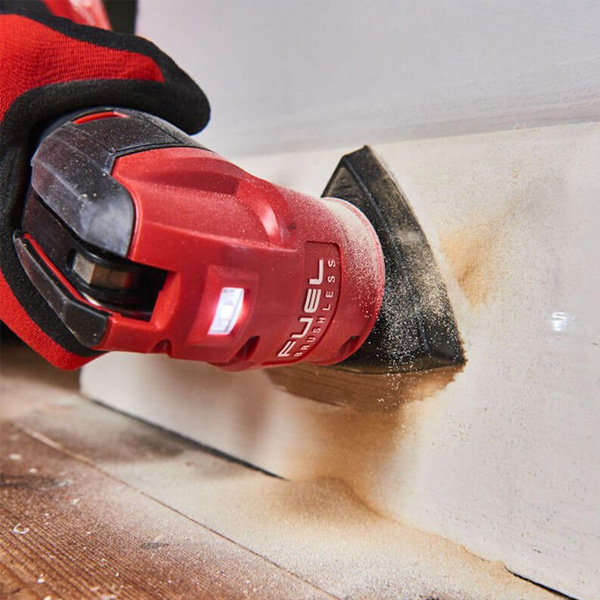
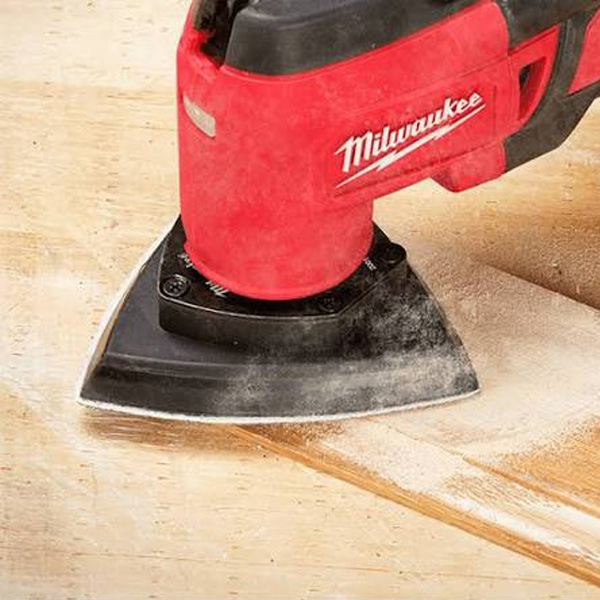
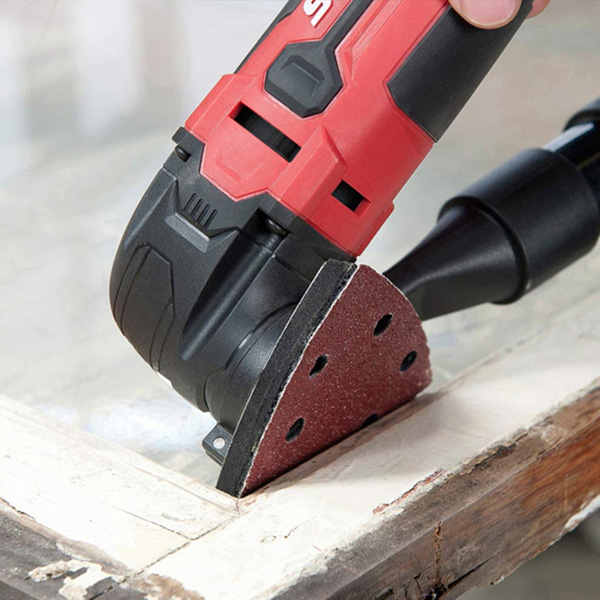
Attach a hook-and-loop sanding pad, and your tool becomes a super-aggressive detail sander. The triangular shape allows the pad to reach deep corners at 90 degrees where circular pads simply cannot. The triangular shape allows the pad to reach deep corners at 90 degrees where circular pads simply cannot.
Tips for Perfect Sanding
- Let the Tool Do the Work: Beginners often push down too hard. It is the rapid oscillation that removes the material. Just putting heavy downward pressure will only melt the hook-and-loop backing pad and prematurely burn out the motor.
- Control Your Speed: High speeds work great for quickly removing old paint or varnish, but they produce a lot of heat. When sanding bare wood or delicate veneers, to avoid friction burns, lower the variable speed control to a medium setting.
- Keep Pad Flat: The entire surface of the triangular pad must be in contact with the workpiece. Tilt the tool so you’re sanding with only the very tip, and you will quickly wear out the front edge of your sandpaper and possibly damage the backing pad.
- Use Dust Extraction: If your model has a dust extraction attachment, use it. Keep the grit of the sandpaper unclogged, prolong the life of your abrasives and keep your work area clean by brushing away the dust as you work.
2. Effortless Scraping and Adhesive Removal
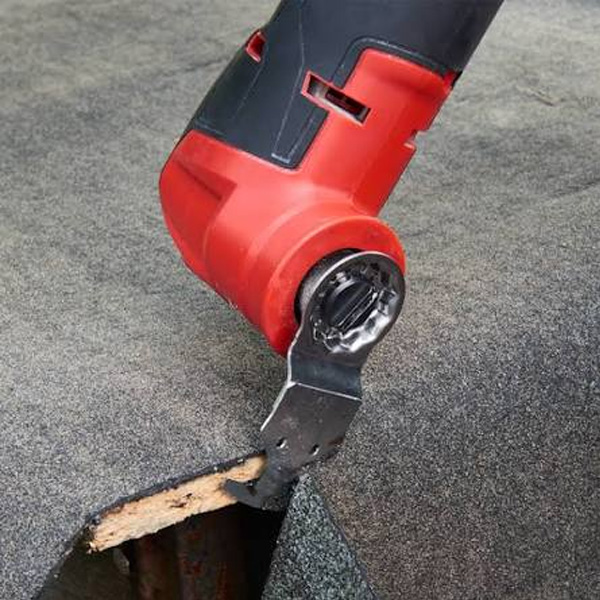
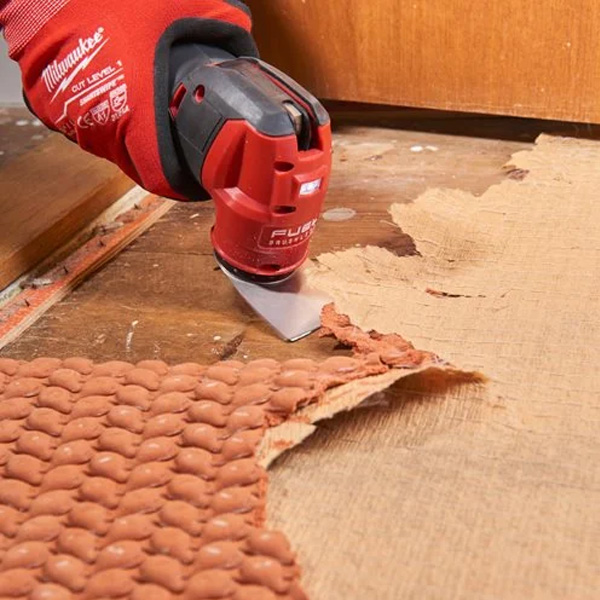
Using a manual hand scraper to remove old flooring, dried adhesives, or silicone caulking is exhausting, blister-inducing work. This stubborn material can be quickly removed with an oscillating multi tool fitted with a rigid or flexible scraper blade in a fraction of the time and without damaging the subfloor or surrounding tiles.
Choosing the Right Scraper Blade
Scraper attachments typically fall into two categories, each designed for particular jobs:
- Rigid Scraper Blades: These are thick and unbending. They’re designed for serious demolition work: popping up glued-down linoleum, chipping out stubborn mortar splatters, and scraping thick dried construction glue off concrete floors.
- Flexible Scraper Blades: Flexible scraper blades are thinner and designed to flex somewhat under pressure. They are perfect for delicate work where you need the blade to ride flat against a surface without gouging it, such as when removing old silicone sealant from the edge of a bathtub, peeling off window caulk, or lifting flaking paint off wood.
Scraping Technique
In scraping, the angle at which you approach is everything. Begin at a low angle, almost flat, and run the vibrating blade gently under the edge of the material you want to cut. Don’t drive the tool forward aggressively; keep the pressure steady and gentle, and let the side-to-side action shear the adhesive bond from below.

3. Restoration Work: Safe and Clean Grout Removal
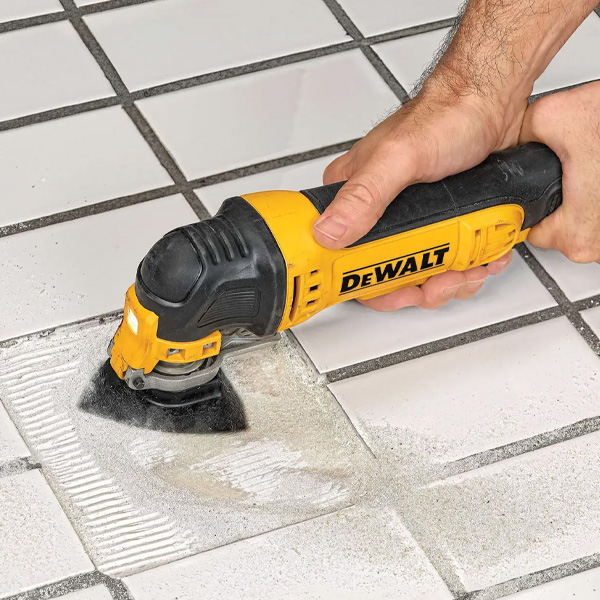
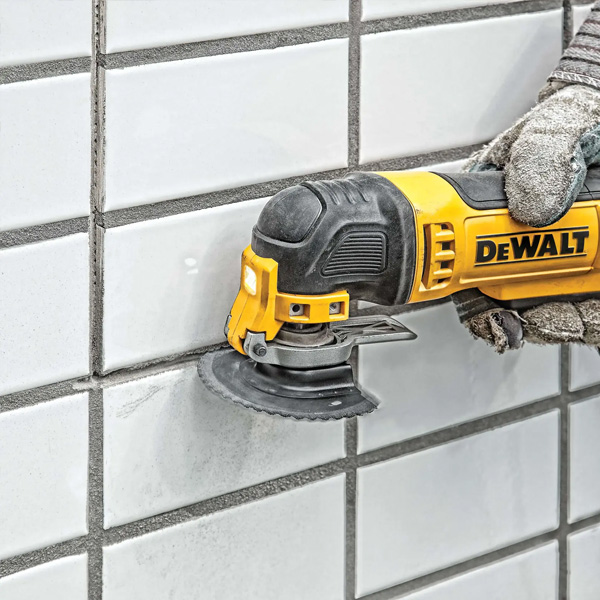
In the past, repointing a tiled bathroom or kitchen splashback involved either a manual grout rake (which takes hours) or a rotary grinder (which creates a massive cloud of dust and risks chipping the ceramic tiles). Tradespeople everywhere now agree that the oscillating multi tool is the best tool for removing old, crumbling tile grout without damaging the surrounding ceramics.
The Right Accessory for the Job
Abrasive grout destroys standard steel blades instantly. For this job, you will need a specialised carbide-grit or diamond-coated blade. These blades are usually shaped like a semicircle or a pointed teardrop.
- Semi-Circle Blades: Best for long straight grout lines. The flat edge means you can keep a consistent depth.
- Pointed/Teardrop Blades: Needed to get deep into tight 90-degree corners that the semi-circle blade cannot reach.
How to Remove Grout Safely
- Choose the Correct Width: Grout blades are available in different thicknesses, usually ranging from 1.5 mm to 3 mm. Select a blade just slightly thinner than your grout line so that it does not vibrate on the edges of the tiles.
- Go Slow: Drop the blade straight down into the grout line slowly to cut a groove. When the blade is in the channel, you can increase the speed slightly.
- Control Depth: Only take out enough grout to make a good mechanical key for the new grout (usually about half the depth of the tile).
- Heat warning: Removing grout produces heat. If you are cutting large sections, pull the blade out every few minutes to allow it to cool and preserve the life of the carbide grit.

Quick Reference: Accessory & Application Guide
To get the most out of your toolkit, here’s a quick breakdown of the ideal attachments, speeds and use cases for non-cutting tasks:
| Application / Task | Recommended Accessory Type | Ideal Speed Setting | Primary Use Case | Specific Product / Range at Toolden |
| Detail Sanding | Triangular hook-and-loop pad | Low to Medium | Interior corners, window mouldings and intricate wood furniture profiles. | Makita B-22947 94mm 100G Abrasive Paper for DTM50, DTM51 (10 Pack) |
| Heavy Scraping | Rigid steel scraper blade | Medium to High | Removing glued linoleum, dried construction adhesive & old carpet backing. | Included in the Bosch 2608669099 Starlock Renovation Blade Set (8 Pack) |
| Delicate Scraping | Flexible steel scraper blade | Low | Flat surfaces. Removing silicone sealant, window caulking and flaking paint. | Milwaukee 48852202 Open Lock Flex/Firm Scraper 50mm (2 Pieces) |
| Grout Removal (Straight) | Semi-circle carbide/diamond grit | Medium | Removing broken-down grout from straight, long tile joints on walls and floors. | DeWalt DT20709 Multi-Tool Titanium Semi-Circle Blade 100 mm |
| Grout Removal (Corners) | Pointed carbide/diamond grit | Medium | Scrape grout that is deep in the 90-degree corners where the tiles meet. | Bosch 2608669332 Starlock Tiling Blade Set (3 Pack) |
| Mortar Grinding | Carbide rasp pad (triangular) | High | Aggressively flattening dried mortar or thin-set adhesive left on subfloors. | Included in the N-Durance MULTIKIT10 Multi-Purpose Multi-Tool Accessory Kit (10 Pieces) |
Conclusion
An oscillating tool is a whole lot more than just a handy saw for awkward plunge cuts. Invest in the right attachments, and you can instantly turn it into a precision sander, a tireless scraper, and a highly accurate grout- removal machine. Whether you’re a professional tradesman wanting to speed up site preparation or a DIYer working on a home renovation, having a dedicated multi tool to hand will save you hours of arduous manual labour and prevent accidental damage to your work surfaces.
Ready to step up your tool kit? If your current machine is having trouble keeping up, or you want to put some money down on your very first all-purpose problem solver, shop our full spectrum of professional-grade tools. See the complete line of high-performance models and full accessory kits on our multi tool category page. Plus, enjoy free delivery to the UK mainland and flexible 0% interest finance options to help you spread the cost of your next essential site tool!
FAQs
What is the difference between an oscillating tool and a rotary tool?
An oscillating tool moves quickly back and forth, making it great for plunge cuts, scraping and sanding. A rotary tool, by contrast, turns in a circle of 360 degrees and is intended for delicate detailing, carving, and engraving.
Which is better: a DeWalt multi tool or a Makita multi tool?
If you invest in a particular 18V battery platform, you’ll probably save the most money. A DeWalt is well considered for its brushless efficiency and quick-change accessory system; a Makita is popular for its proven job-site durability.
Are Starlock blades compatible with a DeWalt multi tool?
Yes. Usually through an adapter, though. The DeWalt multi tool has a universal accessory adaptor enabling you to use most third-party multi tool blades for cutting, sanding and scraping with no need for specialised tools to change them.
Can I use standard steel blades for grout removal?
No, abrasive grout would destroy standard steel blades in seconds. For restoration work, you will need to equip your oscillating multi tool with a speciality carbide grit or diamond-coated blade specifically made for masonry and grout.
Need some help with your order? Our new help centre has a wide range of helpful articles and guides to help you!
If you have any additional queries, please do not hesitate to contact us below: