
A Beginner’s Guide to Choosing Your First DeWalt Impact Driver
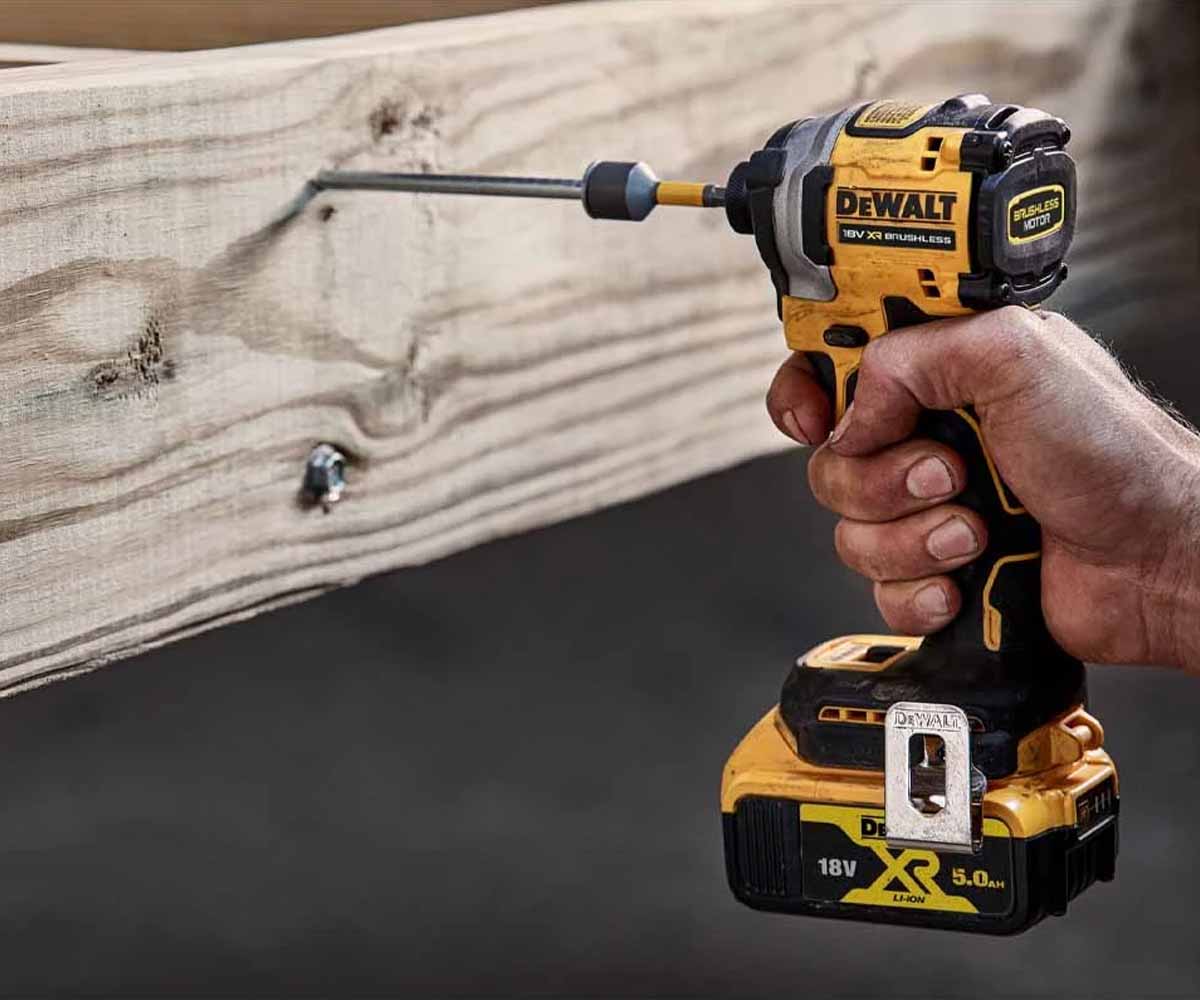
Whether you’re assembling furniture, building a garden deck or tackling a major renovation, having the right power tools can make all the difference. A DeWalt impact driver is one of the most useful additions to any toolkit, offering faster fastening, improved control and less physical effort compared to driving screws by hand.
For beginners, however, choosing the right model can be confusing. With different voltages, battery options and features available, it’s not always obvious which impact driver is best suited to your needs.
If you’re considering investing in your first DeWalt driver and impact tool, understanding the differences between models will help you make the right decision. At Toolden, you’ll find a wide selection of DeWalt impact drivers designed for everything from occasional DIY projects to demanding professional applications.
In this guide, we’ll explain how impact drivers work, how they compare to standard drills, the differences between 12V and 18V models, and which accessories you’ll need to get started.
What Is a DeWalt Impact Driver?
A DeWalt impact driver is a cordless power tool designed primarily for driving screws, bolts and other fasteners into materials such as timber and metal.
Unlike a conventional drill driver, an impact driver uses a rotating hammer-and-anvil mechanism that delivers rapid bursts of rotational force when resistance increases. This allows it to drive larger screws and tougher fixings with less effort from the user.
The main advantages of using a DeWalt impact driver include:
- High torque output for driving long screws and stubborn fasteners
- Compact design for working in tight or awkward spaces
- Reduced twisting force transferred to the user’s wrist
- Faster fastening when working with large quantities of screws
- Quick-change 1/4-inch hex chuck for swapping compatible bits
- Cordless convenience for working around the home or on site
These features make impact drivers particularly useful for tasks such as decking, timber framing, fencing, cabinet installation and general construction work.
While impact drivers are commonly associated with professional tradespeople, they’re equally valuable for DIY enthusiasts looking to make home improvement projects quicker and easier.
DeWalt Drill Driver vs. Impact Driver: What’s the Difference?
One of the most common questions beginners ask is whether they actually need an impact driver if they already own a cordless drill.
Although the two tools may look similar, they’re designed to perform different jobs.
A standard DeWalt drill driver is a versatile tool primarily used for drilling holes and driving smaller screws. It features an adjustable clutch that helps prevent overtightening and offers greater control when working with delicate materials.
A DeWalt impact driver, on the other hand, is designed specifically for fastening applications. Its impact mechanism generates additional rotational force when needed, making it particularly effective for driving long screws and working with tougher materials.
Drill Driver vs. Impact Driver Comparison
| Feature | DeWalt Drill Driver | DeWalt Impact Driver |
|---|---|---|
| Primary use | Drilling holes and driving screws | Driving screws and fasteners |
| Torque delivery | Smooth, continuous rotation | Rapid rotational impacts under load |
| Chuck type | Adjustable keyless chuck | 1/4-inch hex quick-release chuck |
| Speed control | Variable speed, often with multiple gears | Variable speed, sometimes with multiple modes |
| Best applications | Drilling, furniture assembly and precision work | Decking, framing and heavy-duty fastening |
| Fastener control | Adjustable clutch for delicate tasks | High fastening force, with model-dependent control modes |
| Noise levels | Generally quieter | Louder when the impact mechanism engages |
When Should You Use a Drill Driver?
A standard drill driver is generally the better choice when drilling holes into timber, metal or plastic, particularly when using conventional round-shank drill bits.
It’s also ideal for assembling furniture, installing hinges and completing jobs where precise control over screw depth is important.
The adjustable clutch helps prevent screws from being driven too far into the material, making it useful for delicate applications.
When Should You Use an Impact Driver?
An impact driver is the better choice when driving long screws, tightening larger fixings or completing repetitive fastening tasks.
For example, if you’re installing a timber deck, an impact driver can make driving hundreds of decking screws significantly easier than using a standard drill driver.
The additional rotational force helps maintain progress when resistance increases, while the impact mechanism reduces the continuous twisting force transferred to your wrist.
For many tradespeople, the ideal solution is to own both tools. A drill driver handles drilling and precision work, while an impact driver takes care of demanding fastening applications.
Choosing Between 12V and 18V DeWalt Impact Drivers
Once you’ve decided to purchase an impact driver, the next consideration is voltage.
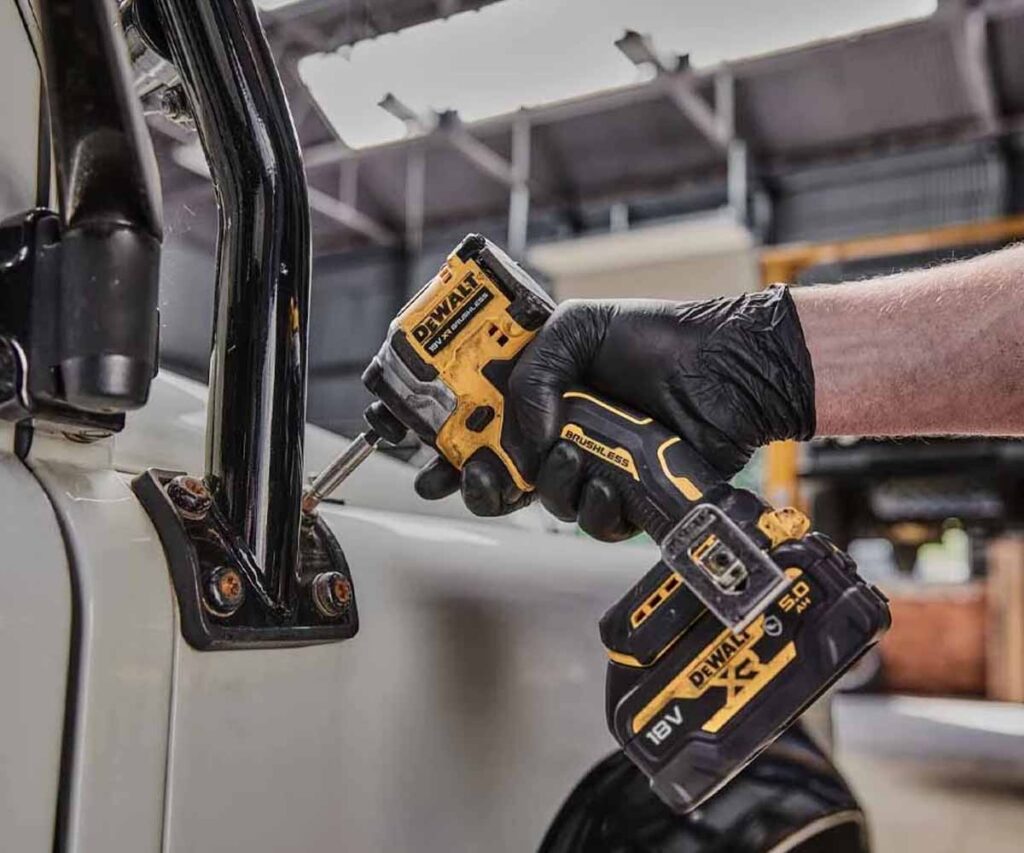
DeWalt offers compact 12V XR models alongside its more extensive 18V XR range. Both can be excellent choices, but they’re designed with different users and applications in mind.
12V DeWalt Impact Drivers: Compact and Lightweight
A 12V DeWalt impact driver is a good option for beginners who prioritise portability, comfort and ease of use.
These models are generally smaller and lighter than their 18V counterparts, making them particularly useful for working inside cabinets, installing fixtures or accessing confined spaces.
The compact design can also help reduce fatigue when working overhead or completing repetitive fastening tasks.
A 12V impact driver is particularly well suited to:
- Furniture assembly and cabinet installation
- Light-duty woodworking projects
- Installing shelves and brackets
- Electrical and maintenance work
- General household DIY tasks
- Working in confined or awkward spaces
Although 12V models are smaller, they can still deliver impressive fastening performance. For many everyday DIY applications, the additional power of an 18V model may not be necessary.
However, if you regularly work with large structural screws or heavy-duty timber fixings, an 18V model will generally offer greater performance headroom.
18V DeWalt Impact Drivers: Power and Versatility
The DeWalt 18V XR range is a popular choice among professional tradespeople and serious DIY enthusiasts.
These tools generally offer higher torque outputs and a wider choice of models, making them suitable for more demanding fastening applications.
An 18V DeWalt impact driver is particularly useful for:
- Installing decking and fencing
- Driving long structural timber screws
- Timber framing and construction
- Building sheds and garden structures
- Repetitive fastening on site
- Heavy-duty woodworking and renovation projects
Another major advantage is compatibility with DeWalt’s extensive 18V XR battery platform.
If you already own compatible 18V XR tools, you can use the same batteries across your impact driver, combi drill, circular saw and many other cordless tools.
This makes an 18V model a particularly practical investment for anyone planning to expand their cordless toolkit.
12V vs. 18V: Which Should You Choose?
| Consideration | 12V XR Impact Driver | 18V XR Impact Driver |
|---|---|---|
| Power | Ideal for light to medium fastening | Better suited to demanding fastening |
| Size | Generally smaller and lighter | Usually larger, with compact options available |
| Best user | DIYers, installers and maintenance workers | Tradespeople and regular DIY users |
| Typical applications | Cabinets, furniture and small fixings | Decking, framing and structural screws |
| Battery platform | DeWalt 12V XR | DeWalt 18V XR |
| Future expansion | Suitable for a compact tool collection | Extensive cordless tool ecosystem |
For occasional DIY use, a 12V impact driver may provide everything you need.
However, if you’re planning to build a larger collection of cordless power tools, an 18V XR model is often the more versatile long-term investment.
It’s worth remembering that 12V XR and 18V XR batteries are not interchangeable between tools, so consider which battery platform best suits your future needs.
Should You Buy a Body-Only DeWalt Impact Driver or a Complete Kit?
Another important decision is whether to purchase your impact driver as a body-only tool or as part of a complete kit.
Understanding the difference can help you avoid unnecessary spending.
What Is a Body-Only Impact Driver?
A body-only impact driver includes the tool itself but does not normally include a battery or charger.
This option is particularly useful if you already own compatible DeWalt XR batteries and a suitable charger.
For example, if you already have a DeWalt 18V XR combi drill with two batteries, purchasing a body-only 18V impact driver allows you to use your existing batteries without paying for additional ones.
The benefits of buying body-only include:
- Lower initial purchase cost compared with equivalent kits
- No need to purchase duplicate batteries and chargers
- Convenient compatibility with existing DeWalt XR tools
- A cost-effective way to expand your cordless collection
- Less unnecessary equipment to store and transport
However, always check the product listing carefully, as body-only tools may also be supplied without a carry case.
When Is a Complete Kit the Better Choice?
If you’re purchasing your first cordless DeWalt tool and don’t already own compatible batteries, a complete kit is generally the more convenient option.
Depending on the model, a kit may include the impact driver, one or more batteries, a charger and a carry case.
Buying everything together ensures you have the essential equipment needed to start working.
A complete kit can also offer better overall value than purchasing each component separately.
Before choosing between the two options, consider the batteries you already own, how frequently you’ll use the tool and whether you plan to expand your DeWalt collection in the future.
Key Features to Look for in Your First DeWalt Impact Driver
Not all impact drivers offer the same features. While beginners don’t necessarily need the most expensive model, understanding a few important specifications will help you choose a tool that suits your requirements.
1. Torque Output
Torque is the rotational force produced by the tool, usually measured in newton metres (Nm).
Higher torque generally makes it easier to drive larger screws and fasteners into resistant materials.
For light DIY tasks, a compact impact driver with moderate torque may be more than sufficient.
For decking, timber framing and other demanding applications, a higher-torque model will provide greater flexibility.
However, maximum torque isn’t everything. Having control over how that force is delivered is equally important, particularly when working with smaller screws.
2. Brushless Motor Technology
Many modern DeWalt impact drivers feature brushless motors.
Unlike traditional brushed motors, brushless designs use electronic control rather than carbon brushes to operate the motor.
This offers several advantages, including:
- Improved energy efficiency
- Reduced maintenance requirements
- Less internal friction and heat generation
- Longer motor service life
- Consistent performance under demanding workloads
For beginners planning to use their impact driver regularly, choosing a brushless model can be a worthwhile long-term investment.
3. Variable Speed and Drive Modes
Variable speed control allows you to adjust the tool’s output using the trigger.
Some DeWalt impact drivers also feature multiple speed settings or dedicated fastening modes.
These features are useful when switching between different applications.
For example, a lower speed setting can provide greater control when starting smaller screws, while a higher setting is better suited to driving long timber fixings.
If you expect to use your impact driver for a wide range of jobs, adjustable drive modes are worth considering.
4. Compact Design and Ergonomics
An impact driver should feel comfortable and balanced in your hand.
Compact models are particularly useful when working between joists, inside cupboards or in other restricted spaces.
Weight is also important, especially if you’re using the tool for extended periods.
Remember that larger batteries add weight, so the lightest possible battery isn’t always the best choice for every job. Consider the balance between runtime, performance and comfort.
5. LED Work Light
Many DeWalt impact drivers feature integrated LED lighting around the front of the tool.
This helps illuminate the fastening area when working inside cabinets, under floorboards or in poorly lit spaces.
Although it may seem like a minor feature, improved visibility can make a noticeable difference when positioning screws accurately.
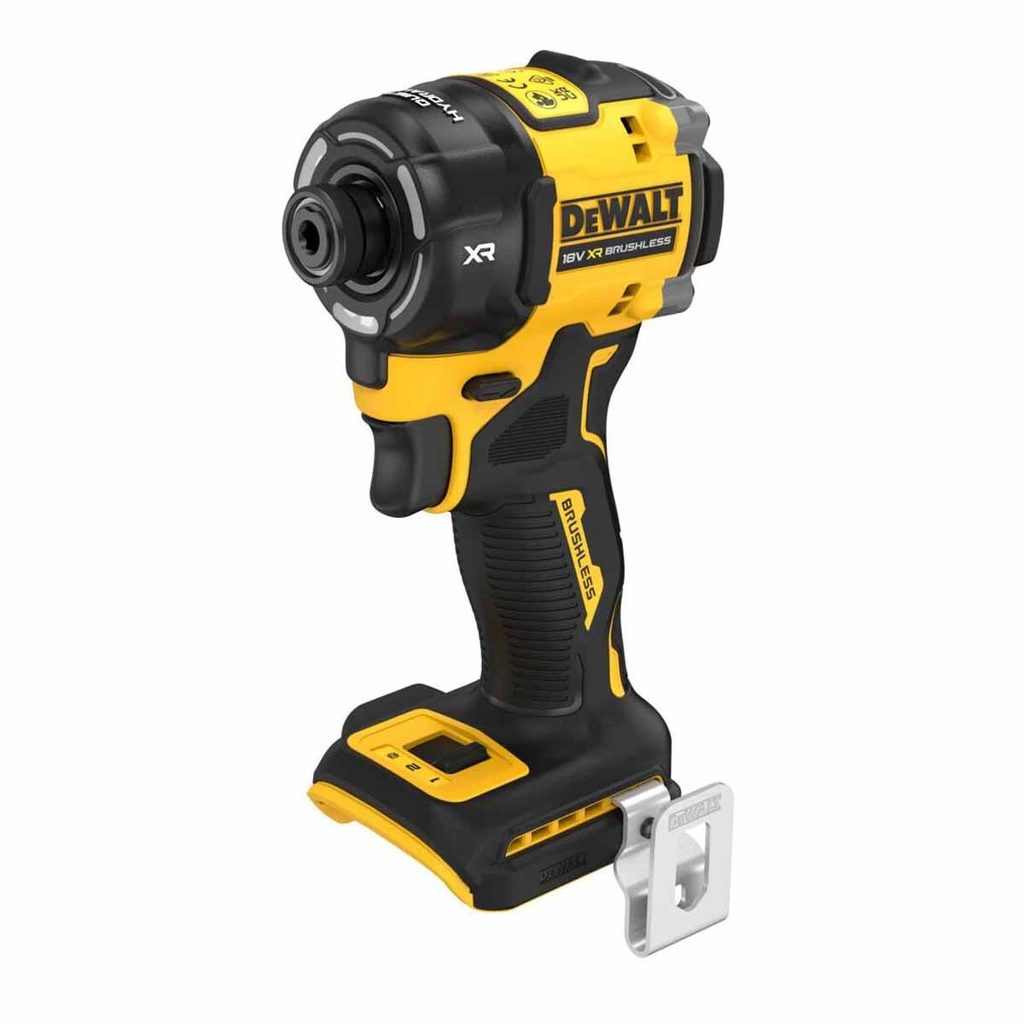
DeWalt DCF870N-XJ 18V XR Brushless Hydraulic Impact Driver (Body Only)
Essential Accessories for Your DeWalt Impact Driver
Choosing the right impact driver is only part of the process. You’ll also need compatible accessories to get the best performance from your tool.
One of the most important things beginners should understand is the difference between standard screwdriver bits and impact-rated bits.
Why You Should Always Use Impact-Rated Screwdriver Bits
Impact drivers generate rapid rotational impacts that place significant stress on screwdriver bits.
Standard screwdriver bits are not necessarily designed to withstand these repeated forces. Under heavy loading, unsuitable bits can crack, chip or break, potentially creating a safety hazard.
For this reason, it’s important to choose impact-rated screwdriver bits specifically designed for use with impact drivers.
These accessories are engineered to tolerate the repeated torsional loading generated by the impact mechanism.
Impact-rated bits often feature specially designed torsion zones that help absorb rotational stress and improve durability.
Common bit types include:
- Phillips bits for cross-head screws
- Pozidriv bits for compatible woodworking and general-purpose screws
- Torx bits for high-grip fastening applications
- Hex bits for compatible socket-head fasteners
- Impact-rated nut setters for suitable hex-head fixings
Always match the bit type and size to the fastener, as using the wrong bit can damage the screw head and increase the risk of slipping.
Choosing the Right Bit Holder
A magnetic bit holder can make fastening work more convenient by helping retain compatible screwdriver bits and screws.
For impact driver applications, choose a bit holder specifically rated for impact use.
Longer bit holders can also improve access when working in recessed areas, although shorter accessories may offer better control in tighter spaces.
Other Useful Accessories
Depending on the jobs you’re planning to tackle, you may also benefit from:
- DeWalt impact bit sets for a selection of common screw types and sizes
- Impact-rated socket adaptors for compatible fastening applications
- DeWalt XR batteries for extended cordless runtime
- DeWalt battery chargers for keeping spare batteries ready
- Tool storage and carry cases for protecting your equipment during transport
It’s also important to remember that a standard 1/4-inch hex impact driver is not the same as an impact wrench.
While impact drivers can operate compatible nut setters and adaptors, dedicated impact wrenches are generally better suited to larger nuts, bolts and demanding socket applications.
Common Mistakes to Avoid When Using an Impact Driver
If you’re new to impact drivers, developing good habits from the beginning will help you achieve better results and protect your equipment.
Using the Wrong Screwdriver Bits
One of the most common mistakes is fitting standard screwdriver bits to an impact driver.
Always choose impact-rated accessories and inspect them regularly for wear or damage.
Overtightening Screws
Impact drivers can deliver substantial fastening force, making it easy to overtighten smaller screws or damage softer materials.
Start slowly, use an appropriate drive mode where available and release the trigger once the screw is properly seated.
For applications requiring a precise tightening torque, use a suitable torque-controlled tool rather than relying on an impact driver.
Using an Impact Driver for Every Drilling Job
Although impact drivers can operate compatible hex-shank drill bits, they’re not designed to replace conventional drills in every situation.
For accurate drilling, large holes or applications requiring a conventional drill chuck, a drill driver is generally the better choice.
Choosing the Wrong Battery Platform
Before purchasing a body-only model, check that your existing batteries are compatible.
DeWalt 12V XR and 18V XR tools use different battery platforms, so don’t assume that every DeWalt battery will fit every cordless tool.
Applying Too Much Pressure
Impact drivers are designed to deliver rotational impacts when resistance increases, so excessive forward pressure is unnecessary.
Maintain firm, controlled contact with the fastener, keep the bit aligned and allow the tool to do the work.
Always wear appropriate eye protection and follow the manufacturer’s instructions.
Is a DeWalt Impact Driver Worth Buying for DIY?
For many DIY enthusiasts, a DeWalt impact driver is one of the most worthwhile additions to a cordless toolkit.
While a standard drill driver can handle occasional screwdriving, an impact driver becomes particularly valuable when tackling larger projects or repetitive fastening work.
Building a deck, installing a fence or assembling a timber structure can involve driving hundreds of screws. Using an impact driver helps make these tasks faster and reduces the amount of continuous twisting force transferred to your wrist.
Its compact design also makes it useful in spaces where a larger drill driver may be difficult to position.
If your projects mainly involve drilling holes and assembling occasional flat-pack furniture, a standard drill driver may be sufficient.
However, if you regularly work with timber, install fixings or plan to take on more demanding home improvement projects, an impact driver is well worth considering.
Conclusion: Choosing the Right DeWalt Impact Driver
Choosing your first DeWalt impact driver doesn’t need to be complicated.
The most important thing is to consider the types of jobs you’ll be completing, the level of power you need and whether you already own compatible DeWalt batteries.
For light DIY projects and work in confined spaces, a compact 12V model can offer excellent convenience and control.
For more demanding applications such as decking, fencing and timber framing, an 18V XR impact driver generally provides greater versatility and performance.
If you’re already invested in the DeWalt XR battery platform, choosing a body-only model can also be an excellent way to expand your toolkit without unnecessary additional costs.
Whichever model you choose, pairing your impact driver with quality impact-rated bits will help ensure reliable performance and safer operation.
From reducing wrist fatigue to speeding up repetitive fastening tasks, a DeWalt impact driver can make a noticeable difference to how efficiently you work.
Explore the full range of DeWalt driver and impact tools at Toolden to find the right model for your next project.
Frequently Asked Questions
Can I use a DeWalt impact driver as a normal drill?
Yes, a DeWalt impact driver can be used for certain drilling applications when fitted with compatible 1/4-inch hex-shank drill bits. However, a conventional drill driver is generally better suited to precision drilling and applications requiring round-shank bits or larger drill accessories.
Is a 12V or 18V DeWalt impact driver better for beginners?
Both can be suitable for beginners. A 12V model is generally lighter and more compact, making it ideal for furniture assembly and smaller DIY projects. An 18V model typically offers greater fastening power and is a better choice for decking, fencing and demanding applications.
Do I need special screwdriver bits for a DeWalt impact driver?
Yes, you should use impact-rated screwdriver bits designed to withstand the repeated rotational impacts produced by the tool. Standard bits may crack or break under heavy impact loading, so impact-rated accessories are the safer and more durable option.
Can I use my existing DeWalt batteries with a new impact driver?
If you already own compatible DeWalt XR batteries, you may be able to use them with a body-only impact driver from the same battery platform. For example, DeWalt 18V XR batteries can be used with compatible 18V XR impact drivers. However, 12V XR and 18V XR batteries are not interchangeable between tools.
Is an impact driver better than a drill for driving screws?
An impact driver is generally better for driving long screws, large fasteners and completing repetitive fastening work. Its rotational impact mechanism helps deliver additional torque with less continuous twisting force on the user’s wrist. However, a standard drill driver offers better clutch control for delicate fastening applications and remains more versatile for drilling holes.
Need some help with your order? Our new help centre has a wide range of helpful articles and guides!
If you have any additional queries, please do not hesitate to contact us below: