
A Complete Guide to Electric Lawnmowers and How to Choose One (2026)

If you are reading this, there is a good chance you are either replacing an older petrol machine or buying your first mower and trying to future-proof the choice. Either way, you are in the right place.
This electric lawnmower guide walks you through what electric mowers are, why they are taking over UK gardens in 2026, and how to pick the right model without overpaying or underbuying. We will cover the real-world differences between electric and petrol lawn mowers, the main electric mower types, the features that genuinely matter, and the accessories that make mowing easier, safer, and more satisfying.
An electric lawn mower is a mower powered by electricity instead of petrol, either via a mains cable (corded) or a rechargeable battery (cordless). Electric mowers are popular because they are quieter, cleaner at the point of use, and need less maintenance than petrol models. If you want to see what is available right now, start by browsing Toolden’s full range of lawn mowers.
Electric is also a big step towards sustainable lawn care. Even if your goal is simply a tidy lawn and fewer headaches, it is hard to ignore the convenience gains: push-button starts, less servicing, no fuel cans, and far less noise.
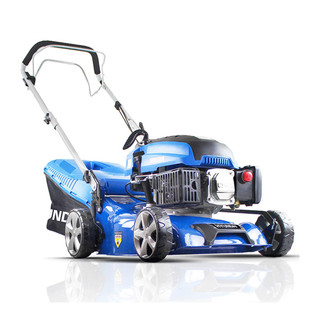
Shop All Lawn Mowers
1. Electric Lawnmowers vs. Petrol Lawnmowers
The “electric vs petrol lawnmower” debate used to be simple: petrol was for big lawns and thick grass, electric was for small patches. In 2026, that is no longer a fair summary. Cordless battery tech and brushless motors have pushed electric into territory that used to be petrol-only.
That said, there are still trade-offs. The best option depends on your lawn size, how often you mow, whether you let grass get long, and whether you want “quick and quiet” or “maximum brute force”.
Electric mower advantages (and where petrol still wins)
Electric mowers tend to suit most UK gardens because they:
- Start instantly (no pull cord, no warm-up)
- Are typically quieter, which matters if you mow early or have close neighbours
- Have fewer service items (no spark plug, no carburettor, no oil changes)
- Avoid fuel storage, fuel mixing, and stale petrol issues
- Reduce local exhaust fumes at the point of use
Petrol still has strengths:
- Refuel in minutes, rather than recharge
- Often better for very large lawns, thick rough grass, or infrequent “rescue mowing”
- Great where you have no interest in managing batteries or cables
Quick comparison table: electric vs petrol lawnmower
| Factor | Electric lawnmower (corded or cordless) | Petrol lawnmower |
|---|---|---|
| Starting | Push-button or safety lever start | Pull start (sometimes electric-start models) |
| Noise | Usually lower | Typically louder |
| Emissions at point of use | None | Exhaust emissions present |
| Maintenance | Low (blade, cleaning, occasional checks) | Higher (oil, filters, spark plug, fuel system) |
| Running costs | Electricity and blades | Fuel, servicing, blades |
| Power delivery | Strong, consistent torque (especially brushless) | Strong; well-suited to heavy, continuous use |
| Runtime | Corded is unlimited; cordless depends on batteries | Refuel and go |
| Storage | Clean and simple | Fuel storage considerations, smells, winter prep |
| Best for | Most small to medium lawns; larger lawns with the right battery system | Large lawns, rougher conditions, heavy mowing sessions |
Why the shift from petrol to electric is accelerating
Most households are not choosing electric to make a political statement. They are choosing electric because it is easier to live with.
The big drivers behind the move include:
- Lower noise: more pleasant for you and more considerate to neighbours.
- Cleaner operation: no petrol fumes while mowing, and less messy storage.
- Less maintenance: fewer parts to service, fewer consumables.
- Better modern performance: brushless motors and improved battery packs mean electric is no longer “weak by default”.
If you are switching from petrol, the key mindset change is this: you stop thinking about engine size and start thinking about cutting width, drive type, battery platform (if cordless), and mowing routine.
2. Different Types of Electric Lawnmowers
Electric lawnmowers are not one category. Your experience can vary massively depending on how the mower gets power and how it cuts the grass.
2.1 Cordless vs Corded Electric Lawnmowers
A useful first split is:
- Corded electric mowers: plug into the mains and run continuously.
- Cordless electric mowers: run on battery packs (one, two, or more).
Before you pick a type, read the table below. It captures the trade-offs most buyers actually feel after a few weekends of mowing.
Corded vs cordless comparison table
| Criteria | Corded Electric Mower | Cordless (Battery) Mower |
|---|---|---|
| Power source | Direct mains electricity via cable | Rechargeable battery pack(s) |
| Runtime | Effectively unlimited as long as plugged in | Limited by battery (roughly 30 to 60 min typical per charge) |
| Range | Restricted by cable length and socket location | Full freedom of movement anywhere in the garden |
| Mobility / handling | Very light but cable can tangle and is a trip/cut hazard | Heavier due to battery but no cable to manage |
| Best lawn size | Small to modest lawns near the house | Small to medium lawns; larger if you have spare batteries |
| Set-up needed | Extension lead and safe cable routing | Charging batteries and managing charge cycles |
| Purchase cost | Usually cheaper to buy | Higher upfront cost for mower plus batteries |
| Long-term costs | Low; mainly electricity and occasional blade replacement | Battery replacement after several years adds cost |
| Noise level | Quiet compared with petrol | Similarly quiet; some models even quieter under load |
| Environmental impact | No direct emissions; uses grid electricity | No direct emissions; battery production and disposal to consider |
| Ideal user / use case | Budget-conscious, has easy outdoor socket, simple small lawn | Wants cable-free convenience, has obstacles or awkward access, may already own same battery system |
Corded electric mowers: who they suit best
Corded mowers make sense if you have:
- A smaller lawn near the house
- A convenient outdoor socket
- A straightforward lawn layout (not too many trees, beds, or tight corners)
The main benefit is simple: unlimited runtime. You can mow as long as you like without thinking about charging or spare batteries. The compromise is that you have to learn cable management. That means:
- Routing the cable behind you
- Working in a pattern that keeps the cable away from the cutting deck
- Using a proper outdoor extension lead where needed
If you want an easy, garden-friendly extension lead, an example option is the Masterplug MSTCT1513 Garden Extension Lead 240V 15m.
Cordless (battery-powered) mowers: petrol-like freedom without the fumes
A battery powered electric lawn mower gives you the freedom that petrol owners love, but without fuel mixing, pull starts, or exhaust fumes. For most people, this is the most enjoyable way to mow.
The biggest “win” with cordless is choosing a mower that fits a battery platform you will stick with. Many buyers already own a compatible cordless drill or garden tool range, so it makes sense to stay in the same ecosystem.
Toolden has dedicated battery and charger ranges for major cordless platforms, including:
- Milwaukee batteries & chargers
- DeWalt batteries & chargers
- Makita batteries & chargers
- Einhell batteries & chargers
- Bosch batteries & chargers
If you are comparing packs across brands, focus on two numbers:
- Volts (V): a rough indicator of power potential. Higher voltage systems often handle tougher conditions better, especially self-propelled mowers or larger cutting widths.
- Amp-hours (Ah): a rough indicator of capacity and runtime. Higher Ah usually means longer runtime, but also more weight.
A handy way to compare batteries across systems is to think in watt-hours (Wh):
Wh = V × Ah
Example: an 18V 5.0Ah battery is about 90Wh. Two of them in a twin-battery mower can be about 180Wh (depending on how the mower uses them).
That still does not give you exact runtime, because mowing load changes with grass length, moisture, cutting height, and blade sharpness. But it helps you compare “small battery vs big battery” realistically.
If you are building a cordless kit from scratch, browse Toolden’s full batteries & chargers selection, or jump straight to batteries and chargers.
2.2 Types of electric lawnmowers according to cutting system and application
Once you have picked corded vs cordless, the next decision is how the mower cuts and moves. This affects cut quality, ease of use, and how forgiving the mower is if you miss a week.
Rotary electric lawnmowers: the most popular, practical all-rounders
Rotary mowers use a fast-spinning horizontal blade. They are the most common choice in the UK because they:
- Handle slightly longer grass better than cylinders
- Work well on most lawn types
- Usually collect grass effectively in a rear box
- Often offer mulching options as an add-on or included feature
If you are choosing your first cordless electric lawn mower, a rotary design is typically the safest bet.
Cylinder electric lawnmowers: best for show-lawn stripes and a finer finish
Cylinder mowers cut using a rotating cylinder of blades against a fixed bottom blade, like scissors. This can give a very clean cut, which is great for lawn health and appearance.
Choose a cylinder mower if:
- You mow frequently (little and often)
- You want a classic striped finish
- Your lawn is reasonably flat and well maintained
Avoid cylinder mowers if you regularly let the grass grow long or your lawn is bumpy, because they can struggle and may scalp uneven ground.
Hover lawnmowers: useful for slopes and awkward shapes
Hover mowers float on a cushion of air, which makes them handy on:
- Sloped lawns
- Irregular shapes
- Banks and tricky edges
They are usually light and easy to manoeuvre, but they can be less satisfying for formal lawns because striping and collection can be more limited depending on the model.
Electric push mowers: simple, light, and budget-friendly
A push mower is exactly what it sounds like: you provide the movement. In electric form, these are often:
- Lighter
- Simpler
- Cheaper than self-propelled designs
They are ideal for flat lawns, smaller gardens, or anyone who wants maximum control and minimal complexity.
Self-propelled mowers: the comfort upgrade for bigger or sloped lawns
Self-propelled mowers drive their wheels, reducing effort. They are worth paying for if you have:
- A sloped garden
- A larger lawn that becomes tiring to push
- Thick grass where the mower feels heavy under load
Self-propelled cordless models have come a long way, and they are a strong “petrol replacement” option when matched with the right battery system.
Mowers with mulchers: tidy lawns and free fertiliser
Mulching mowers (or mowers with a mulching plug) chop clippings into finer pieces and drop them back into the grass. This can:
- Reduce how often you empty the grass box
- Return nutrients to the lawn
- Help moisture retention during dry spells
Mulching works best when you mow regularly and the grass is not too long or wet. A simple example accessory is a mulching plug such as Makita GB00000067 Mulching Plug for DLM330 Cordless Lawn Mowers.
Robot lawnmowers: set-and-forget mowing
Robot mowers are designed to maintain the lawn little and often. They can be brilliant if you want a consistently neat lawn without spending your weekends behind a mower.
Key things to understand before buying a robot mower:
- Boundary wire or boundary tech: many systems use a perimeter wire to define the mowing area and keep the robot off beds and paths.
- Obstacles: trees, narrow passages, and steep slopes can change which models work well.
- App integration: many models offer scheduling, zones, and remote control.
Robot mowers are a separate buying journey because installation and garden layout matter more than raw cutting width.
Battery-powered tractors and riding lawnmowers: for big land, not typical gardens
Riding mowers and lawn tractors make sense when:
- You have very large areas
- You want to tow small garden trailers or attachments
- You prefer seated mowing for comfort or mobility reasons
For most UK homes, a wide-deck cordless walk-behind mower is the more practical “big lawn” step-up, especially if storage space is limited.
Shop electric lawnmowers by brand on Toolden
If you are ready to browse, here are quick links to leading mower ranges on Toolden:
- Milwaukee lawn mowers
- DeWalt lawn mowers
- Makita lawn mowers
- Einhell lawnmowers
- Or view all lawn mowers in one place
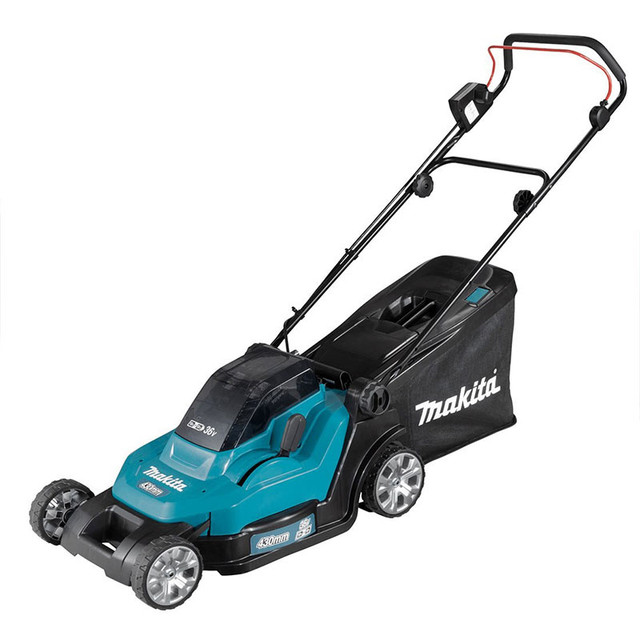
Shop Makita Lawn Mowers!
Shop DeWalt Lawn Mowers!
Shop Milwaukee Lawn Mowers!
3. Things to Consider Before Choosing an Electric Lawnmower
Choosing an electric mower is not just about “corded vs cordless”. The best mower is the one that fits your lawn and your habits.
Below is a practical checklist of what matters most, especially if you are comparing small electric lawnmowers and large electric lawnmowers, or deciding between an 18V vs 36V mower.
Lawn size (m²) and shape
Start with lawn area, then adjust for complexity:
- Simple rectangle lawn: you can size more tightly.
- Lots of beds, trees, paths, and corners: consider a smaller, more manoeuvrable deck, or budget for longer mowing time.
- Front plus back lawns: cordless becomes more appealing, unless you have sockets in both places.
If you are unsure, measure roughly: length × width for each area (in metres), then add them up to get square metres.
Cutting width (deck size) and why it matters
This is your biggest time-saver. A wider deck means fewer passes, but it also means:
- More weight
- Larger storage footprint
- Often higher power demand (especially for cordless)
Use these UK-friendly starting points:
- Small lawn (under 150m²): 30 to 34cm deck
- Medium lawn (150 to 400m²): 35 to 42cm deck
- Large lawn (400m²+): 43cm+ deck
Tip: if you have narrow gates, tight paths, or awkward corners, do not automatically go wide. A slightly smaller deck that fits everywhere can be quicker overall than dragging a wide mower into tight spaces.
Cutting height adjustment: do not overlook it
A good mower should have at least 3 to 5 cutting height stages. More is better, but only if it is easy to use.
Why it matters:
- In spring, you may want to cut higher to protect new growth.
- In summer, cutting too low can stress the lawn and encourage drying.
- In autumn, you might change height as growth slows.
Central height adjustment (one lever) is usually more convenient than adjusting each wheel.
Power rating for corded electric lawnmowers
Corded models are often listed in watts (W). Higher wattage can help in thicker grass, but it is not the only factor. Blade design, deck airflow, and grass collection design matter too.
As a general guide:
- Smaller corded mowers often suit routine mowing on small lawns.
- If you have thick grass, a higher-powered model and a sharp blade matter more than chasing the biggest number.
Lawnmower battery life and power for cordless models
For a cordless mower, battery decisions often decide whether you love it or regret it.
What changes real runtime:
- Battery capacity (Ah and Wh)
- Cutting width
- Cutting height (higher height is often easier than scalping low)
- Grass length and wetness
- Blade sharpness
- Whether the mower is self-propelled
Practical advice:
- If your lawn is near the upper end of your mower’s “recommended area”, plan to own a second battery set.
- If you mow less often and let grass get long, you will need more capacity than someone mowing weekly.
If you already own compatible packs, staying in the same ecosystem can save a lot. For example, browsing DeWalt batteries & chargers or Makita batteries & chargers can be a sensible step before committing to a mower platform.
Drive type: push vs self-propelled
Ask yourself one honest question: do you enjoy pushing a mower?
- Choose push if your lawn is flat and small enough that it feels easy.
- Choose self-propelled if you have slopes, a heavy mower, or a bigger lawn.
Self-propelled is not “lazy”, it is a fatigue reducer. Less fatigue means more consistent mowing, and consistent mowing usually means a better lawn.
Grass handling options: collect, mulch, side discharge
Most rotary mowers can collect into a grass box. Some can also mulch, and a few offer side discharge.
- Collection: best for a clean look, and for reducing thatch.
- Mulching: best when mowing regularly and you want to feed the lawn.
- Side discharge: can be useful for longer grass, but it leaves clippings visible.
If you like the mulching idea, make sure the mower is designed for it, or supports a plug. An example is Makita 191D46-2 Mulching Plug for DLM382/DLM432 Cordless Lawn Mowers.
Weight, ergonomics, and ease of turning
A mower can look perfect on paper and feel awkward in your hands.
Look for:
- Comfortable handle shape and grip
- Easy folding handles for storage
- Balanced feel when turning at the end of each pass
- Easy removal and fitting of the grass box
If you are buying for a household where different people mow, ergonomics matter even more.
Size and storage
Measure your shed, garage, or storage space before you buy.
Consider:
- Foldable handles
- Vertical storage capability (some models store upright)
- Battery removal (store batteries indoors to protect them)
Noise level and neighbours
Electric mowers are usually quieter than petrol lawn mowers, but noise still varies. If you live in a tight area, it is worth prioritising quieter designs and keeping blades sharp (dull blades can make mowing louder and rougher).
Build quality, warranty, and support
Look for:
- Solid deck materials (especially if you bump edges often)
- Reliable switches and safety keys
- Brand support and parts availability
This is another reason buyers choose big battery ecosystems, because they tend to have better long-term support.
Price and total cost of ownership
For cordless models, the “real price” includes:
- Mower body
- Batteries (if not included)
- Charger (if not included)
- Potential second battery set in future
If you already own batteries, a body-only mower can be great value. If you do not, a kit (mower + batteries + charger) is often the simplest way to start.
4. Functions, Accessories, and Attachments to Look For Before Buying
Once you have chosen the right size and power type, features become the difference between “fine” and “I love using this”.
Mulching plugs
Mulching plugs convert many collection mowers into mulchers. Choose mulching if:
- You mow regularly
- You prefer not to empty a grass box every few lines
- You want clippings broken down into the lawn as natural fertiliser
Example accessory: Makita GB00000067 Mulching Plug for DLM330 Cordless Lawn Mowers.
Rear rollers: the professional “British stripes” look
If you want classic stripes, a rear roller helps flatten grass in alternating directions as you mow.
Rear rollers are especially popular in the UK because:
- They produce visible stripes quickly
- They help with a formal lawn appearance
Do note: rollers are not magic. Stripes are more visible when you mow regularly and keep the lawn healthy.
Self-propelled drive: the slope saver
Self-propelled drive is a must-have if:
- Your garden slopes
- Your mower is heavy (often true with larger cordless models)
- You want to reduce strain and finish mowing faster
A grass box with a level indicator or foldable design
A good grass box:
- Is easy to remove and refit
- Has a decent capacity for your lawn size
- Ideally includes a fill indicator so you stop guessing
Some mowers also offer fabric bags that collapse for easier storage.
Handlebars and handle adjustments
Look for:
- Multiple height settings (useful if different people mow)
- Foldable handles
- Secure clamps that do not loosen with vibration
Grass combs and edge cutting
If you want a clean edge line, look for designs that let the mower cut closer to walls and borders. Some mowers include comb-style features that lift grass near edges.
Leaf collect mode
Some mowers are better at picking up leaves than others. If you have trees, a mower that can “vacuum” leaves into the box can save time in autumn.
Anti-vibration systems and general comfort
Cordless and corded mowers are generally smoother than petrol, but vibration still matters:
- Less vibration means less fatigue
- It can also reduce hand and arm discomfort during longer mowing sessions
Comfort features might not sound exciting, but they are often what turns mowing from a chore into an easy routine.
5. Frequently Asked Questions (FAQs)
Can you cut wet grass with an electric lawnmower?
Technically possible, but strongly discouraged.
Wet grass tends to:
- Clog the deck and chute
- Produce a rough, uneven cut
- Stick inside the grass box
- Increase slipping risk underfoot
For corded models, there is an additional concern: wet conditions increase the risk of electrical hazards if you use damaged leads or unsafe connections. If you ever do mow in damp conditions, make cable safety and RCD protection non-negotiable.
How long do electric mower batteries last per charge and overall?
Per charge, a lot depends on deck size, grass length, and battery capacity, but many cordless mowers land in the ballpark of 30 to 60 minutes in typical conditions.
Overall lifespan: many lithium-ion batteries are designed for hundreds of charge cycles. In normal home use, that often works out at around 3 to 5 years before you notice a meaningful drop in runtime. How you store and charge batteries makes a big difference.
Simple runtime estimate:
- Convert your battery to watt-hours: Wh = V × Ah
- More Wh generally equals more mowing time.
If your lawn pushes the limits of one charge, the best fix is usually practical rather than technical: buy a second compatible battery so you can swap and keep mowing.
You can explore compatible options in Toolden’s batteries section, or within brand ranges like Milwaukee batteries & chargers.
Is an electric mower powerful enough for tall grass?
Yes, with the right mower and the right approach.
Two big factors matter:
- Brushless motors: brushless designs tend to be more efficient, run cooler, and maintain torque under load. That helps in thicker, taller grass.
- How you mow: if the lawn is very overgrown, raise the cutting height and take a first pass, then lower the height for a second finishing pass.
If you regularly deal with long grass, also consider:
- Wider cutting decks with strong airflow
- Self-propelled drive (less effort when the mower feels heavy)
- Having spare battery capacity for tougher sessions
Can you store an electric lawnmower outside?
It is better not to.
Electric mowers contain motors, switches, and electrical contacts that do not love moisture, frost, and long-term damp exposure. If you must store outside:
- Use a waterproof cover designed for outdoor equipment
- Keep it off the ground
- Store batteries indoors (for cordless models)
- Avoid leaving it where condensation builds up
A shed, garage, or sheltered storage box is a safer long-term solution.
Are electric lawnmowers better for the environment?
For most homeowners, electric is a positive move for sustainable lawn care, mainly because:
- No exhaust emissions at the point of use
- Lower noise pollution
- Less ongoing consumption of engine oils and fuel
Cordless mowers do involve battery manufacturing and end-of-life recycling, so the most sustainable choice is usually the one you will keep and use for years. Buying into a long-lived battery ecosystem, then using batteries across multiple tools, can also reduce waste over time.
Which are better: electric lawnmowers or hand pushed versions?
It depends on what you mean by “hand pushed”.
- If you mean a manual cylinder mower, it can be excellent for small, flat lawns and frequent mowing. It is quiet and simple.
- If you mean a push electric mower, it gives you powered cutting with simple handling, often at a lower cost than self-propelled.
For most households, a push electric mower is the easiest balance of convenience and affordability, especially for small and medium lawns.
How much electricity does an electric lawnmower use?
Electricity use depends on motor power and time.
A simple estimate:
- If a corded mower uses roughly 1,000W (1kW) while mowing
- And you mow for 30 minutes (0.5 hours)
- You use about 0.5kWh of electricity
Cordless mowers consume electricity too, but you see it through battery charging rather than direct use. Either way, electric mowing is typically inexpensive to run compared with buying petrol, especially when maintenance costs are considered.
What is a good electric lawnmower?
A good electric mower is one that matches:
- Your lawn size
- Your storage space
- Your mowing routine
- Your preferred effort level (push vs self-propelled)
For many UK buyers, a “good” cordless mower often includes:
- Rotary cutting
- Central cutting height adjustment
- A practical grass box with a fill indicator
- A brushless motor
- Batteries sized appropriately for your lawn
To see a wide cross-section of options, browse Toolden’s full lawn mowers range and filter by power type, cutting width, and brand.
Which brands for electric lawnmowers do you recommend and why?
A few brand ecosystems stand out because they combine mower performance with strong battery platforms and wider tool compatibility:
- Milwaukee: a premium cordless ecosystem with professional-grade outdoor options. Browse Milwaukee lawn mowers and Milwaukee batteries & chargers.
- DeWalt: strong cordless performance, including higher-voltage options aimed at petrol replacement. Browse DeWalt lawn mowers and DeWalt batteries & chargers.
- Makita: a long-established battery platform with lots of compatible tools and mower options. Browse Makita lawn mowers and Makita batteries & chargers.
- Einhell: popular with homeowners who want value and a broad DIY-friendly platform. Browse Einhell lawnmowers and Einhell batteries & chargers.
- Bosch: a well-known platform with a range of garden tools and battery options. Browse Bosch gardening tools and Bosch batteries & chargers.
The “best” brand is usually the one that matches batteries you already own, or the one you are happy to commit to across multiple tools.
Can I cut long grass with an electric lawn mower?
Yes, but do it in stages:
- Raise cutting height for the first pass
- Mow slowly and do not overload the mower
- If the grass box fills quickly, either empty more often or consider mulching only if the grass is not too wet or long
- Lower the height and do a second pass to finish
Trying to scalp long grass low in one go is the fastest way to clog the deck and drain a battery.
What makes electric lawn mowers safe with electric shock?
Safety comes from both mower design and user habits.
Key safety features often include:
- Two-step start systems and safety levers
- Cable strain relief and routing features (corded)
- Safety keys or removable battery packs (cordless)
- Insulated housings and protected switches
For corded mowing, adding an RCD device is a common extra safety layer. One example is the Masterplug MSTARCDKGMP Safety RCD Adaptor.
What size electric lawn mower do I need?
Use lawn area as your baseline:
- Under 150m²: 30 to 34cm cutting width
- 150 to 400m²: 35 to 42cm cutting width
- 400m²+: 43cm+ cutting width, and consider self-propelled plus extra battery capacity
Then adjust for lawn shape. Narrow passages and lots of obstacles often push you towards slightly smaller decks for easier manoeuvring.
6. Maintenance and Safety Tips
A well-maintained mower cuts better, lasts longer, and is safer. Below are practical, do-this-not-that tips you can follow across corded and cordless models.
Basic safety advice before any work
- Disconnect power before inspecting, cleaning, or adjusting the mower
- Corded: unplug from the mains
- Cordless: remove the battery pack and any safety key
- Let the blade stop completely before lifting or tilting the mower
- Wear gloves when handling blades or cleaning the deck
- Work in good light, on stable ground
- If you are unsure, follow the manufacturer manual for your model
Safe operating practices
- Clear debris (sticks, stones, toys) before mowing
- Keep children and pets indoors or well away from the mowing area
- Mow across slopes rather than straight up and down where possible
- Do not rush corners and edges, especially near gravel or borders
- Use a steady pace to reduce clogging and improve cut quality
After-each-use care
- Brush off grass clippings from the top of the deck and wheels
- Empty the grass box and let it dry if it is damp
- Wipe down handles and controls
- Store the mower somewhere dry and ventilated
Specific checks for corded mowers
- Inspect the cable before each use for cuts, splits, and crushed sections
- Make sure the extension lead is rated for outdoor use
- Keep the cable behind you and away from the cutting path
- Use an RCD adaptor for extra protection, for example Masterplug MSTARCDKGMP Safety RCD Adaptor
- Avoid mowing in wet conditions
Specific checks for cordless mowers
- Check battery contacts for dirt and corrosion
- Make sure batteries latch securely and do not wobble
- Avoid fully draining batteries every time if you can help it
- If you notice sudden drops in runtime, test with a second battery to isolate whether the battery or mower is the issue
Motors, vents, and fasteners
- Keep ventilation slots clear of grass dust and debris
- Check visible bolts and handle clamps occasionally for tightness
- If the mower sounds different, stop and inspect rather than pushing on
Blade maintenance: keep it sharp for a healthy lawn
A sharp blade:
- Cuts cleanly, reducing lawn stress and browning
- Uses less power (especially important for cordless)
- Improves collection and mulching
Practical guidance:
- Check blade condition every few mowing sessions in peak season
- Sharpen when you see tearing rather than clean cutting, or if the mower struggles more than usual
- Clean the underside of the deck (with power disconnected) to prevent build-up
If you are not comfortable removing blades, a local garden equipment service can sharpen or replace them safely.
Battery storage: avoid extreme temperatures
- Store batteries indoors in a dry place
- Avoid freezing temperatures and strong heat (such as sheds that bake in summer)
- Do not leave batteries on a charger permanently unless the manufacturer states it is safe
- If storing long term, many users store batteries partially charged rather than fully full or fully empty
If you are investing in extra packs, browse batteries and make sure you match the right platform.
Cable safety: use an RCD for corded models
- Use an RCD adaptor and test it before use
- Keep cables off wet ground where possible
- Avoid running the cable across pathways where it can be tripped over
- Replace damaged leads immediately rather than taping them
Storage and winterising
- Clean the mower thoroughly before storing for winter
- Store in a dry location to prevent corrosion and electrical issues
- Remove batteries and store them indoors
- Do a quick spring check: blade sharpness, wheel movement, cable condition, battery charge health
7. Conclusion
Electric is no longer just for “small gardens”. In 2026, a well-chosen electric mower is a genuine petrol replacement for the vast majority of UK households, especially when you pick the right cutting width, the right drive type, and a battery platform that fits your garden and your routine.
If you want to compare models right away, start here:
Shop All Lawn Mowers
Shop Makita Lawn Mowers!
Shop DeWalt Lawn Mowers!
Shop Milwaukee Lawn Mowers!
Need some help with your order? Our new help centre has a wide range of helpful articles and guides!
If you have any additional queries, please do not hesitate to contact us below: