
DEWALT 12V XR vs 18V XR vs 54V Flexvolt Explained

Choosing the right DEWALT platform depends on your trade. In Europe, systems are labelled 10.8V/12V, 18V, and 54V based on nominal voltage. In the US, the same systems are marketed as 12V MAX, 20V MAX, and 60V MAX based on peak voltage. Explore the full DEWALT tool range at Toolden.
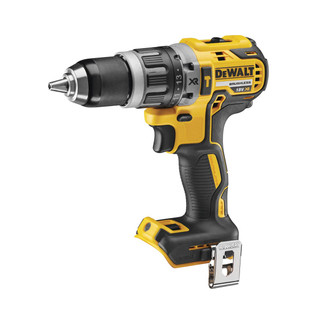
Shop All DeWalt
| Feature | 12V XR (Sub-Compact) | 18V XR (The Standard) | 54V XR FLEXVOLT (Heavy Duty) |
| Best For | Kitchen Fitters / Cabinetry / Overhead | General Builders / Carpenters / Sparks | Roofers / Groundworkers / Heavy Install |
| Motor Type | Brushless | Brushless & Brushed | High-Power Brushless |
| Weight | Ultralight (<1kg usually) | Standard | Heavy / Bulky |
| Battery Voltage | 10.8V / 12V | 18V | 18V / 54V Hybrid |
| Charger Compatibility | Specific 12V/multi-voltage chargers | All XR Chargers | All XR Chargers |
The DeWalt 12V XR Cordless System Explained
The 12V XR system is built around compact, lightweight tools for tight spaces and overhead work. In the US it’s called 12V MAX XTREME, but it’s the same platform. The focus is on control and access rather than raw power, making it a useful addition for specific trade tasks.
These are brushless tools designed for one-handed use and reduced fatigue. They suit light-duty work like cabinetry, electrical installs, and general fitting, where a full-size 18V tool can feel excessive. The power-to-weight balance is the main advantage.
The naming follows the usual pattern. “12V MAX” refers to peak voltage, while 10.8V is the nominal working voltage. In practice, there’s no difference between the two.
It’s a smaller, focused range built around core tools rather than a full ecosystem. The idea is to complement the 18V XR line, not replace it.
Drilling/Driver 12V Cordless Tools
These drills are designed to fit inside cabinets, between joists, and in awkward mechanical spaces without straining your wrist.
- DCD701 12V MAX Brushless 3/8 in. Drill/Driver: Weighing less than 1kg (body only), this drill delivers up to 57.5Nm of torque. It features a 15-position adjustable torque control for consistent screwdriving into various woods and plastics.
- DCD703 12V MAX Brushless 5-in-1 Multi-Head Drill/Driver: A highly versatile installation drill featuring interchangeable chucks (standard keyless, hex driver, offset, and right-angle). It is the ultimate problem-solver for kitchen fitters working in confined corners.
- DCD706 12V MAX Brushless 3/8 in. Hammer Drill: This sub-compact hammer drill measures just 168mm in length. While not meant for heavy concrete, its hammer function easily handles masonry block and brick for light wall fixings and anchor screws.
Fastening Cordless Tools (Impact/Ratchet)
For automotive technicians, plumbers, and electricians, fastening in cramped quarters requires precision rather than raw, bolt-snapping torque.
- DCF503/DCF504 – Brushless 3/8 in. and 1/4 in. Ratchets: Available in standard and extended reach configurations, these cordless ratchets eliminate the manual swing arc needed in tight engine bays or behind plumbing fixtures. They feature strong internal mechanisms built to withstand manual torquing if a bolt is particularly stubborn.
- DCF601 12V MAX Brushless 1/4 in. Screwdriver: A dedicated screwdriving tool with a drop-and-load hex chuck. It provides exceptional control for driving small fasteners into delicate materials like MDF, drywall, or electronics housings without stripping the heads or splitting the wood.
- DCF801 12V MAX Brushless 1/4 in. Impact Driver: Packing a surprising punch for its size, this impact driver provides 163Nm of torque. It is around 38.5mm shorter than its previous generation, making it the go-to tool for driving long screws in cramped floor joists.
- DCF901/DCF902/DCF903 – Brushless 1/2 in. and 3/8 in. Impact Wrenches: These compact wrenches deliver rapid, controlled impact force. They are tailored for mechanics and scaffolders who need to strip down assemblies quickly without the bulk of a full-sized 18V high-torque wrench weighing down their tool belt.
Cutting Cordless Tools
Small-scale cutting tasks require lightweight tools that won’t vibrate excessively in one hand.
- DCS512 12V MAX 5-3/8 in. Brushless Circular Saw: Ideal for cutting sheet goods, OSB, and thin timber on the fly. It is light enough to carry up a ladder for quick roofing adjustments or soffit cuts.
- DCS312 12V MAX One-Handed Reciprocating Saw: Perfectly balanced for one-handed operation, allowing you to hold a pipe or conduit with your free hand while making clean cuts in copper, PVC, or small branches.
- DCS353 12V MAX Oscillating Multi-Tool: A lifesaver for plunge cuts, undercutting door jambs, and removing grout. The brushless motor maintains oscillation speed under load, and the quick-change accessory system keeps downtime to a minimum.
- DCS375 12V MAX 1-3/4 in. Band Saw: Specifically engineered for electricians and plumbers cutting strut, conduit, and threaded rod. It provides spark-free, clean cuts that don’t require subsequent filing or deburring.
Specialty & Site 12V DEWALT Tools
Site preparation and specialised finishing require their own subset of lightweight tools.
- DCH072 12V MAX 9/16 in. SDS PLUS Rotary Hammer: A highly specialised micro-SDS drill. It is strictly for repetitive, small-diameter anchor drilling (like 6mm-10mm plugs) into concrete ceilings or walls, saving the user from shoulder fatigue.
- DCL040/DCL050 LED Worklights: Essential site lighting that utilises your existing 12V batteries. They provide bright, focused beams or broad area illumination for dark cupboards and lofts.
- DCE088/DCE089 Green Line Lasers (Crossline and 360): Utilising green beam technology (which is 4x more visible to the human eye than red beams), these lasers run seamlessly on 12V batteries, providing highly accurate levelling for tiling, ceiling grids, and stud walls.
Key Features of the 12V System
Brushless motors
Brushless motors replace carbon brushes with electronic control and magnets. That removes internal friction, reduces heat, and improves efficiency. The result is longer runtime, a more compact design, and less wear over time.
This shift is what made 12V tools genuinely useful on site. With better efficiency, the tool can adjust power draw based on the load, rather than running at a fixed output. That improves battery life and reduces strain on the motor, making smaller tools far more capable than they used to be.
Batteries (DCB12X Series)
DEWALT’s 12V batteries slide into the base of the tool, similar to the 18V system, rather than slotting into the handle like older pod-style systems.
- 12V MAX Compact (DCB124): Generally available in 1.5Ah, 2.0Ah, and 3.0Ah sizes, these lithium-ion slide packs keep the tool incredibly light. They feature no memory effect and virtually no self-discharge.
- POWERSTACK™: DEWALT is expanding its revolutionary PowerStack pouch-cell technology into the 12V line. These batteries offer lower internal resistance, meaning they can deliver higher currents on demand, effectively giving a 12V tool a noticeable “boost” in power while remaining ultra-compact.
Chargers
DEWALT’s charging infrastructure is highly versatile. Many multi-voltage chargers can handle both 12V and 18V platforms seamlessly.
- DCB112 Multi-Voltage Charger: A standard compact charger that efficiently tops up 10.8V, 12V, 14.4V, and 18V XR Li-Ion batteries. Standard chargers provide a steady, safe charge that prolongs overall battery health. DEWALT also offers faster models (like the DCB115) to minimise downtime for high-volume users.
Key Differences Between 12V vs. 20V/XR
Compactness
Compactness
12V tools are smaller and lighter than 18V models. That size makes a difference in tight spaces like between joists, inside cabinets, or in engine bays where larger tools won’t fit.
Power
They are capable, but not built for heavy work. A 12V drill handles screws and pilot holes without issue, but larger bits, hole saws, or masonry work still need an 18V tool.
Battery compatibility
12V tools only work with 12V (10.8V) batteries. They’re not compatible with 18V XR or FlexVolt packs due to different connections and voltage. Chargers are often shared across ranges.
Target audience
This system is aimed at trades that need control and access over outright power. It suits electricians, plumbers, HVAC work, automotive jobs, and cabinet fitting, where space is limited and tools are used for long periods.
FAQs
Are DEWALT 12V tools any good?
Yes. They’re well suited to light drilling and fastening. With brushless motors and solid gearboxes, they handle most day-to-day tasks while reducing strain compared to larger tools.
Does DEWALT still make 12V tools?
Yes. The range has expanded with newer tools like ratchets, band saws, and multi-head drills, showing ongoing support for the platform.
Is DEWALT discontinuing 12V?
No. The line is still being developed, with newer batteries like PowerStack and additional specialised tools being added.
Are DEWALT 12V and 18V batteries interchangeable?
No. They use different connections and voltage levels. An 18V battery won’t fit a 12V tool, and a 12V battery won’t run an 18V tool.
Are DEWALT 12V and 20V batteries interchangeable?
No. 20V MAX is the same as 18V XR, so the same limitation applies. They are not compatible with 12V tools.
Can you charge a 12V DEWALT battery on a 20V charger?
Often yes. Many DEWALT chargers are multi-voltage and will charge 12V, 18V, and 20V batteries. Check the charger label to confirm compatibility.
The DeWalt 18V XR Cordless System Explained
The 18V XR system is DEWALT’s flagship platform, balancing professional power, extensive runtime, and a massive ecosystem of tools. In the UK and Europe, it is labeled 18V XR; in the US, it is sold as 20V MAX. They are identical tools.
If you are starting your collection, the smartest move is to look at a DEWALT 18V XR Kit Builder to customise your loadout. With over 250+ products available, the 18V XR platform covers every conceivable trade, from heavy-duty SDS masonry drilling to precision woodworking routers.
DeWalt Kit Builder
The “20V Max” Note for UK Readers: It is crucial to understand that 18V XR (UK/EU) is identical to 20V Max (USA). The internal lithium-ion cells are exactly the same. The difference is purely legal marketing: the EU mandates measuring the “nominal” (sustained) voltage of 18V, while US laws allow marketing the “peak” (initial resting) voltage of 20V.
Key Features of the 18V XR System
Brushless motors
DEWALT’s 18V brushless motors are highly efficient, transferring maximum battery energy into torque rather than wasting it as friction and heat. This allows 18V tools to tackle heavy-duty jobs previously reserved for corded tools.
Tools like the DEWALT DCG405N 18V Brushless Angle Grinder perfectly demonstrate this. The brushless motor, paired with an electronic clutch and brake, delivers the sustained high RPM needed to cut thick steel without bogging down, a feat older brushed models struggled with.
PowerStack Technology
PowerStack is DEWALT’s revolutionary battery technology that replaces traditional cylindrical cells with flat, stacked lithium-ion pouch cells. It acts as a “turbo” for 18V tools, delivering more power in a lighter package.
By utilising pouch cells, 18V PowerStack Batteries (DCBP518) eliminate the dead space found between round cylindrical cells. This design vastly reduces internal electrical resistance. The result? The battery can discharge energy much faster, delivering up to 50% more power to the tool, doubling the lifespan (charge cycles), and providing faster application speeds without forcing you to upgrade to a heavier 54V system.
Battery compatibility
The 18V XR system features the widest compatibility in the DEWALT ecosystem. Any 18V XR tool will run on any 18V XR battery, from a compact 2.0Ah up to a massive 54V FlexVolt battery (which intelligently steps down to 18V).
Chargers
18V XR chargers are robust and fast. They are the backbone of site power management, ensuring you never experience downtime.
The standard DEWALT DCB115 Multi-Voltage Fast Charger is a site staple, capable of charging a 2.0Ah battery in 30 minutes. DEWALT also offers dual-port chargers and 4-port fast chargers built directly into ToughSystem toolboxes for heavy commercial users.
Target audience
The 18V XR system is the “Goldilocks” platform. It is strictly targeted at general builders, carpenters, electricians, plumbers, and multi-trade professionals who need a single, reliable battery platform that can run a drill, a circular saw, a nail gun, and a jobsite radio all day long.
Bestselling 18V XR Products on toolden.co.uk
- DEWALT DCD996 18V XR Brushless Combi Drill: A heavy-duty combi drill with a tough 3-speed metal transmission, delivering 95Nm of torque for demanding masonry drilling and large hole-sawing.
- DEWALT DCF887 18V XR Brushless Impact Driver: The quintessential site tool. It features 3-speed settings and 205Nm of torque, capable of driving massive timber screws all day.
- DEWALT DCS331 18V XR Cordless Jigsaw: A versatile saw with tool-free blade changes and a variable speed trigger, favoured by carpenters for intricate wood and metal cuts.
- DEWALT DCS355 18V XR Brushless Oscillating Multi-Tool: A must-have for flooring, drywall, and general site adjustments, featuring a fast-change accessory system and variable speed control.
FAQs
Is Dewalt 18V XR the same as 20V Max?
Yes, absolutely. They are identical tools with identical internal battery cells. “18V XR” is the European label based on nominal voltage, while “20V Max” is the North American label based on peak initial voltage.
Are DeWalt 18V and 20V batteries interchangeable?
Yes. An 18V XR battery purchased in the UK will fit and run a 20V Max tool imported from the US, and vice versa. The physical slide mechanism, pins, and electronics are exactly the same.
Can I use an 18V battery for a 54V DeWalt tool?
No. An 18V battery cannot supply the necessary 54 volts to power a FlexVolt tool. The battery will physically slide on, but the tool’s electronics will recognise the inadequate voltage and refuse to operate.
Can all DeWalt 18V chargers charge FlexVolt XR tools?
Technically, chargers charge the batteries, not the tools. Yes, standard 18V XR chargers (like the DCB115) will charge a 54V FlexVolt battery. However, because FlexVolt batteries have massive capacities, a standard 18V charger will take a very long time to fill it. A dedicated fast charger is recommended.
What is “Flexvolt Advantage”?
“Flexvolt Advantage” is a specific line of 18V tools engineered with upgraded electronic modules. They run perfectly on standard 18V batteries, but if they detect a 54V FlexVolt battery, they draw additional current, boosting the tool’s power output by up to 77%.
54V Flexvolt XR System Explained
DEWALT’s 54V FlexVolt system is designed to deliver true corded power in a cordless package. It is engineered for heavy-duty applications where 18V tools would stall, overheat, or drain too quickly.
You can browse the heavy-duty DEWALT FlexVolt collection here. FlexVolt is unique in the power tool world: the battery features a complex internal switching mechanism that changes its configuration from a 54V series setup (for extreme power) to an 18V parallel setup (for extreme runtime in standard tools) depending on what it’s plugged into.
This platform covers high-draw tools like the DEWALT DCS578 54V FlexVolt Circular Saw, large 12-inch mitre saws, heavy-duty SDS MAX demolition hammers, and core drills. These are tools designed for groundworkers tearing up concrete, roofers cutting thick structural timber, and commercial landscapers clearing brush. The massive energy reserves of a DEWALT FlexVolt 9.0Ah Battery (DCB547) ensure these heavy tools can run continuously without tripping internal thermal overloads.
DeWalt FlexVolt Kit Builder
FAQs
Can I use a 54V battery on my 18V drill?
Yes. This is the magic of FlexVolt. When you slide a 54V FlexVolt battery onto a standard 18V XR drill, the battery internally switches to 18V parallel mode, providing you with massive, all-day runtime without damaging the 18V tool.
Can I charge a DEWALT 54V battery with a standard charger?
Yes, you can charge a 54V FlexVolt battery on a standard DEWALT 18V XR charger. However, due to the sheer size of the battery cells, a standard charger will be incredibly slow. Investing in a specific fast charger (like the DCB118) is highly recommended.
Are the 54V DeWalt batteries interchangeable?
Yes, within the DEWALT ecosystem. A 54V FlexVolt battery will power any 54V FlexVolt tool, any 18V XR tool, and any 18V FlexVolt Advantage tool. However, they are not compatible with the smaller 12V XR platform.
DEWALT POWERSHIFT™ Cordless Equipment System
POWERSHIFT is DEWALT’s newest frontier, stepping beyond standard power tools and moving entirely into heavy construction equipment. It is designed to replace petrol-powered light equipment on commercial jobsites.
Explore the DEWALT PowerShift line here. This is a specialised, high-voltage equipment system focused on concrete and site prep. It features massive tools like concrete vibrators, plate compactors, and power screeds. Designed to eliminate the emissions, noise, and maintenance of 2-stroke and 4-stroke petrol engines, POWERSHIFT utilises a proprietary battery interface built exclusively for heavy industrial use.
Battery Compatibility (The “Golden Rules”)
Navigating DEWALT battery compatibility is straightforward once you understand the basic flow of power: high-voltage batteries step down, but low-voltage batteries cannot step up.
- Rule 1: 12V (10.8V) tools only take 12V batteries.
- Rule 2: 18V (20V MAX) tools take 18V batteries and 54V FlexVolt batteries.
- Rule 3: 54V (60V MAX) tools only take 54V FlexVolt batteries.
- Rule 4: Chargers are often multi-voltage. Standard XR chargers handle 12V and 18V (and will slowly charge 54V). Fast chargers handle 18V and 54V rapidly.
Final Notes. Which System is Right for You?
Still unsure where to invest your hard-earned cash? Base your decision on the bulk of your daily work, rather than the occasional heavy task.
- “I’m a Kitchen Fitter or Electrician.” -> 12V XR. You are working overhead, inside cupboards, or behind drywall. Weight is your enemy. The agility and precision of a lightweight drill will save your wrists and get you into corners 18V tools simply can’t reach.
- “I’m a Chippie (Carpenter) or General Builder.” -> 18V XR. You are the jack-of-all-trades. You need one reliable battery platform that smoothly transitions from a circular saw for cutting sheet timber, to an impact driver for framing, to a nailer for skirting, and a radio for break time.
- “I’m a Roofer or Landscaper.” -> 54V FLEXVOLT. You demand brute force. You need to cut thick, wet structural timbers, grind heavy masonry, or use blowers and trimmers all day without the tool stalling out or constantly needing to swap hot batteries.
Need some help with your order? Our new help centre has a wide range of helpful articles and guides!
If you have any additional queries, please do not hesitate to contact us below: