
Makita Multi Tool Accessory Guide: Which Blade Should You Use?

A Makita multi tool is one of those tools that earns its space because it solves awkward jobs. It can trim a door lining without removing the frame, open up plasterboard without dragging out a larger saw, scrape up old adhesive, sand into a corner and remove grout from between tiles. On paper, that sounds like one tool doing everything. In practice, the tool is only half of the story.
An oscillating multi tool is essentially a compact motor that moves the accessory from side to side at very high speed. The blade does not spin like a circular saw blade and it does not travel back and forward like a reciprocating saw. It vibrates through a small arc. That tiny movement is what makes the tool so controlled in tight spaces, but it also means the blade has to be matched properly to the material.
Fit the wrong blade and the job turns rough very quickly. A clean wood blade used on timber with hidden nails will lose its teeth. A cheap blade forced into hardwood will heat up, scorch the timber and blunt before the cut is finished. A metal blade used like a demolition saw will crawl through the work and flatten its edge. A grout blade pushed too hard can skip out of the joint and mark the tile.
That is why knowing how to choose accessories matters. It is what turns a useful cordless cutter into a genuine Makita all purpose tool. If you already run Makita tools, especially the 18V LXT platform, the right accessory set will help your Makita multi tool 18 volt setup cut faster, run cooler and use less battery per job.
This guide breaks down the main blade and accessory types, what they are good at, where they struggle and how to avoid burning through blades unnecessarily.
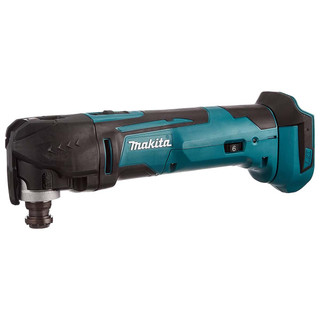
Makita Multi Tools
Quick Reference: Makita Multi Tool Blade Selection
| Blade Type | Best For | What to Avoid |
|---|---|---|
| High-Carbon Steel (HCS) | Fast cuts in clean softwood, fibreboard, soft plastics and plasterboard. A blade such as the Makita B-64858 Starlock Plunge Cut Saw Blade 32mm is built for plunge sawing into softer materials. | Hidden nails, screws, metal brackets, dense hardwood, masonry and tile. |
| Bi-Metal (BiM) | Renovation work, mixed materials, timber with nails, aluminium, epoxy and plasterboard. The Makita B-64939 Starlock Metal Cutting Multi Tool Blade 32mm is a practical choice for metal and mixed-material cutting. | Heavy steel, brick, concrete, tile and long straight cuts where a dedicated saw is faster. |
| Wood and Metal Plunge Blades | Plunge cuts where the material may not be perfectly clean. The Makita B-64814 Starlock Plunge Cut Saw Blade 32mm uses BiM construction and is suited to harder materials than a basic HCS blade. | Using it as a general demolition blade for everything. It is tougher than HCS, but it is still a precision accessory. |
| Carbide or Grit Grout Accessories | Removing grout, clearing tile adhesive and working in abrasive material. The Faithfull Multi-Functional Tool Carbide Grit Finger Grout Remover 65mm is designed for this type of work. | Timber cutting, nail cutting, forcing into corners and working against delicate tile edges without control. |
| Rigid or Sharp Scraper Blade | Removing sealant, putty, insulation, adhesive, vinyl residue and dried filler. The Faithfull FAIMFSCR100 SK7 Sharp Scraper Blade 100mm is suited to scraping and soft material removal. | Cutting timber, cutting metal, digging into finished surfaces and scraping at too steep an angle. |
| Hook-and-Loop Sanding Pad | Detail sanding, corners, edges, filler repairs and finishing. The Makita B-65115 93mm Starlock Sanding Pad is made as a sanding sole for abrasive paper. | Heavy stock removal, sanding wet material, pressing hard enough to melt hook-and-loop backing or rounding sharp detail. |
Why the Blade Matters More Than People Think
Most people notice the tool first. They compare body-only prices, battery compatibility, brushless motors, vibration control and whether the tool has a lever-change mechanism. Those things matter, especially if you use the tool every week. But on the actual job, the accessory is usually what decides whether the work feels clean or frustrating.
A good Makita multitool with the wrong blade will behave badly. It will vibrate without cutting, create too much heat and push dust into the cut rather than clearing it. A suitable blade, used at the right speed with light pressure, lets the oscillating action do what it is meant to do. The cut feels smoother. The tool sounds less strained. The battery lasts longer because the motor is not fighting a blunt or unsuitable edge.
It helps to think of the tool as the engine and the accessory as the tyre. The engine may have plenty of power, but the contact point does the real work. That contact point needs the right tooth shape, material and fitting.
For clean timber, you want sharp teeth that clear waste quickly. For metal, you need a tougher tooth that can survive heat and hard material. For grout, teeth are not the answer at all. You need an abrasive edge. For scraping, sharpness and blade stiffness matter more than tooth count. For sanding, the backing pad, grit choice and dust control decide whether the finish is flat or patchy.
1. Wood and Plunge Cut Blades (HCS)
High-carbon steel blades are the workhorses for clean wood and softer sheet material. These are the blades most people reach for when they first buy a Makita multi tool, and for good reason. They are quick, controllable and ideal for small timber cuts where a circular saw or jigsaw would be too large.
Use HCS blades for jobs such as trimming softwood, cutting a notch in skirting, opening plasterboard, cutting fibreboard, adjusting architrave, trimming a thin timber packer or making a small recess for a fitting. A 32mm plunge blade, such as the Makita B-64858 Starlock Plunge Cut Saw Blade 32mm, is the kind of accessory that suits this work.
The important word is clean. HCS blades do not like metal. They will tolerate plasterboard and soft plastics, but they are not made for hidden fixings. If there is even a reasonable chance of hitting a screw, brad, staple or old framing nail, switch to a BiM blade. It may cost more, but it will usually save the blade and the job.
Where HCS blades are at their best
HCS blades are strongest when the cut is short, controlled and free from surprises. They are especially good for plunge cuts because the tooth pattern bites quickly into soft timber. They also leave a better finish in wood than many general-purpose blades, provided you do not force the tool.
A typical example is fitting new flooring. When laminate or engineered flooring needs to slide under a door lining, a Makita multi tool 18v with a clean wood blade can undercut the lining neatly while the flooring offcut acts as a height guide. That is exactly the sort of job where an oscillating tool feels made for the task.
Another common job is trimming plasterboard. A multi tool will not replace a board saw for every cut, but it is excellent for controlled openings, especially when you are trying not to damage a pipe, cable or timber behind the board. Work carefully, keep the blade shallow and do not treat the cut as a race.
Technique tip: rock the blade, do not bury it
The main mistake with plunge cutting is pushing straight in and holding the tool still. That traps sawdust in the kerf. Once the dust has nowhere to go, the blade heats up, the teeth stop biting and the wood begins to scorch. You can often smell the problem before you see it.
Instead, start the cut lightly and let the teeth establish a groove. Then gently rock the Makita multitool from side to side as the blade enters the material. The movement does not need to be dramatic. A small rocking action clears dust, gives the teeth fresh material to bite and reduces heat. If the cut starts smoking or the blade turns blue, stop. You are either pushing too hard, using the wrong blade or working with a blade that is already spent.
For a neater finish, score the cut line with a knife first, especially on painted timber or veneered board. The oscillating blade can then follow the line without tearing the surface quite as much.
2. The Lifesaver: Bi-Metal Blades
If HCS blades are for clean work, BiM blades are for real renovation work. In older houses, shop fits, refurbs and site alterations, you rarely know exactly what is inside the material. Timber might contain old nails. Plasterboard might be fixed with screws just where you need to cut. A door frame might hide a staple, bracket or bit of metal trim. That is where a BiM blade earns its keep.
Bi-metal blades combine flexibility with harder cutting teeth. They are not indestructible, but they cope much better with mixed materials than HCS blades. A good BiM blade can cut timber and carry on through the occasional hidden nail without instantly shedding its teeth.
That is why a blade such as the Makita B-64814 Starlock Plunge Cut Saw Blade 32mm makes sense for general plunge work where the material is not guaranteed to be clean. For metal-focused jobs and harder mixed materials, the Makita B-64939 Starlock Metal Cutting Multi Tool Blade 32mm is the better sort of blade to consider.
When to choose BiM over HCS
Choose BiM when the job involves old timber, floorboards, fitted units, door frames, studwork, plasterboard with unknown fixings, aluminium trim, epoxy, plastic mixed with metal or any material where you cannot see every fixing. The blade costs more at the till, but it usually costs less across the job because it survives longer.
A common example is cutting into a 2×4 during alteration work. Clean, new timber is easy enough for HCS. Old framing is different. There may be nails, old screws, hard knots, paint, dirt or debris in the cut. A BiM blade lets you work with more confidence.
Another example is removing a damaged section of skirting or architrave. The visible face may look like painted wood, but the fixings are often buried under filler and paint. HCS will cut the timber quickly until it hits the first nail. BiM is slower in clean wood, but it is far more forgiving.
Do not ask a BiM blade to do everything
BiM blades are tough, but they are still small oscillating accessories. They are not a substitute for a grinder, reciprocating saw or bandsaw when the material is heavy. If you need to cut thick steel, long metal sections or heavy bolts, pick the proper tool. A Makita multi tool is at its best when access, control and precision matter more than brute force.
Use steady pressure, keep the blade moving slightly and give it time to cool on harder cuts. If the blade is no longer producing chips or dust and is just polishing the material, it is blunt. Turning up the speed and pushing harder will not fix it.
3. Accessory Sets: Better Than Buying Random Blades One by One
Single blades make sense when you know exactly what you need. But if you are building out a small kit for regular work, a properly matched accessory set is often more useful than grabbing one blade at a time. A mixed set gives you options on site, which matters when the job changes halfway through.
The Makita B-67480 Multi-Tool Starlock Plunge Set, for example, includes a selection of blades for wood, wood and metal, and metal cutting. That kind of set is useful if you want a small but sensible selection rather than a pile of cheap blades with no clear purpose.
The mistake is buying a large unbranded pack just because the price per blade looks low. Some of those packs are fine for rough, occasional work. Many are not. Poor blades dull quickly, run hot and leave rougher cuts. On a cordless Makita multi tool 18 volt body, that also means wasted battery power. The tool spends more time vibrating and less time cutting.
A better starting kit is simple. Keep one clean wood blade, one BiM plunge blade, one metal or wood-with-nails blade, one scraper, one grout accessory if you do tiling work and one sanding pad with a few grit options. That covers most of the realistic jobs people use a Makita multitool for.
4. Grout Removal and Masonry Accessories
Grout removal is one of the jobs where an oscillating multi tool makes immediate sense. You are not trying to slice through material. You are trying to grind out a narrow line without damaging the tiles on either side. A spinning disc can be fast, but it can also be unforgiving. A hand grout rake is controlled, but slow. A multi tool with the right grout accessory sits between the two.
Carbide and grit accessories are designed to abrade the grout rather than cut it with teeth. The shape matters. Finger-style and crescent-style accessories let you follow grout lines, work into corners and stop close to the edge of a tile without overcutting as easily as you might with a larger disc.
For grout removal, something like the Faithfull Multi-Functional Tool Carbide Grit Finger Grout Remover 65mm is made for the abrasive nature of the job. Do not use a standard wood blade. It will not work properly and it will be ruined.
How to remove grout without damaging tiles
Start by checking the width of the grout line. If the accessory is too wide, it can chip the tile edges. If it is too narrow, the job may take longer, but it is usually safer. Hold the tool with both hands where possible and bring the accessory into the grout line before applying full speed.
Use light pressure. The grit needs contact, not force. If you push hard, the blade may jump out of the joint or wear unevenly. Work in short passes and let the accessory clear the grout gradually. For corners, slow down. Corners are where overcutting usually happens.
Dust is another issue. Grout dust is fine and unpleasant, so use suitable eye protection and a dust mask. Keep the area controlled and stop regularly to clear the joint. A clean joint helps you see how deep you have gone and reduces the risk of cutting beyond what is needed.
Can a Makita multi tool cut masonry?
It can work on small abrasive jobs with the correct accessory, such as grout, mortar residue and tile adhesive. It is not the right tool for deep masonry cutting or chasing long channels. For those jobs, you need a dedicated masonry tool. The Makita multi tool is there for access and accuracy, not heavy material removal.
5. Scrapers: The Accessory People Forget Until They Need It
A scraper blade is not exciting, but it can save a lot of time. Once you have used a multi tool to lift old adhesive or remove dried filler, it becomes hard to go back to doing every scraping job by hand.
Scraper blades are useful for removing old vinyl flooring, dried drywall mud, sealant, carpet glue, putty, insulation, foam residue and stubborn surface contamination. The Faithfull FAIMFSCR100 SK7 Sharp Scraper Blade 100mm is a good example of the type of accessory used for this work.
The key is the angle. Keep the blade fairly shallow to the surface. If you lift the back of the tool too high, the scraper digs in. On timber, that can gouge the grain. On plaster, it can tear the face. On flooring, it can leave ridges that have to be repaired before the next finish goes down.
Rigid scraper or flexible scraper?
A rigid scraper is better when the material is hard, thick or brittle. Use it for dried filler, old adhesive, stubborn vinyl backing and heavier residue. A flexible scraper is better for sealant, soft adhesive and work where you need the blade to stay flatter to the surface.
Do not treat the scraper like a chisel. Let the oscillation do the work. The blade should skim under the material and separate it from the surface. If it is bouncing, reduce pressure and lower the angle. If it is smearing adhesive rather than lifting it, the adhesive may be too soft or warm. Sometimes cooling the material or switching technique gives a cleaner result.
6. Detail Sanding: Turning the Makita Multi Tool into a Finisher
Sanding is not usually the reason someone buys a Makita multi tool, but it is one of the reasons the tool stays useful. A triangular hook-and-loop pad turns the machine into a detail sander for corners, small repairs and awkward edges.
The Makita B-65115 93mm Starlock Sanding Pad uses a delta shape, which is useful for getting into corners where a round random orbital sander cannot reach. Pair it with suitable abrasive sheets such as the Makita D-78922 Delta Net Sanding Sheet A240 10 Pack for finer finishing work.
This setup is useful for feathering filler, sanding inside window reveals, cleaning up edges after a repair, dulling sharp corners, preparing small painted sections and reaching into tight joinery. It is not the right choice for sanding a whole tabletop or stripping a full door. The pad is too small for that, and the oscillating action can leave an uneven surface if you try to cover large areas.
Sanding technique that gives a better finish
Use less pressure than you think. Pressing hard does not make the tool sand faster. It usually wears the abrasive, heats the backing pad and leaves swirl or chatter marks. Let the abrasive do the work and keep the pad flat.
Move steadily across the surface and avoid sitting on one spot. If you are sanding filler, start with a grit that actually levels the repair, then step down to a finer grit to finish. Do not jump straight to a very fine grit if the surface is still proud. You will polish the high spot rather than flatten it.
For painted or varnished surfaces, watch heat. Small pads build heat quickly. If the finish starts softening or clogging the abrasive, stop and change the sheet. A clogged sanding sheet does poor work and can mark the surface.
FAQ
What is the best blade for a Makita multi tool?
There is no single best blade for every job. For clean wood, choose an HCS blade. For renovation work or timber with hidden nails, choose a BiM blade. For grout, use a carbide or grit accessory. For adhesive and sealant removal, use a scraper. The best blade is the one designed for the material in front of you.
Can a Makita multi tool cut through nails?
Yes, but only with the right blade. A BiM blade is the better choice for timber with nails or mixed materials. Do not use a clean wood HCS blade for hidden fixings, as the teeth can dull or strip very quickly.
What is the difference between HCS and BiM multi tool blades?
HCS blades are made for fast cutting in softer, cleaner materials such as softwood, fibreboard and plasterboard. BiM blades are tougher and better suited to mixed materials, including wood with nails, aluminium and harder renovation materials. HCS is usually faster in clean wood. BiM is usually safer when you do not know what is inside the cut.
Can I use a Makita multi tool for removing grout?
Yes. Fit a carbide or grit grout remover and work slowly along the grout line. Do not use a normal wood blade. A grout accessory grinds the grout away and gives better control near tile edges.
Are Makita multi tool blades universal?
Not always. Some Makita multi tools use OIS accessories, while others use Starlock or Starlock Max. Always check the fitting system on your specific model before buying blades or accessory packs.
Is Starlock better than OIS?
Starlock can offer fast changes and a very secure connection on compatible tools, but better depends on your tool and the accessories you need. OIS is widely used and still practical. The main point is compatibility. A high-quality blade is only useful if it fits your machine correctly.
Why does my multi tool blade burn wood?
Burning usually means too much heat. The blade may be blunt, the wrong type, pushed too hard or trapped in dust. During plunge cuts, gently rock the tool from side to side to clear sawdust and reduce heat.
Can I sand with a Makita multi tool?
Yes. Fit a hook-and-loop sanding pad and suitable sanding sheets. A Makita multi tool works well for detail sanding, corners and small repairs, but it is not the best tool for large flat areas.
Should I buy a multi tool accessory set or individual blades?
If you use the tool often, a small quality accessory set is a good starting point. You can then add individual blades for the jobs you do most. Avoid buying a large cheap pack unless you are sure the blades fit your tool and suit the materials you cut.
How do I make my Makita multi tool battery last longer?
Use sharp accessories, match the blade to the material and avoid forcing the cut. A blunt or unsuitable blade makes the motor work harder, creates heat and drains the battery faster. Good accessories are one of the simplest ways to improve runtime on a cordless Makita multi tool 18v.
Need some help with your order? Our new help centre has a wide range of helpful articles and guides!
If you have any additional queries, please do not hesitate to contact us below: